UN says Sudan resources fuel civil war / Photo: © AFP

 London
 14 °C
14 °C

 Manchester
 13 °C
13 °C
 Glasgow
 15 °C
15 °C
 Dublin
12 °C
Dublin
12 °C
 Belfast
13 °C
Belfast
13 °C
 Washington
18 °C
Washington
18 °C
 Denver
18 °C
Denver
18 °C
 Atlanta
25 °C
Atlanta
25 °C
 Dallas
33 °C
Dallas
33 °C
 Houston Texas
30 °C
Houston Texas
30 °C
 New Orleans
 29 °C
29 °C
 El Paso
28 °C
El Paso
28 °C
 Phoenix
35 °C
Phoenix
35 °C
 Los Angeles
21 °C
San Diego
21 °C
San Francisco
Los Angeles
21 °C
San Diego
21 °C
San Francisco
 15 °C
Chicago
24 °C
Minneapolis
15 °C
Seattle
16 °C
Portland
18 °C
Salt Lake City
19 °C
Las Vegas
34 °C
Miami
29 °C
Jacksonville
27 °C
San Antonio
30 °C
Bermuda
27 °C
Nassau
17 °C
Iqaluit
4 °C
Yellowknife
6 °C
Anchorage
15 °C
Chicago
24 °C
Minneapolis
15 °C
Seattle
16 °C
Portland
18 °C
Salt Lake City
19 °C
Las Vegas
34 °C
Miami
29 °C
Jacksonville
27 °C
San Antonio
30 °C
Bermuda
27 °C
Nassau
17 °C
Iqaluit
4 °C
Yellowknife
6 °C
Anchorage
 12 °C
Fairbanks
9 °C
Barrow
0 °C
Calgary
8 °C
Edmonton
28 °C
Winnipeg
8 °C
Goose Bay
18 °C
Halifax
11 °C
Boston
14 °C
Ottawa
16 °C
Toronto
17 °C
Detroit
22 °C
Cleveland
24 °C
New York
18 °C
Baltimore
18 °C
Philadelphia
17 °C
Nuuk (Godthåb)
4 °C
Hong Kong
12 °C
Fairbanks
9 °C
Barrow
0 °C
Calgary
8 °C
Edmonton
28 °C
Winnipeg
8 °C
Goose Bay
18 °C
Halifax
11 °C
Boston
14 °C
Ottawa
16 °C
Toronto
17 °C
Detroit
22 °C
Cleveland
24 °C
New York
18 °C
Baltimore
18 °C
Philadelphia
17 °C
Nuuk (Godthåb)
4 °C
Hong Kong
 30 °C
Singapore
30 °C
Melbourne
27 °C
Canberra
30 °C
Singapore
30 °C
Melbourne
27 °C
Canberra
 12 °C
Adelaide
16 °C
Darwin
33 °C
Perth
26 °C
Fort Worth
33 °C
Honolulu
30 °C
Sydney
12 °C
Adelaide
16 °C
Darwin
33 °C
Perth
26 °C
Fort Worth
33 °C
Honolulu
30 °C
Sydney
 16 °C
Johannesburg
9 °C
Dubai
32 °C
Mumbai
28 °C
Zürich
18 °C
Tokyo
21 °C
Seoul
25 °C
Delhi
29 °C
Beijing
26 °C
Riyadh
28 °C
Prague
14 °C
Pennsylvania
17 °C
Valletta
25 °C
Manama
33 °C
Warsaw
12 °C
Stockholm
15 °C
16 °C
Johannesburg
9 °C
Dubai
32 °C
Mumbai
28 °C
Zürich
18 °C
Tokyo
21 °C
Seoul
25 °C
Delhi
29 °C
Beijing
26 °C
Riyadh
28 °C
Prague
14 °C
Pennsylvania
17 °C
Valletta
25 °C
Manama
33 °C
Warsaw
12 °C
Stockholm
15 °C
Sudan's rival factions are profiting from control over the country's resources and the "war economy" was sustaining the conflict, the United Nations said Wednesday.
To fund the growing cost of military operations, the two sides rely on exploiting territory, trade routes, and commodities, contributing to a conflict that has become "increasingly self-perpetuating", said the UN human rights office OHCHR.
The war between Sudan's regular army and the paramilitary Rapid Support Forces (RSF), that erupted in April 2023, has killed 200,000 people by some estimates and displaced upwards of 11 million. Several areas of Sudan have been plunged into hunger and famine.
OHCHR called on the two sides, and corporations involved in collecting and selling Sudanese commodities, to ensure compliance with international law.
"Sudan's vast wealth of natural resources should benefit its people," said UN rights chief Volker Turk.
"Distressingly, what we are seeing today is anything but that. In fact, this wealth is only serving to undermine human rights and drive conflict, bringing pain and suffering on an enormous scale.
"This war economy must be disrupted, and the international community must pay much closer attention to the commodities and trade routes that help keep it alive."
- Gum arabic trade -
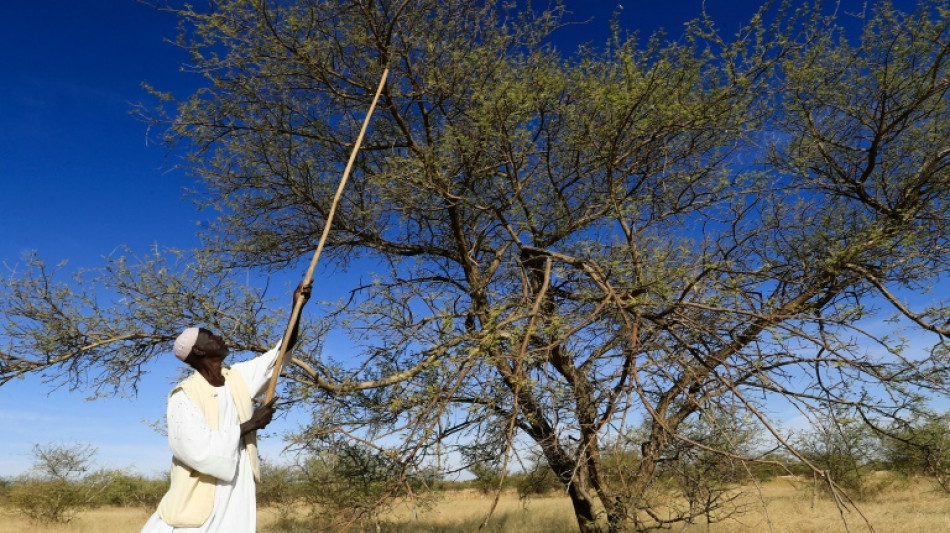
OHCHR issued a report focusing on the trade in gum arabic -- a key ingredient in products ranging from soft drinks, to cosmetics and pharmaceuticals.
Sudan accounted for 70-80 percent of global crude gum arabic exports before the war.
Although modest in export value compared with other commodities, it is an important income source for millions of Sudanese, and remains one of the country's most internationally relied-upon exports.
The report found that many who depend on the gum arabic trade have faced looting, extortion, arbitrary detention and threats -- particularly at the hands of the parties to the conflict and their allies.
In May 2025, for instance, the Gum Arabic Exchange and its warehouses, plus part of the local market in El-Nuhud in West Kordofan state, were reportedly looted by the RSF when stocks were full and ready for export.
This severely disrupted local trade and livelihoods, the report said.
OHCHR said that Sudan's gum arabic trade had been reshaped by the fragmentation of the country since the war started.
Gum arabic from areas controlled by the armed forces goes towards Port Sudan for export, while significant quantities from RSF-controlled areas have been redirected to neighbouring countries via cross-border smuggling routes.
The report said this may then be treated and traded as locally-produced, making its origin hard to verify.
Turk, the UN high commissioner for human rights, urged countries and companies linked to trade in Sudanese commodities, including gum arabic, to ensure their business was not fuelling the conflict or damaging human rights.
He urged countries to strengthen accountability, traceability and regulatory oversight and respect human rights.
"Companies cannot continue business as usual when sourcing from conflict-affected value chains," Turk said.
S.Mazur--GL