Stranded boats, out-of-work fishermen as Danube hits record lows / Photo: © AFP

 London
 22 °C
22 °C

 Manchester
 21 °C
21 °C
 Glasgow
19 °C
Glasgow
19 °C
 Dublin
19 °C
Dublin
19 °C
 Belfast
17 °C
Belfast
17 °C
 Washington
26 °C
Washington
26 °C
 Denver
 22 °C
22 °C
 Atlanta
 27 °C
27 °C
 Dallas
30 °C
Dallas
30 °C
 Houston Texas
31 °C
Houston Texas
31 °C
 New Orleans
29 °C
New Orleans
29 °C
 El Paso
27 °C
El Paso
27 °C
 Phoenix
31 °C
Phoenix
31 °C
 Los Angeles
22 °C
San Diego
22 °C
San Francisco
15 °C
Chicago
20 °C
Minneapolis
14 °C
Seattle
13 °C
Portland
12 °C
Salt Lake City
26 °C
Las Vegas
29 °C
Miami
32 °C
Jacksonville
Los Angeles
22 °C
San Diego
22 °C
San Francisco
15 °C
Chicago
20 °C
Minneapolis
14 °C
Seattle
13 °C
Portland
12 °C
Salt Lake City
26 °C
Las Vegas
29 °C
Miami
32 °C
Jacksonville
 30 °C
San Antonio
28 °C
Bermuda
29 °C
Nassau
22 °C
Iqaluit
3 °C
Yellowknife
11 °C
Anchorage
8 °C
Fairbanks
30 °C
San Antonio
28 °C
Bermuda
29 °C
Nassau
22 °C
Iqaluit
3 °C
Yellowknife
11 °C
Anchorage
8 °C
Fairbanks
 6 °C
Barrow
2 °C
Calgary
4 °C
Edmonton
28 °C
Winnipeg
10 °C
Goose Bay
22 °C
Halifax
19 °C
Boston
20 °C
Ottawa
23 °C
Toronto
23 °C
Detroit
24 °C
Cleveland
25 °C
New York
21 °C
Baltimore
25 °C
Philadelphia
22 °C
Nuuk (Godthåb)
5 °C
Hong Kong
28 °C
Singapore
6 °C
Barrow
2 °C
Calgary
4 °C
Edmonton
28 °C
Winnipeg
10 °C
Goose Bay
22 °C
Halifax
19 °C
Boston
20 °C
Ottawa
23 °C
Toronto
23 °C
Detroit
24 °C
Cleveland
25 °C
New York
21 °C
Baltimore
25 °C
Philadelphia
22 °C
Nuuk (Godthåb)
5 °C
Hong Kong
28 °C
Singapore
 29 °C
Melbourne
29 °C
Canberra
29 °C
Melbourne
29 °C
Canberra
 8 °C
Adelaide
13 °C
Darwin
27 °C
Perth
16 °C
Fort Worth
30 °C
Honolulu
23 °C
Sydney
14 °C
Johannesburg
25 °C
Dubai
8 °C
Adelaide
13 °C
Darwin
27 °C
Perth
16 °C
Fort Worth
30 °C
Honolulu
23 °C
Sydney
14 °C
Johannesburg
25 °C
Dubai
 36 °C
Mumbai
26 °C
Zürich
26 °C
Tokyo
24 °C
Seoul
20 °C
Delhi
31 °C
Beijing
15 °C
Riyadh
40 °C
Prague
18 °C
Pennsylvania
21 °C
Valletta
30 °C
Manama
35 °C
Warsaw
19 °C
Stockholm
17 °C
36 °C
Mumbai
26 °C
Zürich
26 °C
Tokyo
24 °C
Seoul
20 °C
Delhi
31 °C
Beijing
15 °C
Riyadh
40 °C
Prague
18 °C
Pennsylvania
21 °C
Valletta
30 °C
Manama
35 °C
Warsaw
19 °C
Stockholm
17 °C
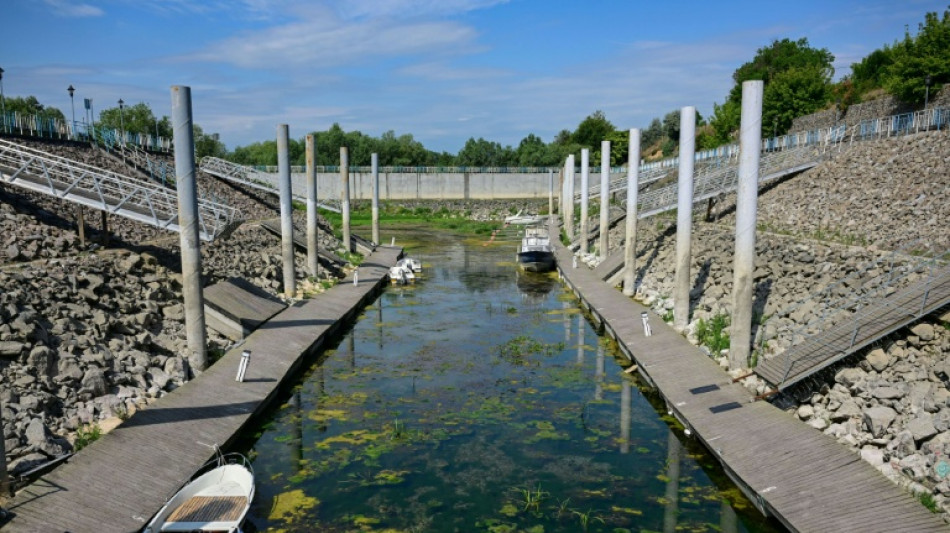
The tourist port in the Romanian town of Corabia, on the banks of the Danube river, is deserted except for a few pleasure boats stranded in the algae.
The waters of the river are so low that vessels can no longer get in or out due to sandbars.
"Last year we could swim across but now the water only comes up to our chests," said 71-year-old Doru, pointing to an island in the river.
"In two years, we'll be able to just walk across," the fisherman, who only gave his first name, told AFP.
The waters of the mighty Danube, Europe's second longest river, have dropped in parts to a record low due to prolonged rain shortages and successive heatwaves that have parched the continent since May.
From its source in the Black Forest mountains of western Germany to its mouth on the Black Sea in the east, countries along its 2,850-kilometre (1,770-mile) route are feeling the impact.
In Slovakia and Hungary in central Europe to Romania and Bulgaria further east, ships are unable to travel fully loaded along the waterway and face lengthy waits.
Hungary has reduced the output of its nuclear power plant, which relies on the waters of the Danube for cooling, while Romania shut down the two reactors at the Cernavoda plant, the first time both had been shut at the same time because of low water levels.
Already harsh, this current drought was made even more severe by human-caused climate change, according to a report published last week by the World Weather Attribution group of scientists.
The river is at a 30-year drop in Romania and Slovakia and at its lowest ever in Hungary.
- Navigation problems -
At the Vidin-Calafat bridge connecting Bulgaria and Romania across the Danube, Bulgarian fishermen complained of being out of work because the low water levels had trapped their boats onshore.
"It's never dried up this much before," fisherman Rossen Dobrev told AFP. "Now we can even walk all the way to Romania."
"I've been a fisherman for 39 years and there's never been a drought like this before," sighed fellow fisherman Aleksandar Angelov.
"The people in charge up there need to take action," the 59-year-old continued, his brow deeply furrowed.
"We don't have any water here."
Ferry service between Romania and Bulgaria have been suspended temporarily in two areas.
A cruise ship with almost 200 passengers had to be evacuated in Bulgaria this week after it ran aground on the Danube because of low water levels.
Commercial shipping is also affected.
"Cargo vessels are being forced to wait or sail with a reduced load," a spokesperson at the Bulgarian government's Danube agency told AFP.
In Romania, the water level along parts of the Danube is already one metre (three feet) below the minimum navigable.
"This is an exceptional situation... We're surprised by this very, very low level," Adrian Maizel, from the administration monitoring traffic on the Danube, told AFP.
"We are making efforts to maintain a navigable channel as much as possible -- albeit a narrower one -- so that navigation is not completely blocked," he added of the administration's dredging operations.
Both countries recorded low water levels much sooner than last year.
In the Hungarian capital Budapest, further upstream, the Danube has dropped to its lowest level since measurements began.
Dozens of Hungarian cities and villages along the river introduced water restrictions during the June heatwave. By July, several cruises had been suspended as well.
At Slovakia's Gabcikovo dam, further upstream again, lock operations have slowed down, causing longer waiting times, and captains are being urged to check their vessels' navigability.
- 'Like quicksand' -
With the heat expected to last, there is no immediate relief in sight.
"I've lived here for 25 years and the water has never been this low," said pensioner Mitica Nicolae from Corabia as he fished in an irrigation canal close to the river.
The 65-year-old, who checks public radio every morning for the latest Danube water report, said he was catching fewer fish than before and feared for farm crops.
The river recently dropped to a three-decade low in Romania.
The national authorities imposed irrigation restrictions on farmers in the southeast but those AFP talked to said they had not been affected so far.
On a beach in southern Romania, a few metres from the Danube shore, a boy sloshed his bare feet through water that only reached up to his ankles.
"It's like quicksand," he shouted in surprise to his family watching from a distance.
K.Radomski--GL