Food safety crackdown snares Mumbai's famed restaurants / Photo: © AFP

 London
 19 °C
19 °C

 Manchester
16 °C
Manchester
16 °C
 Glasgow
16 °C
Glasgow
16 °C
 Dublin
16 °C
Dublin
16 °C
 Belfast
16 °C
Belfast
16 °C
 Washington
24 °C
Washington
24 °C
 Denver
 19 °C
19 °C
 Atlanta
26 °C
Atlanta
26 °C
 Dallas
29 °C
Dallas
29 °C
 Houston Texas
27 °C
Houston Texas
27 °C
 New Orleans
29 °C
New Orleans
29 °C
 El Paso
23 °C
El Paso
23 °C
 Phoenix
36 °C
Phoenix
36 °C
 Los Angeles
21 °C
San Diego
21 °C
San Francisco
14 °C
Chicago
22 °C
Minneapolis
18 °C
Seattle
15 °C
Portland
19 °C
Salt Lake City
Los Angeles
21 °C
San Diego
21 °C
San Francisco
14 °C
Chicago
22 °C
Minneapolis
18 °C
Seattle
15 °C
Portland
19 °C
Salt Lake City
 22 °C
Las Vegas
32 °C
Miami
22 °C
Las Vegas
32 °C
Miami
 27 °C
Jacksonville
28 °C
San Antonio
27 °C
Bermuda
26 °C
Nassau
20 °C
Iqaluit
5 °C
Yellowknife
27 °C
Jacksonville
28 °C
San Antonio
27 °C
Bermuda
26 °C
Nassau
20 °C
Iqaluit
5 °C
Yellowknife
 9 °C
Anchorage
15 °C
Fairbanks
19 °C
Barrow
9 °C
Calgary
14 °C
Edmonton
25 °C
Winnipeg
15 °C
Goose Bay
21 °C
Halifax
19 °C
Boston
20 °C
Ottawa
18 °C
Toronto
21 °C
Detroit
24 °C
Cleveland
24 °C
New York
21 °C
Baltimore
24 °C
Philadelphia
21 °C
Nuuk (Godthåb)
6 °C
Hong Kong
9 °C
Anchorage
15 °C
Fairbanks
19 °C
Barrow
9 °C
Calgary
14 °C
Edmonton
25 °C
Winnipeg
15 °C
Goose Bay
21 °C
Halifax
19 °C
Boston
20 °C
Ottawa
18 °C
Toronto
21 °C
Detroit
24 °C
Cleveland
24 °C
New York
21 °C
Baltimore
24 °C
Philadelphia
21 °C
Nuuk (Godthåb)
6 °C
Hong Kong
 31 °C
Singapore
33 °C
Melbourne
28 °C
Canberra
12 °C
Adelaide
16 °C
Darwin
31 °C
Singapore
33 °C
Melbourne
28 °C
Canberra
12 °C
Adelaide
16 °C
Darwin
 31 °C
Perth
17 °C
Fort Worth
29 °C
Honolulu
26 °C
Sydney
15 °C
Johannesburg
12 °C
Dubai
42 °C
Mumbai
28 °C
Zürich
21 °C
Tokyo
30 °C
Seoul
27 °C
Delhi
34 °C
Beijing
30 °C
Riyadh
42 °C
Prague
19 °C
Pennsylvania
21 °C
Valletta
29 °C
Manama
40 °C
Warsaw
19 °C
Stockholm
31 °C
Perth
17 °C
Fort Worth
29 °C
Honolulu
26 °C
Sydney
15 °C
Johannesburg
12 °C
Dubai
42 °C
Mumbai
28 °C
Zürich
21 °C
Tokyo
30 °C
Seoul
27 °C
Delhi
34 °C
Beijing
30 °C
Riyadh
42 °C
Prague
19 °C
Pennsylvania
21 °C
Valletta
29 °C
Manama
40 °C
Warsaw
19 °C
Stockholm
 16 °C
16 °C
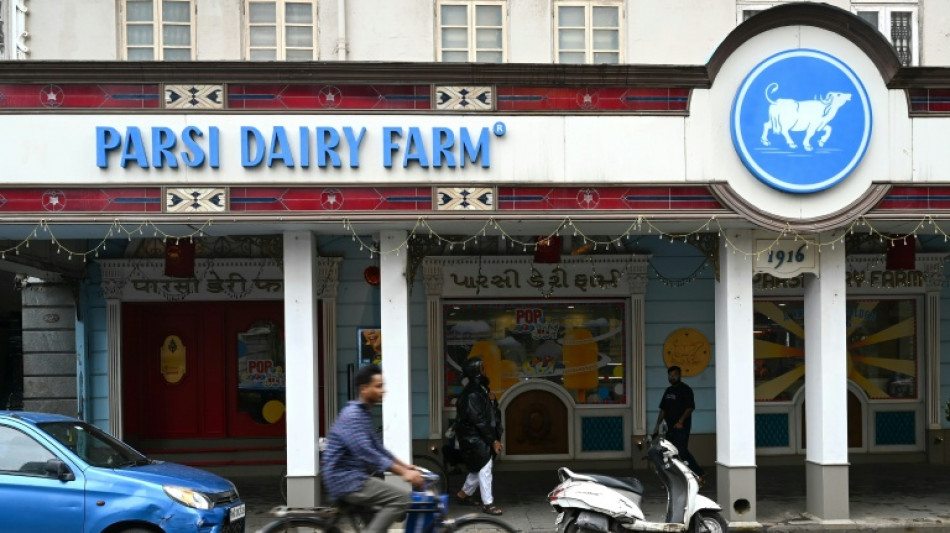
When food safety inspectors raided a Mumbai dessert parlour famed for its ice cream sandwiches last month, they found rats, houseflies and expired flavouring agents.
At another beloved restaurant known for slow-cooked mutton and beef stews, they discovered meat stored in filthy containers, greasy floors and open windows that could let in insects and crows.
Both eateries were ordered shut in the toughest crackdown in years on restaurants in the megacity of more than 20 million people.
Residents of India's financial capital are fiercely protective of their food culture, but many have welcomed the closure of some of the best-known establishments over a lack of hygiene.
Much of the campaign has been driven by Tukaram Mundhe, the new head of Maharashtra state's food safety regulator.
"If they are abiding by the law... they have nothing to fear. And those who do not, they have no place to hide," Mundhe told AFP.
In July alone, his office inspected nearly 900 businesses and temporarily suspended more than 100 licences.
The sweep has targeted everything from top eateries and luxury hotels to canteens at elite institutions, including the nearly century-old Cricket Club of India.
Mundhe, who has 2.6 millionInstagram followers, said he was surprised by how many owners lacked knowledge of even basic food safety rules.
"How to receive the raw material, how to store it, how to process it... whether there should be (special) flooring. Many of the things they are unaware (of)."
- Taste tests -
India has a robust food safety framework on paper, but enforcement remains weak.
Government data from 2022 to 2025 shows roughly one in six food samples tested by the federal regulator failed to meet key standards.
While Indians are used to street food carts that use grimy rags or rancid cooking oil, they have higher expectations for established restaurants.
Mundhe's no-holds-barred approach has won support from residents who believe some operators routinely bribe officials to overlook violations.
"Every department must have an officer like Mundhe," said Mumbai resident Pramod Shinde.
"Corruption and adulteration can be contained only through the strict actions of such officers."
But the campaign is also facing resistance from hotel lobby groups, who have criticised it as too heavy-handed.
"The sudden suspension or termination of licences without prior notice or opportunity for corrective action is a matter of grave concern," three industry associations said in a statement, adding that they had appealed to Prime Minister Narendra Modi.
Courts have also begun weighing in.
In one case, local media reported that Mumbai's high court had overturned the suspension of a hotel's licence, telling regulators to tone downtheir approach given "we're in India".
Anxiety has also spread among roadside vendors, many of whom fear they could be next.
- More than he can chew? -
"If the smaller street-food stalls are closed down, where will we go? We have a family and kids to support," said Ashok Verma, who runs a sandwich shop.
Mundhe, who took over in May, says much of the criticism he has faced is unfair since only a small share of inspections have led to licence suspensions.
"(But) we don't compromise on unhealthy or unsafe food which is likely to go in the stomach of the person."
Experts say India's food safety problems are structural and cannot be fixed through inspections alone.
A shortage of personnel is among the biggest challenges. Maharashtra's regulator has fewer than 400 officers, despite rules requiring more than twice that number.
"They ideally need 2,000 for proper functioning," said food safety consultant Sanjay Indani.
Many residents worry Mundhe may not stay long enough to complete the overhaul, given India's reputation for frequently transferring bureaucrats who upset powerful interests.
Mundhe has reportedly been moved 20 times during a career spanning more than two decades.
He has received some backing from the rich and influential, including billionaire Harsh Goenka.
"Nothing restores public faith faster than seeing the powerful treated like everyone else. Nothing destroys it faster than transferring the officer who made that happen. Let's hope this time it's different," Goenka wrote on social media.
Mundhe himself is unfazed by the prospect of reassignment.
"I do not look at it as a hanging sword on me. I just look at my role where I am posted. I try to do it in the best possible manner," he said.
F.Jankowski--GL