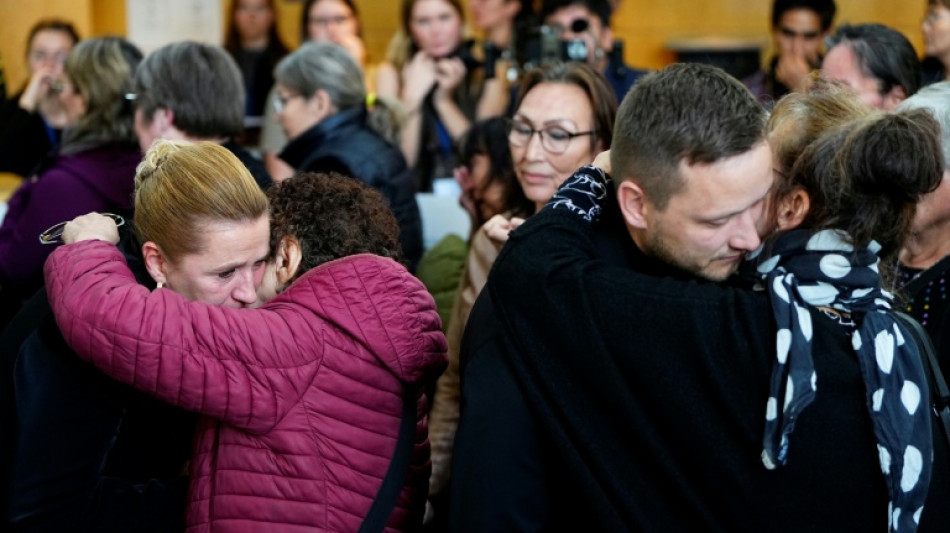
Greenland to open truth commission over forced contraception scheme / Photo: © Ritzau Scanpix/AFP

 London
 22 °C
22 °C

 Manchester
18 °C
Manchester
18 °C
 Glasgow
23 °C
Glasgow
23 °C
 Dublin
 23 °C
23 °C
 Belfast
22 °C
Belfast
22 °C
 Washington
 28 °C
28 °C
 Denver
25 °C
Denver
25 °C
 Atlanta
28 °C
Atlanta
28 °C
 Dallas
 32 °C
32 °C
 Houston Texas
31 °C
Houston Texas
31 °C
 New Orleans
29 °C
New Orleans
29 °C
 El Paso
27 °C
El Paso
27 °C
 Phoenix
36 °C
Phoenix
36 °C
 Los Angeles
27 °C
San Diego
25 °C
San Francisco
15 °C
Chicago
25 °C
Minneapolis
23 °C
Seattle
16 °C
Portland
15 °C
Salt Lake City
25 °C
Las Vegas
33 °C
Miami
Los Angeles
27 °C
San Diego
25 °C
San Francisco
15 °C
Chicago
25 °C
Minneapolis
23 °C
Seattle
16 °C
Portland
15 °C
Salt Lake City
25 °C
Las Vegas
33 °C
Miami
 32 °C
Jacksonville
29 °C
San Antonio
30 °C
Bermuda
31 °C
Nassau
26 °C
Iqaluit
5 °C
Yellowknife
15 °C
Anchorage
11 °C
Fairbanks
8 °C
Barrow
3 °C
Calgary
16 °C
Edmonton
29 °C
Winnipeg
19 °C
Goose Bay
17 °C
Halifax
27 °C
Boston
27 °C
Ottawa
17 °C
Toronto
20 °C
Detroit
22 °C
Cleveland
23 °C
New York
26 °C
Baltimore
26 °C
Philadelphia
25 °C
Nuuk (Godthåb)
6 °C
Hong Kong
32 °C
Jacksonville
29 °C
San Antonio
30 °C
Bermuda
31 °C
Nassau
26 °C
Iqaluit
5 °C
Yellowknife
15 °C
Anchorage
11 °C
Fairbanks
8 °C
Barrow
3 °C
Calgary
16 °C
Edmonton
29 °C
Winnipeg
19 °C
Goose Bay
17 °C
Halifax
27 °C
Boston
27 °C
Ottawa
17 °C
Toronto
20 °C
Detroit
22 °C
Cleveland
23 °C
New York
26 °C
Baltimore
26 °C
Philadelphia
25 °C
Nuuk (Godthåb)
6 °C
Hong Kong
 30 °C
Singapore
29 °C
Melbourne
31 °C
Canberra
30 °C
Singapore
29 °C
Melbourne
31 °C
Canberra
 4 °C
Adelaide
4 °C
Adelaide
 13 °C
Darwin
23 °C
Perth
13 °C
Fort Worth
32 °C
Honolulu
25 °C
Sydney
12 °C
Johannesburg
20 °C
Dubai
37 °C
Mumbai
28 °C
Zürich
20 °C
Tokyo
27 °C
Seoul
26 °C
Delhi
31 °C
Beijing
20 °C
Riyadh
42 °C
Prague
26 °C
Pennsylvania
23 °C
Valletta
37 °C
Manama
38 °C
Warsaw
24 °C
Stockholm
21 °C
13 °C
Darwin
23 °C
Perth
13 °C
Fort Worth
32 °C
Honolulu
25 °C
Sydney
12 °C
Johannesburg
20 °C
Dubai
37 °C
Mumbai
28 °C
Zürich
20 °C
Tokyo
27 °C
Seoul
26 °C
Delhi
31 °C
Beijing
20 °C
Riyadh
42 °C
Prague
26 °C
Pennsylvania
23 °C
Valletta
37 °C
Manama
38 °C
Warsaw
24 °C
Stockholm
21 °C
Greenland said Friday it would establish a Truth and Reconciliation Commission on Denmark's forced contraception of thousands of indigenous Inuits, after experts failed to agree on whether the scheme constituted "genocide".
The forced contraception campaign is one of the darkest chapters in Greenland's history with its former colonial master Denmark.
From the 1960s to 1990, more than 4,000 Greenlandic women were forced to wear a contraceptive coil -- or intrauterine device (IUD) -- in the vast majority of cases without their consent or that of their parents if they were minors.
Girls as young as 12 were affected, some of whom were never able to have children afterwards.
"We cannot say, on behalf of the government, whether there was genocide. This is something we can continue to debate," Greenland's Justice Minister Marianne Paviasen told reporters.
Greenland's Prime Minister Jens-Frederik Nielsen said the priority now was to "begin the healing process".
"We will set up a reconciliation commission," he vowed, saying he wanted to cooperate with Denmark on the matter.
In Copenhagen, Danish Prime Minister Mette Frederiksen also sounded a conciliatory note.
"We will handle the political process together with the government of Greenland. The most important thing for me is that we find the right path together," she said.
A four-member commission was tasked in August 2024 with shedding light on the scheme.
The experts were unable to agree on a unanimous conclusion, presenting two different reports instead.
"One states there was no genocide at all, while the other says there might have been," Paviasen said.
The reports did however agree that the contraception programme may have violated multiple human rights and the rights of Indigenous peoples.
- 'Not just about history' -
One of the victims, Henriette Berthelsen, told AFP before the reports were presented that the conclusions were skewed from the start since no Greenlandic Inuit were appointed as experts.
"For me, this is not just about history or politics. It's my body, my life, and my right to self-determination," she said.
"And once again, I see that it is others who will investigate and define what was done to me and to other Inuit women."
On Thursday, the Danish parliament agreed that women affected by the forced contraception campaign can claim compensation from Copenhagen -- an initiative pushed by Frederiksen, who presented Denmark's official apology last year.
Media coverage of the case has revived trauma that had been buried for decades.
"I realised everything it had cost me -- all those hospitalisations, those surgeries, the schooling I missed and, above all, those pains I had never associated with that damn IUD," said Kirstine Najarak Berthelsen.
"It was buried so deeply in my subconscious... Everything that happened to people is beyond imagination if you haven't experienced it yourself," she added.
By the late 1970s, one in two Greenlandic women of childbearing age -- at least 4,070 women -- had been fitted with an IUD, according to an investigation presented in September 2025.
The scandal came to light when one of the victims spoke out in the media about the trauma she experienced.
A podcast series in 2022 then revealed the full extent of the campaign.
Henriette Berthelsen has long called for a Truth and Reconciliation Commission to be established.
The 68-year-old psychologist said that would make it possible to "acknowledge what happened".
"I believe that only then will we be able to begin to heal and move forward -- not as adversaries, but as human beings and as peoples equal in dignity."
Nuuk and Copenhagen are also shedding light on several other painful chapters from the past, including children adopted without their parents' consent.
X.Dabrowski--GL