Nepal tunnel rescue revives hopes 10 days after flood / Photo: © Nepal Army Facebook Page/AFP

 London
 18 °C
18 °C

 Manchester
 16 °C
16 °C
 Glasgow
15 °C
Glasgow
15 °C
 Dublin
15 °C
Dublin
15 °C
 Belfast
15 °C
Belfast
15 °C
 Washington
 22 °C
22 °C
 Denver
 21 °C
21 °C
 Atlanta
24 °C
Atlanta
24 °C
 Dallas
28 °C
Dallas
28 °C
 Houston Texas
27 °C
Houston Texas
27 °C
 New Orleans
26 °C
New Orleans
26 °C
 El Paso
 26 °C
26 °C
 Phoenix
31 °C
Phoenix
31 °C
 Los Angeles
19 °C
San Diego
19 °C
San Francisco
15 °C
Chicago
25 °C
Minneapolis
20 °C
Seattle
12 °C
Portland
13 °C
Salt Lake City
22 °C
Las Vegas
26 °C
Miami
Los Angeles
19 °C
San Diego
19 °C
San Francisco
15 °C
Chicago
25 °C
Minneapolis
20 °C
Seattle
12 °C
Portland
13 °C
Salt Lake City
22 °C
Las Vegas
26 °C
Miami
 28 °C
Jacksonville
25 °C
San Antonio
27 °C
Bermuda
28 °C
Nassau
21 °C
Iqaluit
4 °C
Yellowknife
8 °C
Anchorage
13 °C
Fairbanks
13 °C
Barrow
2 °C
Calgary
9 °C
Edmonton
24 °C
Winnipeg
17 °C
Goose Bay
16 °C
Halifax
16 °C
Boston
17 °C
Ottawa
15 °C
Toronto
17 °C
Detroit
21 °C
Cleveland
20 °C
New York
23 °C
Baltimore
23 °C
Philadelphia
22 °C
Nuuk (Godthåb)
8 °C
Hong Kong
30 °C
Singapore
32 °C
Melbourne
26 °C
Canberra
12 °C
Adelaide
14 °C
Darwin
28 °C
Perth
18 °C
Fort Worth
27 °C
Honolulu
25 °C
Sydney
23 °C
Johannesburg
28 °C
Jacksonville
25 °C
San Antonio
27 °C
Bermuda
28 °C
Nassau
21 °C
Iqaluit
4 °C
Yellowknife
8 °C
Anchorage
13 °C
Fairbanks
13 °C
Barrow
2 °C
Calgary
9 °C
Edmonton
24 °C
Winnipeg
17 °C
Goose Bay
16 °C
Halifax
16 °C
Boston
17 °C
Ottawa
15 °C
Toronto
17 °C
Detroit
21 °C
Cleveland
20 °C
New York
23 °C
Baltimore
23 °C
Philadelphia
22 °C
Nuuk (Godthåb)
8 °C
Hong Kong
30 °C
Singapore
32 °C
Melbourne
26 °C
Canberra
12 °C
Adelaide
14 °C
Darwin
28 °C
Perth
18 °C
Fort Worth
27 °C
Honolulu
25 °C
Sydney
23 °C
Johannesburg
 14 °C
Dubai
14 °C
Dubai
 42 °C
Mumbai
31 °C
Zürich
22 °C
Tokyo
25 °C
Seoul
27 °C
Delhi
42 °C
Mumbai
31 °C
Zürich
22 °C
Tokyo
25 °C
Seoul
27 °C
Delhi
 27 °C
Beijing
32 °C
Riyadh
40 °C
Prague
19 °C
Pennsylvania
22 °C
Valletta
32 °C
Manama
37 °C
Warsaw
19 °C
Stockholm
16 °C
27 °C
Beijing
32 °C
Riyadh
40 °C
Prague
19 °C
Pennsylvania
22 °C
Valletta
32 °C
Manama
37 °C
Warsaw
19 °C
Stockholm
16 °C
Rescuers in Nepal pulled a Chinese national alive on Saturday from a tunnel buried by debris, as emergency response teams dug with new vigour in the search for missing people 10 days after catastrophic flooding.
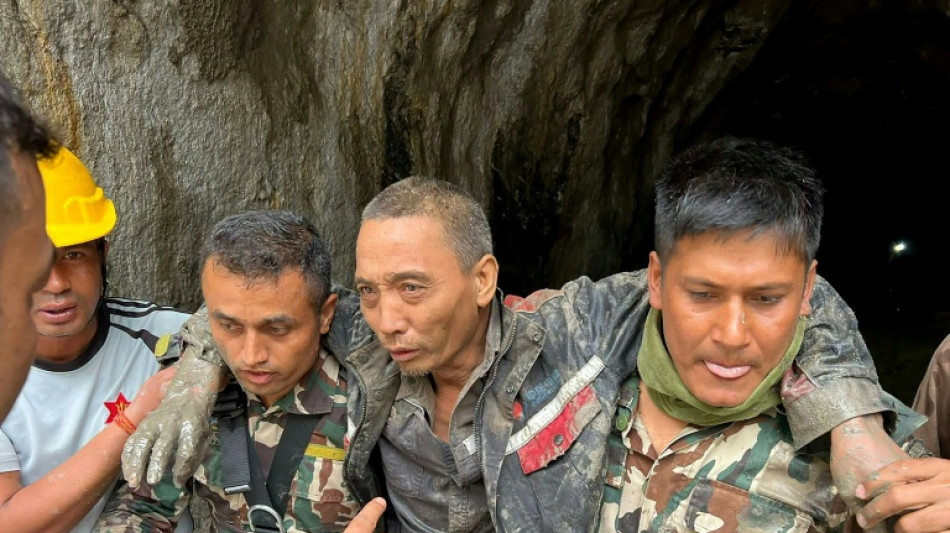
A joint rescue team comprising personnel from the Nepal Army and foreign experts rescued the man from 225 metres (738 feet) inside the tunnel of the Upper Trishuli-1 Hydropower Project in Rasuwa district, a military statement said.
A picture of the rescue published on the army's Facebook page shows the man, identified only as Luhaitao, with his arms around the shoulders of two camouflage-clad rescuers.
He looked alert but his hands were covered in thick, slimy mud.
"His health is currently being assessed and further search and rescue operations are continuing," the army said.
The survivor was among hundreds of hydropower workers who went missing since a tsunami-like wall of water and mud swept through the China-Nepal border following a vast glacial and rock collapse on August 26.
Two Nepali hydropower workers were rescued on Friday at the Trishuli 3A tunnel, where searches continued alongside multiple other sites, with at least 12 hydropower projects destroyed by the floods.
So far, 1,344 bodies have been recovered in Nepal, according to the national disaster agency, with around 5,000 people missing.
In China, state media said 31 people had been killed and 531 were missing. That takes the overall death toll to 1,375 people, and more than 5,500 missing.
- Thousands in relief camps -
Army spokesman Raja Ram Basnet told AFP that "work is underway at the tunnels" to locate any survivors.
The government initially said it believed more than 100 workers could be alive inside multiple tunnels.
Rescuers called it a "miracle" after the two Nepali men, caked in mud, were pulled out alive on Friday, nine days after being trapped by the flood.
They were taken to hospital and are said to be in a stable condition.
Experts from India, China, Australia and South Korea have been aiding Nepali rescuers in their search of survivors inside blocked tunnels.
With morgues overflowing, some 1,030 bodies hade been buried in mass graves after taking DNA samples for future identification, Nepal Police said Saturday.
Prime Minister Balendra Shah promised to provide "safe and comfortable accommodation" for thousands of people displaced by the diaster and currently living in temporary relief camps.
"We know that staying there (in camps) is not easy for you," he said in a Friday post on social media.
But he promised to "once again create an environment where you can dream about and build your future".
N.Piotrowski--GL