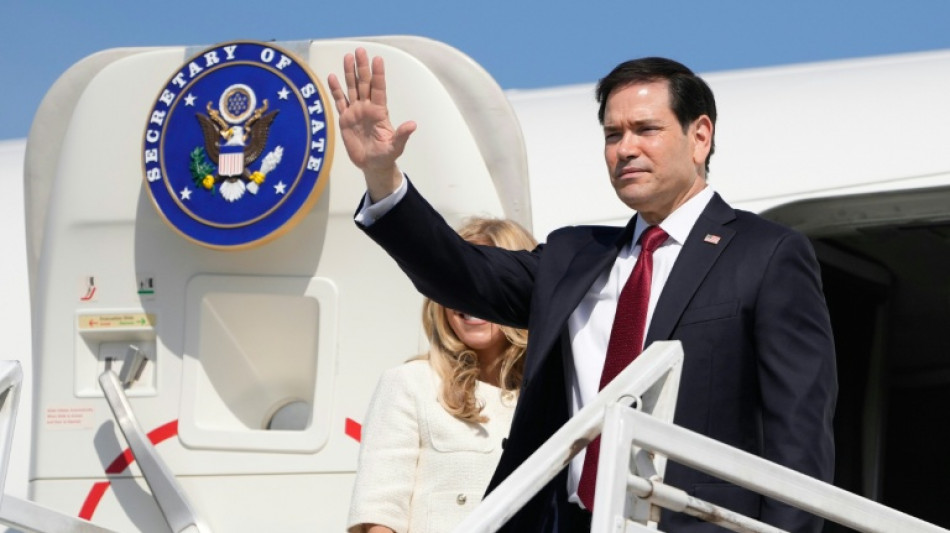
Rubio pushes extraditions, anti-drug fight in Ecuador / Photo: © POOL/AFP

 London
 19 °C
19 °C
 Manchester
16 °C
Manchester
16 °C
 Glasgow
16 °C
Glasgow
16 °C
 Dublin
17 °C
Dublin
17 °C
 Belfast
16 °C
Belfast
16 °C
 Washington
 31 °C
31 °C
 Denver
 21 °C
21 °C
 Atlanta
30 °C
Atlanta
30 °C
 Dallas
 35 °C
35 °C
 Houston Texas
31 °C
Houston Texas
31 °C
 New Orleans
31 °C
New Orleans
31 °C
 El Paso
30 °C
El Paso
30 °C
 Phoenix
36 °C
Phoenix
36 °C
 Los Angeles
35 °C
San Diego
33 °C
San Francisco
26 °C
Chicago
23 °C
Minneapolis
26 °C
Seattle
18 °C
Portland
20 °C
Salt Lake City
24 °C
Las Vegas
34 °C
Miami
30 °C
Jacksonville
32 °C
San Antonio
33 °C
Bermuda
28 °C
Nassau
27 °C
Iqaluit
8 °C
Yellowknife
16 °C
Anchorage
10 °C
Fairbanks
9 °C
Barrow
2 °C
Calgary
20 °C
Edmonton
32 °C
Winnipeg
19 °C
Goose Bay
Los Angeles
35 °C
San Diego
33 °C
San Francisco
26 °C
Chicago
23 °C
Minneapolis
26 °C
Seattle
18 °C
Portland
20 °C
Salt Lake City
24 °C
Las Vegas
34 °C
Miami
30 °C
Jacksonville
32 °C
San Antonio
33 °C
Bermuda
28 °C
Nassau
27 °C
Iqaluit
8 °C
Yellowknife
16 °C
Anchorage
10 °C
Fairbanks
9 °C
Barrow
2 °C
Calgary
20 °C
Edmonton
32 °C
Winnipeg
19 °C
Goose Bay
 19 °C
Halifax
26 °C
Boston
25 °C
Ottawa
18 °C
Toronto
23 °C
Detroit
24 °C
Cleveland
31 °C
New York
29 °C
Baltimore
31 °C
Philadelphia
30 °C
Nuuk (Godthåb)
6 °C
Hong Kong
28 °C
Singapore
29 °C
Melbourne
31 °C
Canberra
19 °C
Halifax
26 °C
Boston
25 °C
Ottawa
18 °C
Toronto
23 °C
Detroit
24 °C
Cleveland
31 °C
New York
29 °C
Baltimore
31 °C
Philadelphia
30 °C
Nuuk (Godthåb)
6 °C
Hong Kong
28 °C
Singapore
29 °C
Melbourne
31 °C
Canberra
 1 °C
Adelaide
9 °C
Darwin
25 °C
Perth
15 °C
Fort Worth
35 °C
Honolulu
24 °C
Sydney
1 °C
Adelaide
9 °C
Darwin
25 °C
Perth
15 °C
Fort Worth
35 °C
Honolulu
24 °C
Sydney
 11 °C
Johannesburg
17 °C
Dubai
38 °C
Mumbai
29 °C
Zürich
16 °C
Tokyo
11 °C
Johannesburg
17 °C
Dubai
38 °C
Mumbai
29 °C
Zürich
16 °C
Tokyo
 19 °C
Seoul
17 °C
Delhi
30 °C
Beijing
13 °C
Riyadh
38 °C
Prague
17 °C
Pennsylvania
29 °C
Valletta
29 °C
Manama
38 °C
Warsaw
25 °C
Stockholm
17 °C
19 °C
Seoul
17 °C
Delhi
30 °C
Beijing
13 °C
Riyadh
38 °C
Prague
17 °C
Pennsylvania
29 °C
Valletta
29 °C
Manama
38 °C
Warsaw
25 °C
Stockholm
17 °C
US Secretary of State Marco Rubio arrived in Ecuador Wednesday to press the fight against "narco-terrorists" who have transformed the country into one of Latin America's most violent.
Rubio visits Quito as the second stop on a three-nation tour designed to shore up conservative allies in Colombia, Ecuador and Peru, and bolster US influence across the continent.
He is expected to discuss tougher extradition rules for drug traffickers, push military operations against alleged drug-runners and champion investment from politically connected US tech firms like Google, Palantir and SpaceX.
On the eve of his visit, Rubio described Ecuador as "one of our closest security partners in the region, and I think there's more we can do with them."
A year ago, the US government dramatically shifted its anti-drug strategy to include air strikes against vessels suspected of shipping drugs in the Caribbean and the eastern Pacific.
The strikes have killed more than 200 people, according to US Defense Department figures.
Last year Washington designated several of Ecuador's top gangs as "Foreign Terrorist Organizations," expanding the legal tools available to US authorities and paving the way for closer military and intelligence cooperation.
In recent days, joint US-Ecuador patrols have sunk at least six fishing boats accused of being involved the drug trade -- although many were carrying only fuel and some crew members have been released without charge.
Drug gangs from Albania to Mexico have descended on Ecuador in recent years, vying for control of routes to take drugs from the coca fields of the Andes to US, European and Asian markets.
More than 25,000 people have been killed in homicides since 2023, according to Ministry of Interior figures.
In an opinion article published ahead of his arrival, Rubio underscored the scale of the challenge facing Ecuador's leader.
"President Noboa is confronting criminal organizations that previously operated as if they were untouchable. But they're not," he said.
The United States is by far the world's largest consumer of cocaine, the vast majority of which comes from or through Colombia, Ecuador and Peru.
Rubio also underscored commercial ties, saying Google, Palantir, and SpaceX were "establishing operations and digital infrastructure in Ecuador."
"These investments translate into high-speed connectivity, secure data analysis, and tech jobs for Ecuadorian workers, without compromising state security or user privacy," he said.
- Regional ambitions -
In Colombia on Tuesday, Rubio pledged to restore "natural relations" with Bogota after years of leftist rule.
After talks with President Abelardo de la Espriella in the Caribbean city of Barranquilla, Rubio told reporters an energetic discussion was underway aimed at supplying Colombia with military equipment, specialized training and intelligence.
The top US diplomat also portrayed the political shifts in Colombia and elsewhere as part of a broader regional realignment toward Washington.
Washington has made no secret of its desire to counter the influence of China, Russia and Iran in Latin America, a priority set out in the administration's national security strategy.
After Ecuador, Rubio will travel to Peru, led since July by conservative President Keiko Fujimori.
There, he is expected to advance the "Shield of the Americas" initiative, a US-backed security partnership aimed at coordinating regional efforts against drug trafficking and transnational crime.
"We are synchronizing efforts to protect our hemisphere from transnational and regional threats by bringing Peru, now a major non-NATO ally, into the Shield of the Americas," Rubio said.
T.Chmielewski--GL