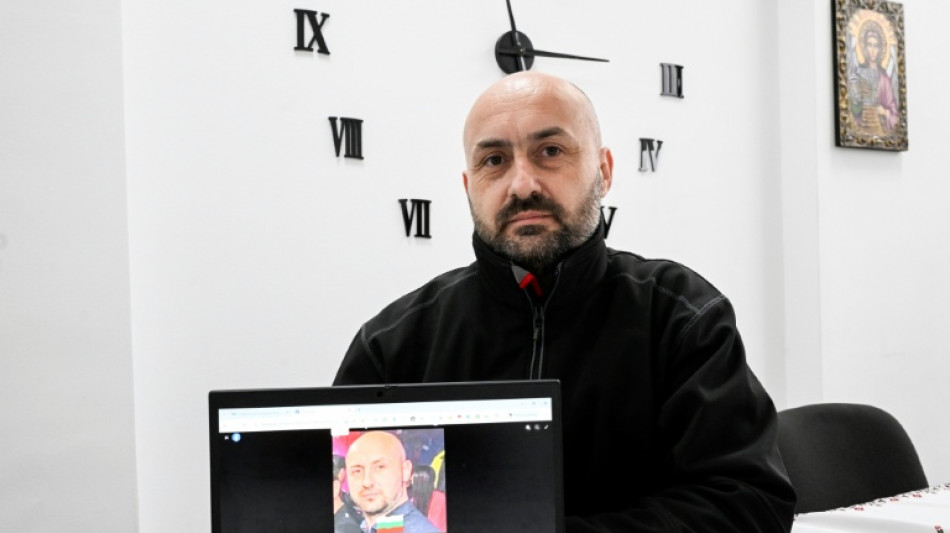
The Bulgarian mechanic Kremlin propaganda keeps killing / Photo: © AFP
 London
 16 °C
16 °C

 Manchester
14 °C
Manchester
14 °C
 Glasgow
 16 °C
16 °C
 Dublin
 14 °C
14 °C
 Belfast
14 °C
Belfast
14 °C
 Washington
22 °C
Washington
22 °C
 Denver
17 °C
Denver
17 °C
 Atlanta
 22 °C
22 °C
 Dallas
28 °C
Dallas
28 °C
 Houston Texas
25 °C
Houston Texas
25 °C
 New Orleans
23 °C
New Orleans
23 °C
 El Paso
21 °C
El Paso
21 °C
 Phoenix
28 °C
Phoenix
28 °C
 Los Angeles
18 °C
San Diego
20 °C
San Francisco
15 °C
Chicago
19 °C
Minneapolis
16 °C
Seattle
Los Angeles
18 °C
San Diego
20 °C
San Francisco
15 °C
Chicago
19 °C
Minneapolis
16 °C
Seattle
 13 °C
Portland
15 °C
Salt Lake City
21 °C
Las Vegas
28 °C
Miami
13 °C
Portland
15 °C
Salt Lake City
21 °C
Las Vegas
28 °C
Miami
 25 °C
Jacksonville
24 °C
San Antonio
25 °C
Jacksonville
24 °C
San Antonio
 26 °C
Bermuda
26 °C
Nassau
22 °C
Iqaluit
26 °C
Bermuda
26 °C
Nassau
22 °C
Iqaluit
 0 °C
Yellowknife
5 °C
Anchorage
10 °C
Fairbanks
6 °C
Barrow
-1 °C
Calgary
8 °C
Edmonton
23 °C
Winnipeg
7 °C
Goose Bay
12 °C
Halifax
19 °C
Boston
19 °C
Ottawa
14 °C
Toronto
15 °C
Detroit
15 °C
Cleveland
20 °C
New York
24 °C
Baltimore
23 °C
Philadelphia
23 °C
Nuuk (Godthåb)
3 °C
Hong Kong
0 °C
Yellowknife
5 °C
Anchorage
10 °C
Fairbanks
6 °C
Barrow
-1 °C
Calgary
8 °C
Edmonton
23 °C
Winnipeg
7 °C
Goose Bay
12 °C
Halifax
19 °C
Boston
19 °C
Ottawa
14 °C
Toronto
15 °C
Detroit
15 °C
Cleveland
20 °C
New York
24 °C
Baltimore
23 °C
Philadelphia
23 °C
Nuuk (Godthåb)
3 °C
Hong Kong
 28 °C
Singapore
32 °C
Melbourne
26 °C
Canberra
12 °C
Adelaide
17 °C
Darwin
29 °C
Perth
20 °C
Fort Worth
26 °C
Honolulu
26 °C
Sydney
17 °C
Johannesburg
17 °C
Dubai
39 °C
Mumbai
30 °C
Zürich
18 °C
Tokyo
24 °C
Seoul
28 °C
Singapore
32 °C
Melbourne
26 °C
Canberra
12 °C
Adelaide
17 °C
Darwin
29 °C
Perth
20 °C
Fort Worth
26 °C
Honolulu
26 °C
Sydney
17 °C
Johannesburg
17 °C
Dubai
39 °C
Mumbai
30 °C
Zürich
18 °C
Tokyo
24 °C
Seoul
 27 °C
Delhi
34 °C
Beijing
28 °C
Riyadh
41 °C
Prague
19 °C
Pennsylvania
22 °C
Valletta
24 °C
Manama
38 °C
Warsaw
19 °C
Stockholm
16 °C
27 °C
Delhi
34 °C
Beijing
28 °C
Riyadh
41 °C
Prague
19 °C
Pennsylvania
22 °C
Valletta
24 °C
Manama
38 °C
Warsaw
19 °C
Stockholm
16 °C
For almost a decade, Nikolay Gentchev has faced a strange question: "You're not dead, are you?"
A photo of the Bulgarian mechanic has been regularly published on pro-Russian sites claiming he was burned alive by a Ukrainian mob in Odesa in the aftermath of the protests that drove the country's last pro-Kremlin ruler from power in 2014.
"When they published my photo for the first time, my friends called me to ask if I was alive," he said.
But "I've never been to Odesa or Ukraine", Gentchev told AFP.
His picture has since been used as proof that Ukrainians hate or are hostile to Bulgaria and Bulgarians.
Despite Gentchev's repeated attempts since 2017 to put the record straight, the story and his photo continue to circulate on social media and in parts of the Bulgarian press.
It resurfaced again in a Facebook post shared by thousands in late November. "Do you remember the Bulgarian burned alive in Odesa on May 2, 2014 by people from Euromaidan and the Banderites?" the post said, referring to Ukraine's 2014 protest movement and admirers of Stepan Bandera, an Ukrainian nationalist leader who collaborated with the Nazis against the Soviets during World War II and has since become a figure symbolising the fight for independence in parts of Ukraine.
The disinformation has its roots in real deadly clashes between pro-Russian and pro-Ukrainian activists in the Black Sea port city in May 2014.
More than 40 people were killed in the violence, the vast majority in a fire at the Trade Unions House. Most of the dead were pro-Russians barricaded inside the building.
"The Odesa fire story is often used to portray Ukrainians as enemies of Bulgarians," said Nikola Tulechki, a disinformation expert at data analysis company Data for Good, as a part of the Kremlin's ongoing attempt to paint Ukrainians as Nazis.
"It fits into Russia's broader narrative about the 'liberation' of Ukraine from a fascist regime," he added. Indeed that was one of the arguments used by Vladimir Putin to justify his "special military operation" the night the invasion began in 2022.
- Russia's enduring influence -
Tulechki said Russian propaganda is everywhere in Bulgaria, repeated by politicians and influencers, and even in school history classes, playing on "extremely low levels of trust in Bulgarian society, a shared past and geographic and cultural proximity to Russia."
Once the staunchest of Soviet satellites where nostalgia for the good old days of communist rule is rife, the country is fertile ground for anti-Western narratives despite now being a member of NATO and the EU.
Indeed, being the victim of Russian disinformation has not stopped Gentchev sharing lots of pro-Kremlin talking points himself on social media, even blaming Ukraine for the invasion.
Nor is he particularly angry with Russian propagandists.
"Let's say they made a mistake, that the algorithm confused people," said the 42-year-old from the central town of Kazanlak, known for its arms factories and rose oil.
"I have recovered (though) it was really tough."
On Facebook, where he has 5,000 followers, Gentchev regularly shares anti-European and pro-Kremlin posts, often railing at "corrupt politicians".
Nor was he happy about Bulgaria finally joining the euro on January 1. It "was really absurd", he said. "In reality, we don't benefit from the EU."
Asked about the terrible human toll in Ukraine, Gentchev said: "I don't know, I wasn't there, I didn't see anything. You can't trust journalists."
His hometown of Kazanlak is kept afloat by Bulgaria's largest arms factory, which churns out ammunition largely for the Ukrainian army.
"If it's not us producing these weapons, someone else will," he said.
M.Stefanski--GL