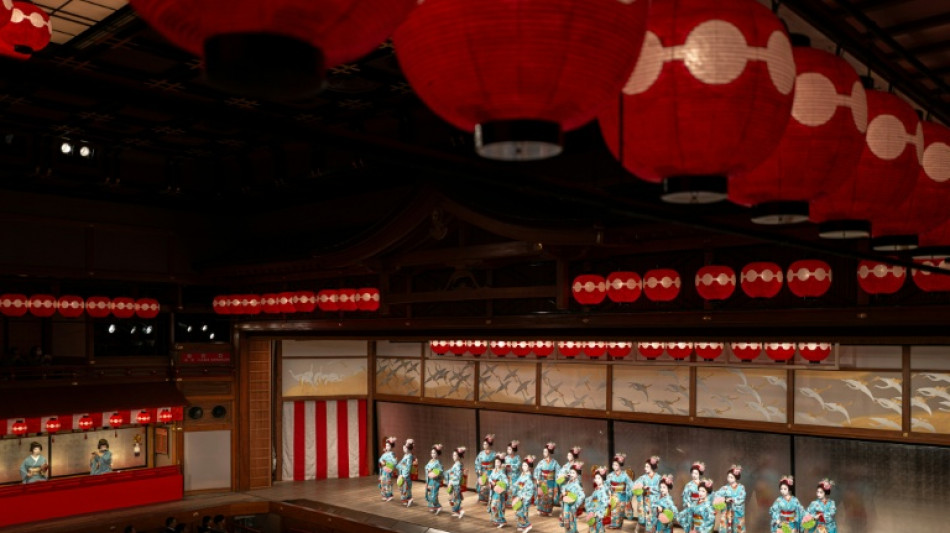
Geisha spectacle in Japan's Kyoto celebrates arrival of spring / Photo: © AFP

 London
 12 °C
12 °C

 Manchester
 13 °C
13 °C
 Glasgow
 14 °C
14 °C
 Dublin
14 °C
Dublin
14 °C
 Belfast
13 °C
Belfast
13 °C
 Washington
24 °C
Washington
24 °C
 Denver
23 °C
Denver
23 °C
 Atlanta
27 °C
Atlanta
27 °C
 Dallas
 34 °C
34 °C
 Houston Texas
29 °C
Houston Texas
29 °C
 New Orleans
28 °C
New Orleans
28 °C
 El Paso
30 °C
El Paso
30 °C
 Phoenix
 32 °C
32 °C
 Los Angeles
 23 °C
San Diego
22 °C
San Francisco
19 °C
Chicago
20 °C
Minneapolis
18 °C
Seattle
23 °C
Portland
28 °C
Salt Lake City
27 °C
Las Vegas
33 °C
Miami
27 °C
Jacksonville
23 °C
San Diego
22 °C
San Francisco
19 °C
Chicago
20 °C
Minneapolis
18 °C
Seattle
23 °C
Portland
28 °C
Salt Lake City
27 °C
Las Vegas
33 °C
Miami
27 °C
Jacksonville
 26 °C
San Antonio
31 °C
Bermuda
27 °C
Nassau
23 °C
Iqaluit
0 °C
Yellowknife
9 °C
Anchorage
14 °C
Fairbanks
11 °C
Barrow
1 °C
Calgary
19 °C
Edmonton
29 °C
Winnipeg
11 °C
Goose Bay
18 °C
Halifax
21 °C
Boston
23 °C
Ottawa
17 °C
Toronto
19 °C
Detroit
19 °C
Cleveland
22 °C
New York
26 °C
Baltimore
25 °C
Philadelphia
25 °C
Nuuk (Godthåb)
4 °C
Hong Kong
30 °C
Singapore
30 °C
Melbourne
27 °C
Canberra
15 °C
Adelaide
20 °C
Darwin
31 °C
Perth
19 °C
Fort Worth
33 °C
Honolulu
26 °C
San Antonio
31 °C
Bermuda
27 °C
Nassau
23 °C
Iqaluit
0 °C
Yellowknife
9 °C
Anchorage
14 °C
Fairbanks
11 °C
Barrow
1 °C
Calgary
19 °C
Edmonton
29 °C
Winnipeg
11 °C
Goose Bay
18 °C
Halifax
21 °C
Boston
23 °C
Ottawa
17 °C
Toronto
19 °C
Detroit
19 °C
Cleveland
22 °C
New York
26 °C
Baltimore
25 °C
Philadelphia
25 °C
Nuuk (Godthåb)
4 °C
Hong Kong
30 °C
Singapore
30 °C
Melbourne
27 °C
Canberra
15 °C
Adelaide
20 °C
Darwin
31 °C
Perth
19 °C
Fort Worth
33 °C
Honolulu
 28 °C
Sydney
22 °C
Johannesburg
12 °C
Dubai
31 °C
Mumbai
28 °C
Zürich
13 °C
Tokyo
23 °C
Seoul
26 °C
Delhi
25 °C
Beijing
28 °C
Sydney
22 °C
Johannesburg
12 °C
Dubai
31 °C
Mumbai
28 °C
Zürich
13 °C
Tokyo
23 °C
Seoul
26 °C
Delhi
25 °C
Beijing
 24 °C
Riyadh
26 °C
Prague
12 °C
Pennsylvania
23 °C
Valletta
26 °C
Manama
33 °C
Warsaw
11 °C
Stockholm
13 °C
24 °C
Riyadh
26 °C
Prague
12 °C
Pennsylvania
23 °C
Valletta
26 °C
Manama
33 °C
Warsaw
11 °C
Stockholm
13 °C
Against a backdrop of blooming cherry blossoms, a group of geishas elegantly shuffle onto a stage in Japan's Kyoto city to begin a centuries-old performance celebrating the arrival of spring.
Dressed in sky blue kimonos emblazoned with flowers, the dancers twist and twirl in unison in front of hundreds of spectators eager to see the annual "Miyako Odori" in the nation's spectacular ancient capital.
Geishas, known as geikos in Kyoto, and apprentices called maikos have been donning elaborate costumes and fluttering fans since the Miyako Odori -- or "capital city dance" -- first started in 1872.
"Just as cherry blossoms bloom when spring approaches, the Miyako Odori is a spring tradition in Kyoto," Kyoko Sugiura, head of the Yasaka Nyokoba Gakuen, a school for geishas in Kyoto's Gion district, told AFP.
In Japanese, the word geisha means "person of the arts", and can refer to a woman or man trained in traditional Japanese performing arts.
In the popular imagination geishas are often confused with courtesans but their work as trained masters of refined old artforms does not involve selling sex.
Their performances are usually small and private, and take place at high-class establishments which operate a no first-time customer policy.
"That's why it is often thought of as a very exclusive world," Sugiura said.
"But the Miyako Odori is a one-hour show in which geisha and maiko have the opportunity to showcase the arts they practise daily," she said.
"Anyone and everyone with a ticket can enjoy the show."
The Miyako Odori began soon after Kyoto hosted Japan's first national expo -- an effort to revitalise the western city following the relocation of the capital to Tokyo in 1869.
The format of the performance has not changed much, Sugiura explained, although the music and dance moves are sometimes switched up.
Maria Superata, a geisha expert who has worked with them as an interpreter, explained that the show "combines all of the traditional performing arts that you can see in Japan".
"For example, elements from kabuki (classical Japanese theatre), elements from traditional dance. So they have to act, they have to sing, they have to play the instruments, everything all in one," she said.
"That's why it's so special."
But the number of geishas, who once made a living through performing for Japan's wealthy elite, is in decline.
Superata said that fewer young Japanese want a life that demands huge discipline and comes with a strict practise schedule.
"Nowadays, young Japanese people... are not very interested that much in traditional art and in kimono."
Z.Kaczmarek--GL