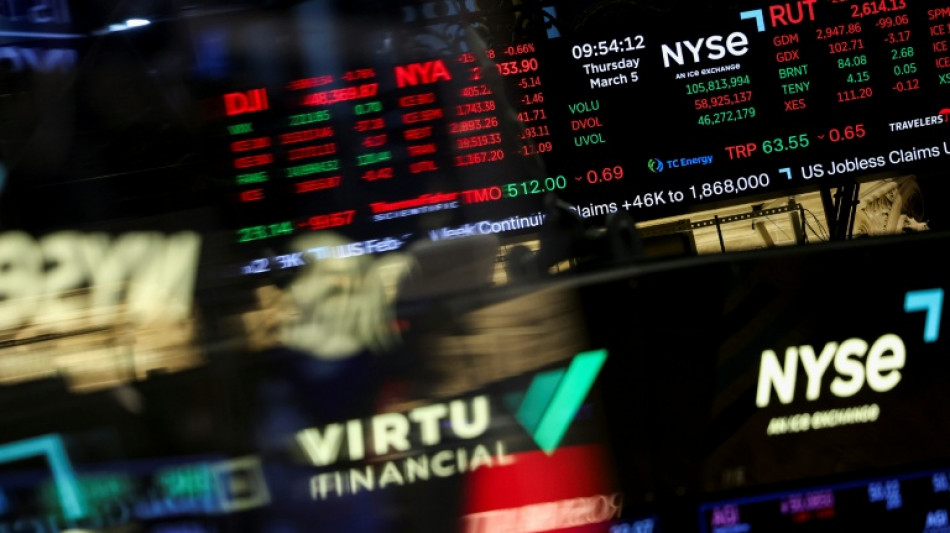
France to host G7 finance meeting on Mideast / Photo: © AFP

 London
 15 °C
15 °C
 Manchester
10 °C
Manchester
10 °C
 Glasgow
 15 °C
15 °C
 Dublin
 10 °C
10 °C
 Belfast
9 °C
Belfast
9 °C
 Washington
16 °C
Washington
16 °C
 Denver
23 °C
Denver
23 °C
 Atlanta
20 °C
Atlanta
20 °C
 Dallas
 31 °C
31 °C
 Houston Texas
29 °C
Houston Texas
29 °C
 New Orleans
28 °C
New Orleans
28 °C
 El Paso
29 °C
El Paso
29 °C
 Phoenix
33 °C
Phoenix
33 °C
 Los Angeles
26 °C
San Diego
25 °C
San Francisco
Los Angeles
26 °C
San Diego
25 °C
San Francisco
 15 °C
Chicago
16 °C
Minneapolis
19 °C
Seattle
15 °C
Chicago
16 °C
Minneapolis
19 °C
Seattle
 16 °C
Portland
21 °C
Salt Lake City
25 °C
Las Vegas
31 °C
Miami
27 °C
Jacksonville
23 °C
San Antonio
32 °C
Bermuda
27 °C
Nassau
16 °C
Portland
21 °C
Salt Lake City
25 °C
Las Vegas
31 °C
Miami
27 °C
Jacksonville
23 °C
San Antonio
32 °C
Bermuda
27 °C
Nassau
 16 °C
Iqaluit
0 °C
Yellowknife
4 °C
Anchorage
16 °C
Iqaluit
0 °C
Yellowknife
4 °C
Anchorage
 11 °C
Fairbanks
14 °C
Barrow
0 °C
Calgary
11 °C
Fairbanks
14 °C
Barrow
0 °C
Calgary
 12 °C
Edmonton
16 °C
Winnipeg
12 °C
Goose Bay
14 °C
Halifax
16 °C
Boston
14 °C
Ottawa
16 °C
Toronto
20 °C
Detroit
18 °C
Cleveland
17 °C
New York
16 °C
Baltimore
17 °C
Philadelphia
16 °C
Nuuk (Godthåb)
1 °C
Hong Kong
30 °C
Singapore
28 °C
Melbourne
23 °C
Canberra
15 °C
Adelaide
22 °C
Darwin
31 °C
Perth
17 °C
Fort Worth
30 °C
Honolulu
28 °C
Sydney
16 °C
Johannesburg
15 °C
Dubai
31 °C
Mumbai
26 °C
Zürich
13 °C
Tokyo
22 °C
Seoul
23 °C
Delhi
23 °C
Beijing
20 °C
Riyadh
29 °C
Prague
10 °C
Pennsylvania
17 °C
Valletta
23 °C
Manama
32 °C
Warsaw
10 °C
Stockholm
10 °C
12 °C
Edmonton
16 °C
Winnipeg
12 °C
Goose Bay
14 °C
Halifax
16 °C
Boston
14 °C
Ottawa
16 °C
Toronto
20 °C
Detroit
18 °C
Cleveland
17 °C
New York
16 °C
Baltimore
17 °C
Philadelphia
16 °C
Nuuk (Godthåb)
1 °C
Hong Kong
30 °C
Singapore
28 °C
Melbourne
23 °C
Canberra
15 °C
Adelaide
22 °C
Darwin
31 °C
Perth
17 °C
Fort Worth
30 °C
Honolulu
28 °C
Sydney
16 °C
Johannesburg
15 °C
Dubai
31 °C
Mumbai
26 °C
Zürich
13 °C
Tokyo
22 °C
Seoul
23 °C
Delhi
23 °C
Beijing
20 °C
Riyadh
29 °C
Prague
10 °C
Pennsylvania
17 °C
Valletta
23 °C
Manama
32 °C
Warsaw
10 °C
Stockholm
10 °C
France will host a video meeting of G7 finance ministers on the Middle East crisis on Monday, as the war fuels fears for the global economy.
The French finance ministry said in a statement the meeting at 1:30 pm (1230 GMT) would "review the situation in the Gulf from an economic point of view" and "events of recent days".
French finance minister Roland Lescure earlier told Franceinfo radio he had agreed with US Treasury Secretary Scott Bessent and other G7 finance ministers to hold the meeting over a week after the start of the US-Israel war against Iran.
The idea, he said, was "to see how the conflict develops, how the markets evolve". Finance ministers and the central bank governors of the member countries would attend, he added.
France holds the rotating presidency of the Group of Seven advanced economies, which also includes Canada, Germany, Italy, Japan, the United Kingdom and the United States.
A first meeting of finance ministers under the French presidency was held on January 27.
Lescure said next week's meeting was expected to be an exchange of views.
"We're going to listen to what is coming up from the ground, from businesses, from economists in these different parts of the world," he added.
"The idea is to be able to discuss the state of the situation, so that we can assess any responses that might be needed, if we have to act.
"In a conflict which is currently a local conflict in one region but has global repercussions, it is obviously essential that we coordinate."
- Fuel price increases -
The war sparked by the US-Israeli bombing of Iran launched on February 28 triggered a spike in crude oil and natural gas prices and a sharp fall in stock markets, particularly in Europe and Asia.
The talks will address the question of Iran's blockade of the Strait of Hormuz, which separates Iran from the United Arab Emirates and is a key route for maritime trade.
Nearly 20 percent of the world's crude oil and about 20 percent of liquefied natural gas (LNG) usually transit through the key shipping lane.
Investors are concerned about a sharp rise in oil and gas prices caused by disruptions to supplies.
They fear a resurgence of inflation, similar to the rise in prices triggered by Russia's full-scale invasion of Ukraine in 2022.
Iran's Revolutionary Guards claim they have "complete control" of the strategic waterway and warned that any vessels seeking to use it risk damage from missiles or stray drones.
But US President Donald Trump has said the US Navy was ready to escort tankers through the key shipping route.
- Oil prices up -
On Friday, the price of a barrel of West Texas Intermediate (WTI), the US reference, had jumped by more than 35.63 percent in a week to $90.90.
But on Sunday the US oil benchmark soared above $100 a barrel as trading opened.
WTI jumped 20 percent to around $109 a barrel, a level not seen since Russia launched its invasion of Ukraine in February 2022.
A barrel of Brent Crude, the international reference, was sitting around $110.
The price of gas has also shot up around 40 percent over the past week.
Frederik Ducrozet, chief economist at asset manager Pictet, said the G7 finance ministers and central bankers would likely issue a statement after the meeting to calm markets.
The meeting will also be an opportunity for G7 nations to find common ground in the face of diverging interests.
"One reading of what is currently ongoing is that the United States wants to increase its dominance in global fossil fuel markets," said Guntram Wolff, an economist at the Bruegel think tank.
"And so that's a certain division between Europe and the United States," he added.
burs-rl/yad/jj/rlp/jfx
R.Kozlowski--GL