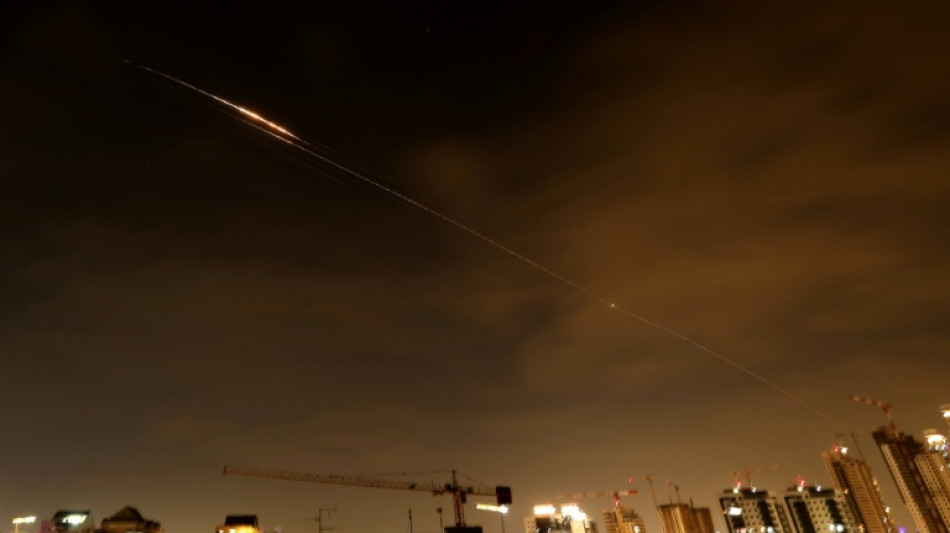
Mideast war threatens energy crisis worse than 1970s oil shocks / Photo: © AFP

 London
 17 °C
17 °C

 Manchester
12 °C
Manchester
12 °C
 Glasgow
 18 °C
18 °C
 Dublin
12 °C
Dublin
12 °C
 Belfast
12 °C
Belfast
12 °C
 Washington
 17 °C
17 °C
 Denver
29 °C
Denver
29 °C
 Atlanta
 27 °C
27 °C
 Dallas
35 °C
Dallas
35 °C
 Houston Texas
34 °C
Houston Texas
34 °C
 New Orleans
 31 °C
31 °C
 El Paso
32 °C
El Paso
32 °C
 Phoenix
36 °C
Phoenix
36 °C
 Los Angeles
31 °C
San Diego
26 °C
San Francisco
18 °C
Chicago
20 °C
Minneapolis
20 °C
Seattle
17 °C
Portland
23 °C
Salt Lake City
Los Angeles
31 °C
San Diego
26 °C
San Francisco
18 °C
Chicago
20 °C
Minneapolis
20 °C
Seattle
17 °C
Portland
23 °C
Salt Lake City
 28 °C
Las Vegas
33 °C
Miami
30 °C
Jacksonville
31 °C
San Antonio
36 °C
Bermuda
29 °C
Nassau
17 °C
Iqaluit
5 °C
Yellowknife
4 °C
Anchorage
10 °C
Fairbanks
12 °C
Barrow
28 °C
Las Vegas
33 °C
Miami
30 °C
Jacksonville
31 °C
San Antonio
36 °C
Bermuda
29 °C
Nassau
17 °C
Iqaluit
5 °C
Yellowknife
4 °C
Anchorage
10 °C
Fairbanks
12 °C
Barrow
 0 °C
Calgary
14 °C
Edmonton
26 °C
Winnipeg
19 °C
Goose Bay
14 °C
Halifax
16 °C
Boston
15 °C
Ottawa
19 °C
Toronto
24 °C
Detroit
23 °C
Cleveland
21 °C
New York
17 °C
Baltimore
17 °C
Philadelphia
17 °C
Nuuk (Godthåb)
3 °C
Hong Kong
29 °C
Singapore
25 °C
Melbourne
28 °C
Canberra
9 °C
Adelaide
12 °C
Darwin
25 °C
Perth
12 °C
Fort Worth
35 °C
Honolulu
28 °C
Sydney
13 °C
Johannesburg
17 °C
Dubai
0 °C
Calgary
14 °C
Edmonton
26 °C
Winnipeg
19 °C
Goose Bay
14 °C
Halifax
16 °C
Boston
15 °C
Ottawa
19 °C
Toronto
24 °C
Detroit
23 °C
Cleveland
21 °C
New York
17 °C
Baltimore
17 °C
Philadelphia
17 °C
Nuuk (Godthåb)
3 °C
Hong Kong
29 °C
Singapore
25 °C
Melbourne
28 °C
Canberra
9 °C
Adelaide
12 °C
Darwin
25 °C
Perth
12 °C
Fort Worth
35 °C
Honolulu
28 °C
Sydney
13 °C
Johannesburg
17 °C
Dubai
 32 °C
Mumbai
27 °C
Zürich
15 °C
Tokyo
22 °C
Seoul
17 °C
Delhi
32 °C
Mumbai
27 °C
Zürich
15 °C
Tokyo
22 °C
Seoul
17 °C
Delhi
 23 °C
Beijing
12 °C
Riyadh
34 °C
Prague
13 °C
Pennsylvania
17 °C
Valletta
24 °C
Manama
33 °C
Warsaw
12 °C
Stockholm
11 °C
23 °C
Beijing
12 °C
Riyadh
34 °C
Prague
13 °C
Pennsylvania
17 °C
Valletta
24 °C
Manama
33 °C
Warsaw
12 °C
Stockholm
11 °C
The world faces an energy crisis worse than both 1970s oil shocks combined if the Middle East war drags on, the head of the International Energy Agency warned Monday, as Israel launched fresh strikes on Tehran and threatened weeks more fighting.
As the war grinds into its fourth week, US President Donald Trump threatened to "obliterate" Iranian power plants if Iran failed to reopen the Strait of Hormuz within 48 hours -- setting an effective deadline of 23:44 GMT Monday.
Tehran has retaliated against US-Israeli assaults by throttling traffic in the vital waterway, conduit for a fifth of global crude oil, hitting energy sites and US embassies across the Gulf as well as firing missiles and drones at Israel.
The Islamic republic issued a firm response to the new ultimatum, with powerful parliament speaker Mohammad Bagher Ghalibaf vowing vital infrastructure across the region will be "irreversibly destroyed" if Trump acts on his threat.
In a stark warning over what lies ahead unless the fighting ends soon, IEA chief Fatih Birol said the world was losing more oil each day than the combined impact of both 1970s oil shocks and Russia's invasion of Ukraine.
"This crisis as things stand is now two oil crises and one gas crash put all together," Birol said.
"No country will be immune to the effects of this crisis if it continues to go in this direction."
At least 40 energy assets across the oil- and gas-exporting region have already been "severely or very severely damaged", Birol said, with oil prices driven above $100 a barrel over supply fears.
In recent days, Iran has allowed a handful of vessels from countries it considers friendly to pass through the Strait of Hormuz, but warned it would block ships from nations joining the "aggression" against it.
Oil prices rose again Monday while stocks tumbled after Trump and Iranian leaders traded threats -- and Israel said the Middle East war could last several more weeks.
Further sign of the real-world impact far beyond the region, a major Cambodian energy supplier said it would halt sales of liquefied petroleum gas due to war-linked supply disruptions.
- 'Weeks' more fighting -
Weighing in from Beijing, China's foreign ministry warned in response to Trump's latest threats that further fighting risks creating an "uncontrollable situation" in the Middle East.
But the US leader has offered varying timelines and objectives for the war, saying Friday he was considering "winding down" the operation -- only to later threaten Iran's power plants.
Israeli Prime Minister Benjamin Netanyahu has spoken of a long-term campaign against Iran's government, a state sponsor of Hamas, which launched the October 7, 2023 attack against Israel, triggering the war in Gaza.
Israel launched fresh strikes Monday at Iran on Monday, with an AFP journalist witnessing a thick column of black smoke rising above Tehran, while Israel's military urged people to take over as it worked to intercept missiles fired from Iran.
Israel has also expanded its ground campaign against Iran-backed Hezbollah in Lebanon, warning of a "weeks of fighting" in the country.
The violence in Lebanon has killed more than 1,000 people, according to the health ministry, with more than a million displaced.
Israeli forces were given orders to destroy bridges they said were used by Hezbollah to cross the key Litani river, 30 kilometres (20 miles) north of the border -- in what Lebanese President Joseph Aoun called "a dangerous escalation" seen as a prelude to a ground invasion.
- Iran takes toll in Israel -
Israel prides itself on its air defences, and Trump and Netanyahu both claim to have knocked out key Iranian military sites.
But Iranian missiles evaded the defences over the weekend to land in two southern towns, including Dimona, close to Israel's desert nuclear facility, injuring dozens on Saturday.
"We thought we were safe," Galit Amir, a 50-year-old care provider, told AFP in Dimona. "We didn't expect this."
Iran said it was retaliating against a hit on its own nuclear site at Natanz, but Israel's military said it was "not aware of a strike".
In Iran, at least 3,230 people have died in the war, including 1,406 civilians, according to the US-based Human Rights Activists News Agency. AFP is not able to access the sites of strikes nor independently verify tolls in Iran.
burs-ec/ser
I.Laskowski--GL