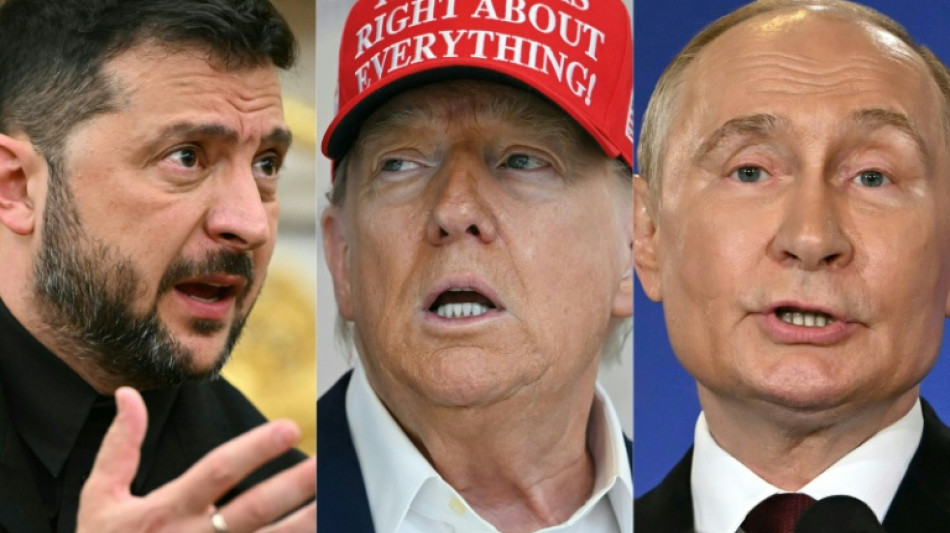
Zelensky says US mooted direct Ukraine-Russia talks on ending war in Miami / Photo: © AFP/File

 London
 19 °C
19 °C

 Manchester
20 °C
Manchester
20 °C
 Glasgow
20 °C
Glasgow
20 °C
 Dublin
18 °C
Dublin
18 °C
 Belfast
15 °C
Belfast
15 °C
 Washington
 20 °C
20 °C
 Denver
 16 °C
16 °C
 Atlanta
24 °C
Atlanta
24 °C
 Dallas
26 °C
Dallas
26 °C
 Houston Texas
26 °C
Houston Texas
26 °C
 New Orleans
27 °C
New Orleans
27 °C
 El Paso
 24 °C
24 °C
 Phoenix
25 °C
Phoenix
25 °C
 Los Angeles
18 °C
San Diego
18 °C
San Francisco
13 °C
Chicago
26 °C
Minneapolis
26 °C
Seattle
13 °C
Portland
13 °C
Salt Lake City
12 °C
Las Vegas
24 °C
Miami
27 °C
Jacksonville
Los Angeles
18 °C
San Diego
18 °C
San Francisco
13 °C
Chicago
26 °C
Minneapolis
26 °C
Seattle
13 °C
Portland
13 °C
Salt Lake City
12 °C
Las Vegas
24 °C
Miami
27 °C
Jacksonville
 24 °C
San Antonio
26 °C
Bermuda
26 °C
Nassau
24 °C
San Antonio
26 °C
Bermuda
26 °C
Nassau
 20 °C
Iqaluit
20 °C
Iqaluit
 10 °C
Yellowknife
21 °C
Anchorage
10 °C
Yellowknife
21 °C
Anchorage
 8 °C
Fairbanks
8 °C
Barrow
2 °C
Calgary
13 °C
Edmonton
22 °C
Winnipeg
17 °C
Goose Bay
18 °C
Halifax
16 °C
Boston
17 °C
Ottawa
20 °C
Toronto
20 °C
Detroit
26 °C
Cleveland
25 °C
New York
23 °C
Baltimore
20 °C
Philadelphia
21 °C
Nuuk (Godthåb)
5 °C
Hong Kong
28 °C
Singapore
29 °C
Melbourne
25 °C
Canberra
11 °C
Adelaide
13 °C
Darwin
26 °C
Perth
15 °C
Fort Worth
25 °C
Honolulu
25 °C
Sydney
15 °C
Johannesburg
20 °C
Dubai
34 °C
Mumbai
29 °C
Zürich
27 °C
Tokyo
26 °C
Seoul
28 °C
Delhi
43 °C
Beijing
29 °C
Riyadh
41 °C
Prague
26 °C
Pennsylvania
20 °C
Valletta
29 °C
Manama
35 °C
Warsaw
8 °C
Fairbanks
8 °C
Barrow
2 °C
Calgary
13 °C
Edmonton
22 °C
Winnipeg
17 °C
Goose Bay
18 °C
Halifax
16 °C
Boston
17 °C
Ottawa
20 °C
Toronto
20 °C
Detroit
26 °C
Cleveland
25 °C
New York
23 °C
Baltimore
20 °C
Philadelphia
21 °C
Nuuk (Godthåb)
5 °C
Hong Kong
28 °C
Singapore
29 °C
Melbourne
25 °C
Canberra
11 °C
Adelaide
13 °C
Darwin
26 °C
Perth
15 °C
Fort Worth
25 °C
Honolulu
25 °C
Sydney
15 °C
Johannesburg
20 °C
Dubai
34 °C
Mumbai
29 °C
Zürich
27 °C
Tokyo
26 °C
Seoul
28 °C
Delhi
43 °C
Beijing
29 °C
Riyadh
41 °C
Prague
26 °C
Pennsylvania
20 °C
Valletta
29 °C
Manama
35 °C
Warsaw
 29 °C
Stockholm
23 °C
29 °C
Stockholm
23 °C
Ukrainian President Volodymyr Zelensky said on Saturday that Washington had proposed the first face-to-face negotiations between Ukraine and Russia in half a year, as diplomats converged on Miami for fresh talks on ending the war.
Russian envoy Kirill Dmitriev said he was heading to Miami, while Ukrainian and European teams were also in the sunny American city for the negotiations, mediated by Donald Trump's envoy Steve Witkoff and the US president's son-in-law Jared Kushner.
"They proposed this format as far as I understand: Ukraine, America, Russia," Zelensky said, adding that the Europeans could be present and it would be "logical to hold such a joint meeting... after we understand the potential results of the meeting that has already taken place".
Trump's envoys have pushed a plan in which the United States would offer security guarantees to Ukraine, but Kyiv will likely be expected to surrender some territory, a prospect resented by many Ukrainians.
However, US Secretary of State Marco Rubio on Friday promised not to force Ukraine into any agreement, saying "there's no peace deal unless Ukraine agrees to it". He added that he may join the talks on Saturday in Miami, his hometown.
Dmitriev wrote in an X post that he was "on the way to Miami", adding a peace dove emoji and attaching a short video of a morning sun shining through clouds on a beach with palms.
"As warmongers keep working overtime to undermine the US peace plan for Ukraine, I remembered this video from my previous visit -- light breaking through the storm clouds," he added.
The last time Ukrainian and Russian envoys held official direct talks was in July in Istanbul, which led to prisoner swaps but little else in the way of concrete progress.
Russian and European involvement marks a step forward from before, when the Americans held separate negotiations with each side in different locations.
However, it is unlikely Dmitriev would hold direct talks with European negotiators as relations between the two sides remain extremely strained.
Moscow, which sent troops into Ukraine in February 2022, argues that Europe's involvement in the talks would only hinder the process and tends to paint the continent's leaders as pro-war.
- Russia presses on -
The weekend talks come after President Vladimir Putin vowed to press ahead with his military offensive in Ukraine, hailing Moscow's battlefield gains nearly four years into his war in an annual news conference on Friday.
Russia announced on Saturday it had captured two villages in Ukraine's Sumy and Donetsk regions, further grinding through the country's east in costly battles.
Putin however suggested that Russia could pause its devastating strikes on the country to allow Ukraine to hold a presidential ballot -- a prospect which his Ukrainian counterpart rejected.
"It is not Putin who decides when and in what format the elections in Ukraine will take place," said Zelensky, who also ruled out votes in territories occupied by Russia.
Meanwhile, the death toll in Ukraine's Black Sea Odesa region from an overnight Russian ballistic missile strike on port infrastructure rose to eight, with almost three dozen people wounded in the attack.
A civilian bus was struck in the attack, Ukrainian Prime Minister Yulia Svyrydenko said, adding the victims "were ordinary Ukrainians."
A series of intensified Russian strikes wrought havoc on the coastline region in recent weeks, hitting bridges and cutting electricity and heating for hundreds of thousands in freezing temperatures.
Moscow earlier said it will expand strikes on Ukrainian ports as retaliation for targeting its sanctions-busting oil tankers.
On Saturday, Ukraine claimed to have destroyed two Russian fighter jets at an airfield in occupied Crimea, according to the security service SBU. While Kyiv's army said it struck a Russian oil rig in the Caspian Sea as well as a patrol ship nearby.
Putin ordered a full-scale invasion of Ukraine in February 2022, describing it as a "special military operation" to demilitarise the country and prevent the expansion of NATO.
Kyiv and its European allies say the war, the largest and deadliest on European soil since World War II, is an unprovoked and illegal land grab that has resulted in a tidal wave of violence and destruction.
O.Kubiak--GL