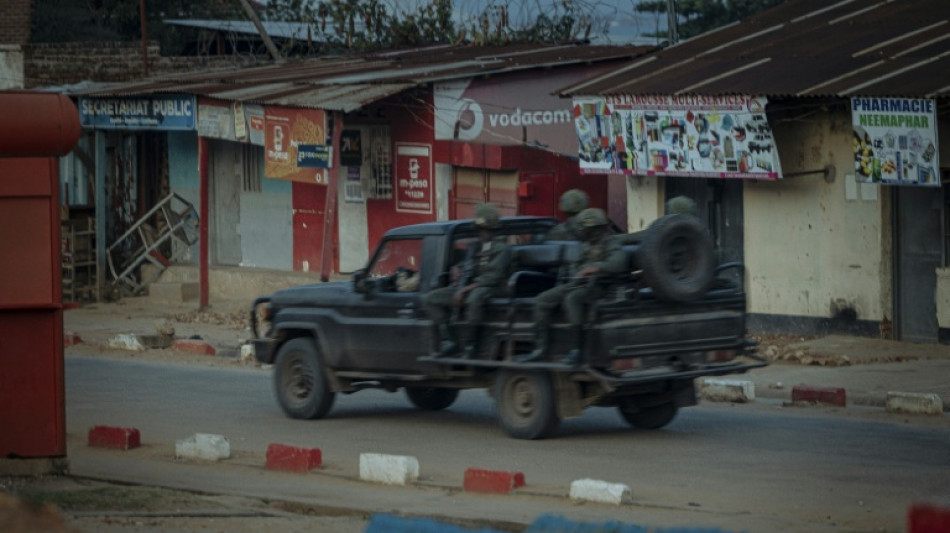
US slaps sanctions on Rwanda military over DR Congo 'violation' / Photo: © AFP/File

 London
 12 °C
12 °C

 Manchester
 13 °C
13 °C
 Glasgow
9 °C
Glasgow
9 °C
 Dublin
16 °C
Dublin
16 °C
 Belfast
15 °C
Belfast
15 °C
 Washington
 17 °C
17 °C
 Denver
 23 °C
23 °C
 Atlanta
21 °C
Atlanta
21 °C
 Dallas
26 °C
Dallas
26 °C
 Houston Texas
29 °C
Houston Texas
29 °C
 New Orleans
27 °C
New Orleans
27 °C
 El Paso
 26 °C
26 °C
 Phoenix
36 °C
Phoenix
36 °C
 Los Angeles
 29 °C
San Diego
27 °C
San Francisco
19 °C
Chicago
17 °C
Minneapolis
14 °C
Seattle
18 °C
Portland
24 °C
Salt Lake City
23 °C
Las Vegas
35 °C
Miami
29 °C
Jacksonville
23 °C
San Antonio
28 °C
Bermuda
26 °C
Nassau
18 °C
Iqaluit
0 °C
Yellowknife
5 °C
Anchorage
29 °C
San Diego
27 °C
San Francisco
19 °C
Chicago
17 °C
Minneapolis
14 °C
Seattle
18 °C
Portland
24 °C
Salt Lake City
23 °C
Las Vegas
35 °C
Miami
29 °C
Jacksonville
23 °C
San Antonio
28 °C
Bermuda
26 °C
Nassau
18 °C
Iqaluit
0 °C
Yellowknife
5 °C
Anchorage
 8 °C
Fairbanks
3 °C
Barrow
-8 °C
Calgary
11 °C
Edmonton
20 °C
Winnipeg
11 °C
Goose Bay
12 °C
Halifax
11 °C
Boston
14 °C
Ottawa
11 °C
Toronto
12 °C
Detroit
15 °C
Cleveland
13 °C
New York
19 °C
Baltimore
17 °C
Philadelphia
18 °C
Nuuk (Godthåb)
1 °C
Hong Kong
28 °C
Singapore
8 °C
Fairbanks
3 °C
Barrow
-8 °C
Calgary
11 °C
Edmonton
20 °C
Winnipeg
11 °C
Goose Bay
12 °C
Halifax
11 °C
Boston
14 °C
Ottawa
11 °C
Toronto
12 °C
Detroit
15 °C
Cleveland
13 °C
New York
19 °C
Baltimore
17 °C
Philadelphia
18 °C
Nuuk (Godthåb)
1 °C
Hong Kong
28 °C
Singapore
 29 °C
Melbourne
24 °C
Canberra
20 °C
Adelaide
17 °C
Darwin
30 °C
Perth
18 °C
Fort Worth
26 °C
Honolulu
27 °C
Sydney
23 °C
Johannesburg
13 °C
Dubai
31 °C
Mumbai
30 °C
Zürich
10 °C
Tokyo
22 °C
Seoul
21 °C
Delhi
26 °C
Beijing
16 °C
Riyadh
28 °C
Prague
8 °C
Pennsylvania
13 °C
Valletta
25 °C
Manama
32 °C
Warsaw
12 °C
Stockholm
12 °C
29 °C
Melbourne
24 °C
Canberra
20 °C
Adelaide
17 °C
Darwin
30 °C
Perth
18 °C
Fort Worth
26 °C
Honolulu
27 °C
Sydney
23 °C
Johannesburg
13 °C
Dubai
31 °C
Mumbai
30 °C
Zürich
10 °C
Tokyo
22 °C
Seoul
21 °C
Delhi
26 °C
Beijing
16 °C
Riyadh
28 °C
Prague
8 °C
Pennsylvania
13 °C
Valletta
25 °C
Manama
32 °C
Warsaw
12 °C
Stockholm
12 °C
The United States said Monday it was imposing sanctions on Rwanda's military, taking action against the longtime partner which it accused of violating a peace agreement in the Democratic Republic of Congo.
The mineral-rich east of DRC has seen decades of conflict, but violence dramatically flared last year when the Rwandan-backed M23 group made huge gains, capturing strategic mines and towns, and displacing thousands.
President Donald Trump in December brought together the leaders of Rwanda and the DRC to sign a peace deal, predicting a "great miracle" -- but just days afterward, the State Department noted, the M23 captured the key city of Uvira in the DRC.
The United States said it was imposing sanctions against the Rwanda Defence Force (RDF) and four officers including the army chief of staff, Vincent Nyakarundi, saying they were critical to M23 gains.
"M23, a US- and UN-sanctioned entity, is responsible for horrific human rights abuses, including summary executions and violence against civilians, including women and children," State Department spokesman Tommy Pigott said.
"The continued backing from the RDF and its senior leadership has enabled M23 to capture DRC sovereign territory and continue these grave abuses," he said in a statement.
"As President Trump has made clear, the United States is prepared to use all available tools to ensure the DRC and Rwanda deliver on the promises of this historic agreement."
Trump had earlier sounded positive about working with Rwandan President Paul Kagame, a veteran leader who has also been willing to take in migrants deported from the United States, a top political goal for Trump.
The December peace deal had been hailed by Trump as a way to secure critical minerals from the DRC.
The sanctions will block any assets that the RDF or the four officers hold in the United States and criminalise any financial transactions with them.
In a separate statement, Secretary of the Treasury Scott Bessent said the US expected "the immediate withdrawal of Rwanda Defence Force troops, weapons, and equipment".
It noted that the RDF had "provided direct operational support to M23 and its affiliates", including advanced weaponry such as GPS jamming systems, air defence equipment, and drones.
"Thousands of RDF troops are deployed across eastern DRC, where they actively engage in combat operations and facilitate M23's control of territory," the statement added.
- Self-reliance -
As calls in the US grew over sanctions in February, Kagame had urged Rwanda to be more self-reliant, calling it his country's "main priority".
The tiny Great Lakes nation has insisted it is only involved in the eastern DRC to help protect against an enemy militia formed from the remnants of those who committed the 1994 Rwandan genocide, denying direct military involvement despite considerable evidence from United Nations observers and others.
In turn, it has demanded that the Kinshasa government clamp down on Hutu militants from the genocide, who targeted Tutsis and moderate Hutus.
Outmatched on the ground by the better-equipped M23 and Rwandan troops, Kinshasa's forces have relied in part on US pressure on Kigali to stabilise the front line, regional specialists and security sources told AFP.
Last month it launched an attack against M23 near the mining town of Rubaya. The nearby mine produces 15 to 30 percent of the world's supply of coltan, key to making electronics like laptops and mobile phones.
L.Sawicki--GL