 London
 11 °C
11 °C

 Manchester
 11 °C
11 °C
 Glasgow
 Dublin
 Belfast
 Washington
 20 °C
20 °C
 Denver
 Atlanta
 Dallas
 31 °C
31 °C
 Houston Texas
 New Orleans
 El Paso
 Phoenix
 Los Angeles
 21 °C
21 °C
 19 °C
19 °C
 0 °C
0 °C
 8 °C
8 °C
 24 °C
24 °C
Trump demands say on Iran's next leader as Mideast war spirals
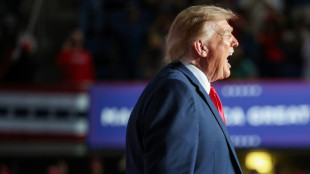
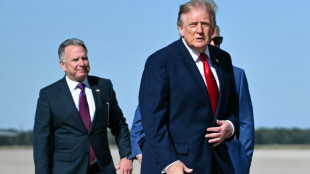
US President Donald Trump insisted on Thursday that he have a say in picking Iran's next supreme leader, as the war triggered by the US-Israeli campaign that killed Ayatollah Ali Khamenei reverberated throughout the Middle East and beyond.
Earlier, Israel issued an unprecedented evacuation warning for the entirety of Beirut's southern suburbs, a stronghold of Iran-backed Hezbollah, sending residents fleeing in a panic from the district of hundreds of thousands of people.
That warning followed a fresh wave of Israeli attacks on Iran, which again lashed out at Gulf nations.
The war has drawn in global powers, snarling shipping and rattling energy markets. It has been felt as far away as the Sri Lankan coast, where a US submarine torpedoed an Iranian warship, and Azerbaijan, which threatened retaliation after a drone hit an airport.
Trump on Thursday rejected the possibility of Khamenei's son, Mojtaba Khamenei, replacing his slain father as supreme leader, dismissing the younger man as a "lightweight".
"I have to be involved in the appointment, like with Delcy," Trump told Axios in an interview, drawing a comparison to Venezuela, where interim president Delcy Rodriguez has cooperated with him under threat of violence after the United States ousted her boss, Nicolas Maduro.
"Khamenei's son is unacceptable to me. We want someone that will bring harmony and peace to Iran," Trump was quoted saying, threatening more war in the future if a better alternative was not found.
The remarks suggest a willingness to work with someone from within the Islamic republic rather than toppling the government entirely, despite Trump's repeated exhortations for Iranians to rise up and take back their country.
- Beirut warning -
Lebanon was dragged into the widening conflict on Monday, when the Iran-backed militant group Hezbollah attacked Israel to avenge the killing of Khamenei.
Israel responded with air strikes and sent ground troops into some Lebanese border villages. It told residents of a large area of south Lebanon to leave in anticipation of military operations there.
In a message on Thursday to the residents of Beirut's southern suburbs, known as Dahiyeh, an Israeli military spokesman said: "Save your lives and evacuate your residences immediately."
Such warnings typically foreshadow large-scale attacks, and massive traffic jams formed on the outskirts of the suburbs, as people fired guns in the air, urging locals to leave as soon as possible.
On a Beirut beach, hundreds of families, many of them scared and angry, milled around after fleeing in haste, having nowhere else to go.
"We fled from the suburbs, we were humiliated," one man told AFP, refusing to give his name.
"We'll sleep on the road tonight and God alone knows what will happen to us."
Lebanese President Joseph Aoun asked his French counterpart Emmanuel Macron to intercede with Israel to prevent the bombing of south Beirut.
"At this moment of great danger, I call on the Israeli Prime Minister (Benjamin Netanyahu) not to expand the war to Lebanon," Macron said after the conversation.
Earlier in the day, Israel said its forces had hit "several command centres belonging to the Hezbollah terrorist organisation" in south Beirut.
Lebanese authorities say at least 102 people have been killed, 638 wounded and at least 90,000 displaced from their homes since Monday.
- From Sri Lanka to Azerbaijan -
On Iran's borders, neighbour Azerbaijan warned a drone attack on an airport "will not go unanswered", raising fears of another country entering the war.
Iran denied being behind the strike and blamed Israel, but that did not stop Azerbaijani President Ilham Aliyev from accusing Tehran of "terrorism".
Australia deployed two military aircraft to the theatre while Canada's Prime Minister Mark Carney said he could not rule out his armed forces taking part.
The war has also dragged in NATO member Turkey after alliance air defences destroyed a missile launched from Iran heading towards Turkish airspace.
A Turkish official said the missile appeared to have been aimed at a British base in Cyprus, but Turkey nonetheless summoned the Iranian ambassador over the incident.
Following fresh strikes on the Iranian capital, AFPTV images showed blackened vehicles and mangled buildings, with smoke still rising from some.
A 30-year-old Tehran resident told AFP: "We're going through a very important page of our history and I'm not afraid."
"Hope is the only thing that we have right now."
An Iranian state-run foundation said the death toll from US and Israeli strikes on the Islamic republic has risen to 1,230, a toll AFP could not independently verify.
The country is effectively cut off from the rest of the world, with the internet operating at around one percent of capacity, according to the Netblocks monitor.
AFP reporters in Jerusalem, meanwhile, heard explosions following warnings of incoming Iranian missile fire.
- 'We will not surrender' -
The conflict has not spared the rich Gulf monarchies, usually seen as a safe haven in a volatile region, as Iran has lashed out at cities and energy infrastructure.
Thirteen people, seven of them civilians, have been killed in countries around the Gulf since the war began, including an 11-year-old girl in Kuwait.
Qatar said Thursday it was intercepting an incoming missile attack as loud blasts, described by AFP journalists as the most intense yet, reverberated across Doha, where a thick column of black smoke billowed across the horizon.
Falling debris from an intercepted drone also injured six people in Emirati capital Abu Dhabi, officials said.
In Bahrain, an Iranian missile strike sparked a blaze at the main state-owned oil refinery, which was later contained, the Gulf country's communications centre said.
And some Western diplomats in the Saudi capital Riyadh, meanwhile, said they were told on Thursday to shelter in place, while a witness said the diplomatic quarter in the city had been closed off.
burs-smw/jsa
N.Wasilewski--GL