French aid worker killed in DR Congo air strike / Photo: © AFP

 London
 13 °C
13 °C

 Manchester
 11 °C
11 °C
 Glasgow
 11 °C
11 °C
 Dublin
12 °C
Dublin
12 °C
 Belfast
10 °C
Belfast
10 °C
 Washington
 26 °C
26 °C
 Denver
26 °C
Denver
26 °C
 Atlanta
28 °C
Atlanta
28 °C
 Dallas
30 °C
Dallas
30 °C
 Houston Texas
32 °C
Houston Texas
32 °C
 New Orleans
 28 °C
28 °C
 El Paso
24 °C
El Paso
24 °C
 Phoenix
34 °C
Phoenix
34 °C
 Los Angeles
29 °C
San Diego
28 °C
San Francisco
21 °C
Chicago
22 °C
Minneapolis
18 °C
Seattle
13 °C
Portland
17 °C
Salt Lake City
26 °C
Las Vegas
31 °C
Miami
32 °C
Jacksonville
27 °C
San Antonio
30 °C
Bermuda
26 °C
Nassau
23 °C
Iqaluit
Los Angeles
29 °C
San Diego
28 °C
San Francisco
21 °C
Chicago
22 °C
Minneapolis
18 °C
Seattle
13 °C
Portland
17 °C
Salt Lake City
26 °C
Las Vegas
31 °C
Miami
32 °C
Jacksonville
27 °C
San Antonio
30 °C
Bermuda
26 °C
Nassau
23 °C
Iqaluit
 0 °C
Yellowknife
4 °C
Anchorage
5 °C
Fairbanks
-5 °C
Barrow
-11 °C
Calgary
9 °C
Edmonton
28 °C
Winnipeg
14 °C
Goose Bay
17 °C
Halifax
22 °C
Boston
22 °C
Ottawa
16 °C
Toronto
18 °C
Detroit
20 °C
Cleveland
20 °C
New York
24 °C
Baltimore
26 °C
Philadelphia
25 °C
Nuuk (Godthåb)
2 °C
Hong Kong
28 °C
Singapore
0 °C
Yellowknife
4 °C
Anchorage
5 °C
Fairbanks
-5 °C
Barrow
-11 °C
Calgary
9 °C
Edmonton
28 °C
Winnipeg
14 °C
Goose Bay
17 °C
Halifax
22 °C
Boston
22 °C
Ottawa
16 °C
Toronto
18 °C
Detroit
20 °C
Cleveland
20 °C
New York
24 °C
Baltimore
26 °C
Philadelphia
25 °C
Nuuk (Godthåb)
2 °C
Hong Kong
28 °C
Singapore
 28 °C
Melbourne
29 °C
Canberra
6 °C
Adelaide
23 °C
Darwin
27 °C
Perth
14 °C
Fort Worth
29 °C
Honolulu
26 °C
Sydney
11 °C
Johannesburg
21 °C
Dubai
36 °C
Mumbai
28 °C
Melbourne
29 °C
Canberra
6 °C
Adelaide
23 °C
Darwin
27 °C
Perth
14 °C
Fort Worth
29 °C
Honolulu
26 °C
Sydney
11 °C
Johannesburg
21 °C
Dubai
36 °C
Mumbai
 32 °C
Zürich
12 °C
Tokyo
18 °C
Seoul
11 °C
Delhi
27 °C
Beijing
11 °C
Riyadh
35 °C
Prague
13 °C
Pennsylvania
23 °C
Valletta
26 °C
Manama
33 °C
Warsaw
18 °C
Stockholm
13 °C
32 °C
Zürich
12 °C
Tokyo
18 °C
Seoul
11 °C
Delhi
27 °C
Beijing
11 °C
Riyadh
35 °C
Prague
13 °C
Pennsylvania
23 °C
Valletta
26 °C
Manama
33 °C
Warsaw
18 °C
Stockholm
13 °C
A French aid worker for the UN children's agency has been killed in an air strike in the eastern Democratic Republic of Congo in a city controlled by the Rwanda-backed M23 militia.
Since taking up arms again in 2021, the M23 has seized swathes of the mineral-rich Congolese east with Rwanda's backing, unleashing a fresh spiral of violence in a region long plagued by fighting.
Despite Rwanda and the DRC signing a peace deal at US President Donald Trump's urging in early December, in the latest attempt to end the conflict, clashes between the M23 and Congolese army have continued.
Humanitarian sources reported that several buildings had been targeted in the overnight strikes and several people killed. AFP was not able to establish a toll or the origin of the strikes.
The Congolese army, which is stationed some several hundred kilometres from Goma, regularly launches long-range drone strikes on the M23's positions in the east.
According to security sources, the M23 likewise makes use of explosive drones at the front.
The sound of bomb blasts and buzzing drones rang out in several residential neighbourhoods of Goma, a large provincial capital near the border with Rwanda which the M23 seized in a lightning offensive in early 2025, witnesses said.
"A French UNICEF humanitarian worker has been killed in Goma. I extend the nation's support and sympathy to her family, loved ones and colleagues," French President Emmanuel Macron said on X, urging "respect for humanitarian law and for the personnel who are on the ground and committed to saving lives".
- House hit -
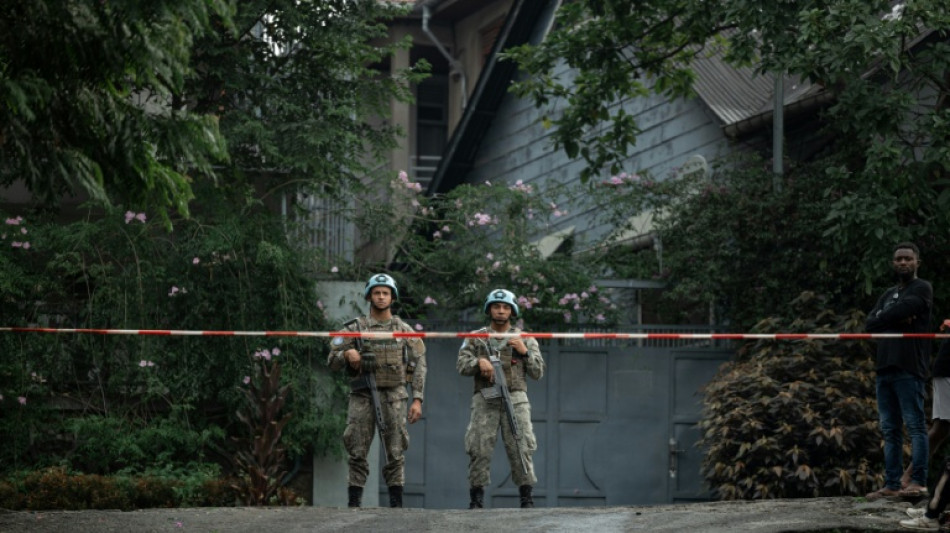
Humanitarian sources and rescuers at the site told AFP that the French woman was killed during the night by a strike on a house where she was staying.
The building is in Himbi, a residential neighbourhood of Goma on the shores of Lake Kivu where many expatriates, staff members and headquarters of humanitarian organisations are based.
Large residences in the area were requisitioned by M23 leaders after they seized the city.
Security sources contacted by AFP said they believed the strikes were targeting officials or allies of the armed group and that the house where the aid worker was staying was hit by mistake.
A humanitarian worker who was near the house during the strike told AFP he heard two explosions: the first was preceded by the sound of drones, then a second one, followed by the sound of a drone moving away from the site.
Firefighters, United Nations employees and officials from the M23 were present at the site early on Wednesday.
The house was severely damaged, partially burnt and its roof destroyed.
The walls and furniture appeared riddled with tiny marks.
Colleagues and those close to the French aid worker emotionally had gathered at the site.
No debris of a drone or projectile has yet been identified, emergency teams said.
- Key minerals -
For three decades, the mineral-rich Congolese east has been riven by fighting between dozens of armed groups, with foreign armies wading in from time to time.
A half-dozen ceasefires hoping to end the M23 conflict have been brokered before being broken in short order.
In early March, the M23 announced the death of one of its spokesmen, Willy Ngoma, in a drone strike near the Rubaya mine in North Kivu province.
The Rubaya mine is under the M23's control and a key source of revenue for the armed group, which taxes the extraction of and trade in minerals on its patch.
UN experts believe Rwanda uses the M23 as a tool to control the Congolese east's rich veins of critical minerals, notably the coltan key to the manufacture of mobile phones and electric car batteries.
At the beginning of March, the United States announced sanctions against the Rwandan army as a result of its support for the M23.
While denying offering the M23 military backing, Rwanda insists that it faces an existential threat from the presence in the eastern DRC of armed groups linked to the 1994 Rwandan genocide of the Tutsis.
O.Lis--GL