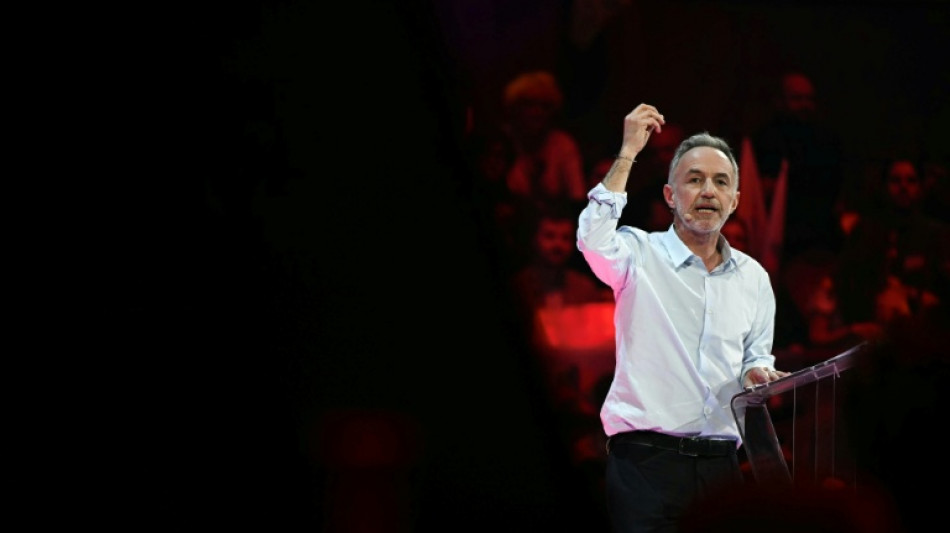
Left leads in Paris, far right eyes gains in France local polls: projections / Photo: © AFP

 London
 14 °C
14 °C

 Manchester
 14 °C
14 °C
 Glasgow
13 °C
Glasgow
13 °C
 Dublin
 11 °C
11 °C
 Belfast
12 °C
Belfast
12 °C
 Washington
 18 °C
18 °C
 Denver
14 °C
Denver
14 °C
 Atlanta
18 °C
Atlanta
18 °C
 Dallas
20 °C
Dallas
20 °C
 Houston Texas
24 °C
Houston Texas
24 °C
 New Orleans
24 °C
New Orleans
24 °C
 El Paso
18 °C
El Paso
18 °C
 Phoenix
 28 °C
28 °C
 Los Angeles
23 °C
San Diego
22 °C
San Francisco
Los Angeles
23 °C
San Diego
22 °C
San Francisco
 14 °C
Chicago
14 °C
Minneapolis
9 °C
Seattle
11 °C
Portland
11 °C
Salt Lake City
18 °C
Las Vegas
24 °C
Miami
28 °C
Jacksonville
25 °C
San Antonio
19 °C
Bermuda
27 °C
Nassau
17 °C
Iqaluit
14 °C
Chicago
14 °C
Minneapolis
9 °C
Seattle
11 °C
Portland
11 °C
Salt Lake City
18 °C
Las Vegas
24 °C
Miami
28 °C
Jacksonville
25 °C
San Antonio
19 °C
Bermuda
27 °C
Nassau
17 °C
Iqaluit
 1 °C
Yellowknife
1 °C
Yellowknife
 3 °C
Anchorage
5 °C
Fairbanks
-4 °C
Barrow
-9 °C
Calgary
4 °C
Edmonton
15 °C
Winnipeg
7 °C
Goose Bay
14 °C
Halifax
18 °C
Boston
16 °C
Ottawa
12 °C
Toronto
13 °C
Detroit
13 °C
Cleveland
14 °C
New York
16 °C
Baltimore
18 °C
Philadelphia
17 °C
Nuuk (Godthåb)
2 °C
Hong Kong
25 °C
Singapore
30 °C
Melbourne
26 °C
Canberra
9 °C
Adelaide
21 °C
Darwin
28 °C
Perth
15 °C
Fort Worth
18 °C
Honolulu
25 °C
Sydney
12 °C
Johannesburg
27 °C
Dubai
37 °C
Mumbai
34 °C
Zürich
14 °C
Tokyo
20 °C
Seoul
15 °C
Delhi
31 °C
Beijing
14 °C
Riyadh
39 °C
Prague
21 °C
Pennsylvania
16 °C
Valletta
28 °C
Manama
36 °C
Warsaw
20 °C
Stockholm
14 °C
3 °C
Anchorage
5 °C
Fairbanks
-4 °C
Barrow
-9 °C
Calgary
4 °C
Edmonton
15 °C
Winnipeg
7 °C
Goose Bay
14 °C
Halifax
18 °C
Boston
16 °C
Ottawa
12 °C
Toronto
13 °C
Detroit
13 °C
Cleveland
14 °C
New York
16 °C
Baltimore
18 °C
Philadelphia
17 °C
Nuuk (Godthåb)
2 °C
Hong Kong
25 °C
Singapore
30 °C
Melbourne
26 °C
Canberra
9 °C
Adelaide
21 °C
Darwin
28 °C
Perth
15 °C
Fort Worth
18 °C
Honolulu
25 °C
Sydney
12 °C
Johannesburg
27 °C
Dubai
37 °C
Mumbai
34 °C
Zürich
14 °C
Tokyo
20 °C
Seoul
15 °C
Delhi
31 °C
Beijing
14 °C
Riyadh
39 °C
Prague
21 °C
Pennsylvania
16 °C
Valletta
28 °C
Manama
36 °C
Warsaw
20 °C
Stockholm
14 °C
A Socialist candidate was leading in Paris while the far right looked strong in several southern cities as projections arrived from first-round local elections Sunday, seen as a political barometer ahead of France's presidential polls.
According to initial results, a centrist touted as a strong contender for the 2027 presidential race, Edouard Philippe, was well-placed to remain mayor in the northern city of Le Havre in a second-round local election in a week's time.
The former prime minister, seen as one of the best candidates to take on the far-right National Rally (RN) party in next year's presidential contest, had made his re-election in the port city a prerequisite of his 2027 campaign.
Analysts see the local races as an early indicator of key trends and patterns of tactical voting ahead of the presidential showdown.
The RN views next year's contest as its strongest chance yet to take power, with centrist President Emmanuel Macron stepping down after the maximum two terms in office.
The elections in around 35,000 villages, towns and city boroughs are held over two rounds on consecutive Sundays.
In more than 90 percent of communes, the mayor was expected to be elected in the first round.
But races in many bigger cities will go into second rounds, with politicians on Sunday evening already moving to make cross-party alliances against their key opponents.
In Paris, Socialist candidate Emmanuel Gregoire was in the lead ahead of former culture minister Rachida Dati, projections from two pollsters indicated.
Right-wing Dati is hoping to wrest control of the city from the left, which has run the French capital for the last quarter-century.
- 'Change won't wait' -
The RN sees the local elections as an opportunity to show it can govern at the local level.
The far-right mayor of Perpignan was re-elected with 50.61 percent of the vote, according to official results. The city of some 100,000 inhabitants is the largest city so far under control of the anti-immigration party.
In France's second largest city of more than 800,000, Marseille, an incumbent left-wing mayor was neck to neck with a far-right candidate.
In Nice, France's fifth biggest city of some 350,000, an ally of the far-right enjoyed a lead of around ten points, according to estimates.
The far-right party's candidate was also in the lead in the southern city of Toulon -- an urban centre of more than 150,000 people -- ahead of the incumbent mayor, projections showed.
"Change won't wait for 2027. It starts next Sunday. It starts in seven days," RN leader Jordan Bardella told supporters.
He also claimed "several outgoing mayors" from the party were re-elected in the first round.
Historically, France's major cities have been governed either by centre-left parties or the right-wing Republicans.
By contrast, the RN, far-left firebrand Jean‑Luc Melenchon's party and President Emmanuel Macron's centrists have struggled to establish a strong local footprint.
In the northern town of Roubaix, a hard-left candidate had a strong lead with 45 percent of the vote.
If he were to win in the second round, the town of some 98,000 people would become the largest city run by Melenchon's party.
- 'We must offer hope' -
Pollsters said turnout on Sunday was the country's lowest, other than the last local polls in 2020 held during the Covid pandemic.
According to estimates from several polling organisations, overall turnout stood at between 56 percent and 58.5 percent, compared to 63.55 percent at the equivalent elections in 2014.
The year 2020 aside, "we have reached a record low", Francois Kraus of the IFOP polling institute told AFP.
Alliances against the far right next week could be tricky, with several leftist leaders refusing to ally with the hard-left after the killing last month of a far-right activist blamed on the hard left.
"From next Sunday, we can -- and must -- offer new hope for 2027," Socialist party leader Olivier Faure said.
Divisive hard-left leader Melenchon said the party urged the left to take up "the outstretched hand" of his party to defeat the hard right.
Bardella called on centre-right politicians to join forces with the RN.
While local elections are traditionally depoliticised in small rural constituencies, the final results will nonetheless provide a snapshot of the country's mood, political scientist Nonna Mayer said in the lead-up to the first round.
"In large towns, national issues will matter more, and they can give some hints on the electoral dynamic of the main parties," Mayer told AFP.
burs-ah-as/ceg
W.Mroz--GL