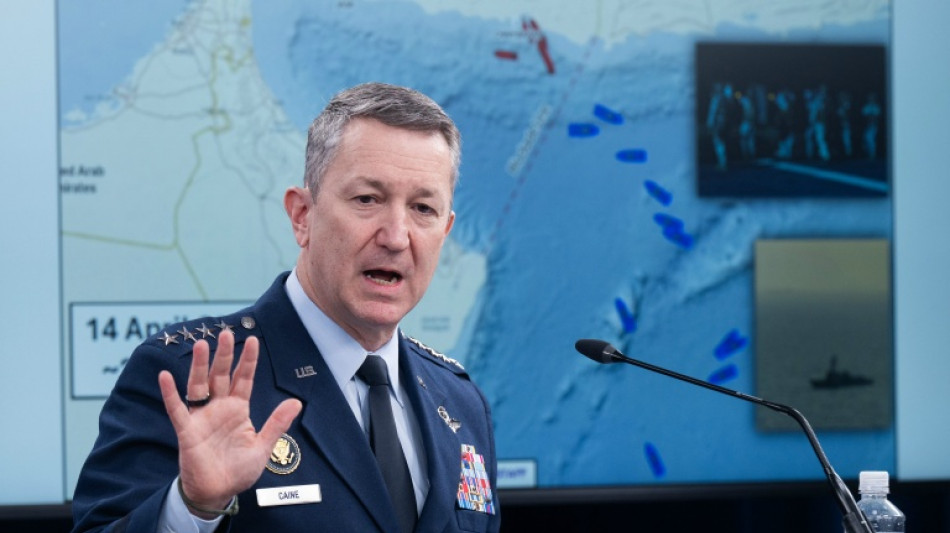
Tit-for-tat blockades once again cripple traffic in Hormuz / Photo: © AFP

 London
 14 °C
14 °C

 Manchester
 13 °C
13 °C
 Glasgow
 15 °C
15 °C
 Dublin
 12 °C
12 °C
 Belfast
11 °C
Belfast
11 °C
 Washington
20 °C
Washington
20 °C
 Denver
14 °C
Denver
14 °C
 Atlanta
22 °C
Atlanta
22 °C
 Dallas
 26 °C
26 °C
 Houston Texas
29 °C
Houston Texas
29 °C
 New Orleans
27 °C
New Orleans
27 °C
 El Paso
20 °C
El Paso
20 °C
 Phoenix
26 °C
Phoenix
26 °C
 Los Angeles
22 °C
San Diego
21 °C
San Francisco
15 °C
Chicago
18 °C
Minneapolis
18 °C
Seattle
13 °C
Portland
17 °C
Salt Lake City
17 °C
Las Vegas
28 °C
Miami
27 °C
Jacksonville
25 °C
San Antonio
29 °C
Bermuda
26 °C
Nassau
17 °C
Iqaluit
3 °C
Yellowknife
6 °C
Anchorage
Los Angeles
22 °C
San Diego
21 °C
San Francisco
15 °C
Chicago
18 °C
Minneapolis
18 °C
Seattle
13 °C
Portland
17 °C
Salt Lake City
17 °C
Las Vegas
28 °C
Miami
27 °C
Jacksonville
25 °C
San Antonio
29 °C
Bermuda
26 °C
Nassau
17 °C
Iqaluit
3 °C
Yellowknife
6 °C
Anchorage
 3 °C
Fairbanks
3 °C
Barrow
-4 °C
Calgary
8 °C
Edmonton
23 °C
Winnipeg
11 °C
Goose Bay
18 °C
Halifax
14 °C
Boston
15 °C
Ottawa
17 °C
Toronto
19 °C
Detroit
19 °C
Cleveland
19 °C
New York
19 °C
Baltimore
19 °C
Philadelphia
19 °C
Nuuk (Godthåb)
0 °C
Hong Kong
3 °C
Fairbanks
3 °C
Barrow
-4 °C
Calgary
8 °C
Edmonton
23 °C
Winnipeg
11 °C
Goose Bay
18 °C
Halifax
14 °C
Boston
15 °C
Ottawa
17 °C
Toronto
19 °C
Detroit
19 °C
Cleveland
19 °C
New York
19 °C
Baltimore
19 °C
Philadelphia
19 °C
Nuuk (Godthåb)
0 °C
Hong Kong
 32 °C
Singapore
31 °C
Melbourne
25 °C
Canberra
23 °C
Adelaide
21 °C
Darwin
31 °C
Perth
19 °C
Fort Worth
27 °C
Honolulu
32 °C
Singapore
31 °C
Melbourne
25 °C
Canberra
23 °C
Adelaide
21 °C
Darwin
31 °C
Perth
19 °C
Fort Worth
27 °C
Honolulu
 28 °C
Sydney
30 °C
Johannesburg
6 °C
Dubai
31 °C
Mumbai
29 °C
Zürich
18 °C
Tokyo
25 °C
Seoul
21 °C
Delhi
27 °C
Beijing
19 °C
Riyadh
28 °C
Prague
12 °C
Pennsylvania
17 °C
Valletta
23 °C
Manama
28 °C
Warsaw
11 °C
Stockholm
13 °C
28 °C
Sydney
30 °C
Johannesburg
6 °C
Dubai
31 °C
Mumbai
29 °C
Zürich
18 °C
Tokyo
25 °C
Seoul
21 °C
Delhi
27 °C
Beijing
19 °C
Riyadh
28 °C
Prague
12 °C
Pennsylvania
17 °C
Valletta
23 °C
Manama
28 °C
Warsaw
11 °C
Stockholm
13 °C
Traffic once again seized up in the Strait of Hormuz as both Tehran and Washington imposed separate blockades, with Iranian vessels continuing to test the US shutdown, tracking data showed Monday.
Iran announced on Friday that it would reopen the strategic waterway, but the United States did not reciprocate for vessels going to and from Iranian ports.
Dozens of commercial vessels passed through the strait before Iran reclosed the passage on Saturday, later warning that any approaching ship would be treated as a target.
Since Sunday, only four ships have made the crossing in either direction, according to marine tracking firm Kpler.
One of those, the Iranian-flagged Nova Crest that is sanctioned by the US, headed out of the Gulf at around 0400 GMT on Monday, and continued to make its way through the Gulf of Oman, according to Marine Traffic.
However, it is usually when a vessel reaches the Iranian border with Pakistan that the US imposes its blockade.
Iran allowed the sanctioned gas tanker Axon I to enter the Gulf on Monday, destined for the UAE and therefore not subject to the US blockade.
Gas tanker G Summer crossed in the opposite direction on Sunday, having gone into the Gulf earlier in the week, but did not appear to dock at an Iranian port.
It was last detected close to the open sea near the Omani capital of Muscat.
The fourth vessel to cross was the Panama-flagged Starway, owned by China-based firm Hechuang International Group, according to Bloomberg.
The tanker passed westwards through the Iran-approved route at around 0800 GMT on Monday, but made a U-turn around 1200 GMT and was last detected heading back towards the strait.
Since the start of the blockade, US forces have directed 27 vessels to turn around or return to an Iranian port, the US military said Monday.
The US appeared to have halted the progress of the sanctioned container ship Shamim on Sunday, which was last detected close to the Iranian port of Chabahar.
Iranian-flagged bulk carrier Artman was also redirected to Chabahar after apparently being intercepted by the US at around 2130 GMT Sunday.
LPG tanker Raine, also sanctioned, was close to entering open seas on Sunday before performing a U-turn and sailing back towards the strait.
While these vessels seem to have heeded US military demands to change course, President Donald Trump wrote on his Truth Social platform Monday that the container ship Touska was seized after failing to respond to a warning to stop.
Iran also took action to impose its own closure, with New Delhi summoning the Iranian ambassador on Saturday to lodge a protest over a "shooting incident" involving two Indian-flagged ships in the Strait of Hormuz.
French-flagged container ship CMA CGM Everglade also reported being hit by "an unknown projectile which caused damage to some of the containers", according to the United Kingdom Maritime Trade Operations (UKMTO).
The brief opening of the waterway had little effect on reducing the number of vessels stuck in the Gulf.
More than 750 commercial vessels transmitted signals from within the Gulf on Sunday, of which around 350 were oil or gas tankers, according to tracking data collated by Bloomberg.
Z.Tomaszewski--GL