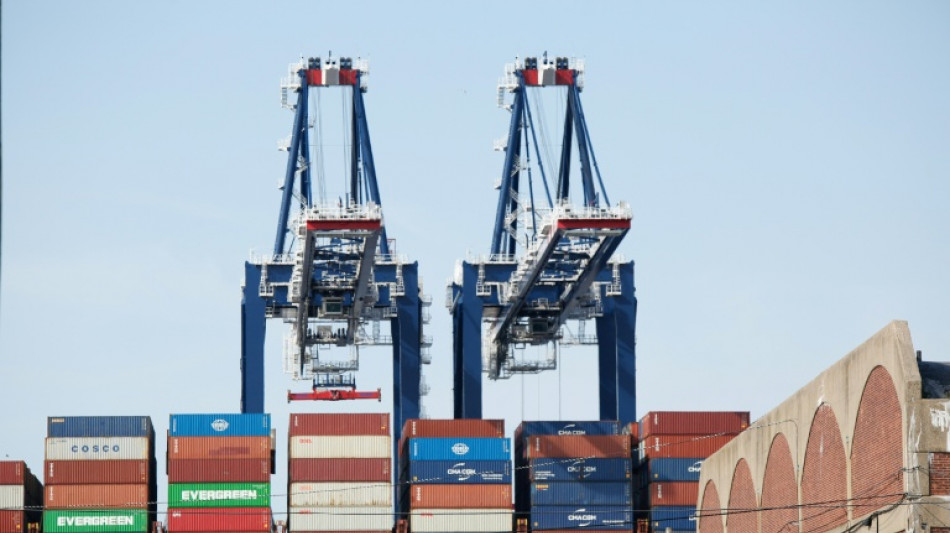
US trade gap in July hits biggest in over a year on AI buildout / Photo: © AFP/File

 London
 25 °C
25 °C

 Manchester
21 °C
Manchester
21 °C
 Glasgow
20 °C
Glasgow
20 °C
 Dublin
21 °C
Dublin
21 °C
 Belfast
19 °C
Belfast
19 °C
 Washington
25 °C
Washington
25 °C
 Denver
 17 °C
17 °C
 Atlanta
28 °C
Atlanta
28 °C
 Dallas
26 °C
Dallas
26 °C
 Houston Texas
28 °C
Houston Texas
28 °C
 New Orleans
28 °C
New Orleans
28 °C
 El Paso
 25 °C
25 °C
 Phoenix
29 °C
Phoenix
29 °C
 Los Angeles
 19 °C
San Diego
17 °C
San Francisco
19 °C
San Diego
17 °C
San Francisco
 16 °C
Chicago
29 °C
Minneapolis
23 °C
Seattle
16 °C
Chicago
29 °C
Minneapolis
23 °C
Seattle
 12 °C
Portland
13 °C
Salt Lake City
12 °C
Portland
13 °C
Salt Lake City
 15 °C
Las Vegas
24 °C
Miami
15 °C
Las Vegas
24 °C
Miami
 29 °C
Jacksonville
28 °C
San Antonio
27 °C
Bermuda
30 °C
Nassau
22 °C
Iqaluit
10 °C
Yellowknife
16 °C
Anchorage
8 °C
Fairbanks
-1 °C
Barrow
0 °C
Calgary
14 °C
Edmonton
25 °C
Winnipeg
16 °C
Goose Bay
22 °C
Halifax
20 °C
Boston
18 °C
Ottawa
20 °C
Toronto
21 °C
Detroit
25 °C
Cleveland
25 °C
New York
22 °C
Baltimore
24 °C
Philadelphia
24 °C
Nuuk (Godthåb)
6 °C
Hong Kong
29 °C
Singapore
29 °C
Melbourne
27 °C
Canberra
10 °C
Adelaide
13 °C
Darwin
29 °C
Jacksonville
28 °C
San Antonio
27 °C
Bermuda
30 °C
Nassau
22 °C
Iqaluit
10 °C
Yellowknife
16 °C
Anchorage
8 °C
Fairbanks
-1 °C
Barrow
0 °C
Calgary
14 °C
Edmonton
25 °C
Winnipeg
16 °C
Goose Bay
22 °C
Halifax
20 °C
Boston
18 °C
Ottawa
20 °C
Toronto
21 °C
Detroit
25 °C
Cleveland
25 °C
New York
22 °C
Baltimore
24 °C
Philadelphia
24 °C
Nuuk (Godthåb)
6 °C
Hong Kong
29 °C
Singapore
29 °C
Melbourne
27 °C
Canberra
10 °C
Adelaide
13 °C
Darwin
 27 °C
Perth
17 °C
Fort Worth
25 °C
Honolulu
25 °C
Sydney
16 °C
Johannesburg
26 °C
Dubai
38 °C
Mumbai
29 °C
Zürich
27 °C
Tokyo
26 °C
Seoul
25 °C
Delhi
32 °C
Beijing
20 °C
Riyadh
40 °C
Prague
24 °C
Pennsylvania
23 °C
Valletta
34 °C
Manama
38 °C
Warsaw
24 °C
Stockholm
20 °C
27 °C
Perth
17 °C
Fort Worth
25 °C
Honolulu
25 °C
Sydney
16 °C
Johannesburg
26 °C
Dubai
38 °C
Mumbai
29 °C
Zürich
27 °C
Tokyo
26 °C
Seoul
25 °C
Delhi
32 °C
Beijing
20 °C
Riyadh
40 °C
Prague
24 °C
Pennsylvania
23 °C
Valletta
34 °C
Manama
38 °C
Warsaw
24 °C
Stockholm
20 °C
The US trade deficit in July widened to its largest since March 2025, government data showed Thursday, as imports climbed on the back of the booming AI tech build-out.
US trade has seen wide fluctuations since President Donald Trump returned to the White House last year and rolled out sweeping tariffs on allies and competitors, in efforts to narrow the trade gap.
But the trade deficit in the world's biggest economy grew to $88.6 billion in July -- a 24.4 percent increase from the month prior -- as exports of crude oil and gold fell while imports of tech products jumped.
Exports dipped 2.1 percent to $310.7 billion, the Department of Commerce said.
Imports rose 2.8 percent to $399.3 billion, bolstered by computers, computer accessories and semiconductors.
The US deficit with Taiwan, a major manufacturer of chips, reached a record $20.7 billion for the month.
US trade gaps with Mexico, Thailand, South Korea and Malaysia for the month also hit their highest on record.
While Trump's tariffs have hit economies representing the majority of US trade, American officials have been careful to exempt products like chips, smartphones and other types of electronics.
Washington is looking to develop new tariffs on semiconductors, Commerce Secretary Howard Lutnick told CNBC Wednesday, although adding that tech giants are aware of the Trump administration's plans.
"What you're going to see is targeted, thoughtful tariff policy that basically says if you build here, you don't pay," Lutnick said.
Over the past year, businesses have scrambled to step up imports before new waves of US duties kicked in.
Although the US Supreme Court struck down many of Trump's global tariffs in February, officials in July replaced them with fresh duties targeting 60 trading partners.
A separate trade investigation taking aim at 16 partners including China, the European Union and Taiwan, could lead to a further round of tariffs.
The United States meanwhile is engaged in a trade war with neighboring Canada, with which its deficit narrowed in July. Last month, Trump slapped a 50-percent duty on billions of dollars in Canadian goods, prompting Ottawa's planned retaliation.
Also weighing on trade flows is fallout from the Middle East war, with Iran largely blocking off the Strait of Hormuz -- a key waterway for global energy and fertilizer transit.
This has helped to raise demand for US energy products but US firms have been grappling with snarled supply chains.
S.Mazur--GL