'Sportswashing' or investment? Rwanda F1 stirs debate and doubts / Photo: © AFP

 London
 15 °C
15 °C
 Manchester
 12 °C
12 °C
 Glasgow
 19 °C
19 °C
 Dublin
12 °C
Dublin
12 °C
 Belfast
12 °C
Belfast
12 °C
 Washington
21 °C
Washington
21 °C
 Denver
6 °C
Denver
6 °C
 Atlanta
26 °C
Atlanta
26 °C
 Dallas
16 °C
Dallas
16 °C
 Houston Texas
22 °C
Houston Texas
22 °C
 New Orleans
27 °C
New Orleans
27 °C
 El Paso
13 °C
El Paso
13 °C
 Phoenix
26 °C
Phoenix
26 °C
 Los Angeles
27 °C
San Diego
27 °C
San Francisco
19 °C
Chicago
11 °C
Minneapolis
Los Angeles
27 °C
San Diego
27 °C
San Francisco
19 °C
Chicago
11 °C
Minneapolis
 8 °C
Seattle
11 °C
Portland
16 °C
Salt Lake City
13 °C
Las Vegas
21 °C
Miami
32 °C
Jacksonville
29 °C
San Antonio
18 °C
Bermuda
28 °C
Nassau
18 °C
Iqaluit
8 °C
Seattle
11 °C
Portland
16 °C
Salt Lake City
13 °C
Las Vegas
21 °C
Miami
32 °C
Jacksonville
29 °C
San Antonio
18 °C
Bermuda
28 °C
Nassau
18 °C
Iqaluit
 -4 °C
Yellowknife
4 °C
Anchorage
2 °C
Fairbanks
-4 °C
Yellowknife
4 °C
Anchorage
2 °C
Fairbanks
 -2 °C
Barrow
-6 °C
Calgary
8 °C
Edmonton
15 °C
Winnipeg
5 °C
Goose Bay
-2 °C
Barrow
-6 °C
Calgary
8 °C
Edmonton
15 °C
Winnipeg
5 °C
Goose Bay
 17 °C
Halifax
16 °C
Boston
14 °C
Ottawa
7 °C
Toronto
14 °C
Detroit
14 °C
Cleveland
15 °C
New York
18 °C
Baltimore
20 °C
Philadelphia
19 °C
Nuuk (Godthåb)
2 °C
Hong Kong
26 °C
Singapore
28 °C
Melbourne
29 °C
Canberra
8 °C
Adelaide
17 °C
Halifax
16 °C
Boston
14 °C
Ottawa
7 °C
Toronto
14 °C
Detroit
14 °C
Cleveland
15 °C
New York
18 °C
Baltimore
20 °C
Philadelphia
19 °C
Nuuk (Godthåb)
2 °C
Hong Kong
26 °C
Singapore
28 °C
Melbourne
29 °C
Canberra
8 °C
Adelaide
 18 °C
Darwin
28 °C
Perth
15 °C
Fort Worth
15 °C
Honolulu
18 °C
Darwin
28 °C
Perth
15 °C
Fort Worth
15 °C
Honolulu
 24 °C
Sydney
15 °C
Johannesburg
28 °C
Dubai
33 °C
Mumbai
31 °C
Zürich
21 °C
Tokyo
21 °C
Seoul
15 °C
Delhi
24 °C
Beijing
14 °C
Riyadh
33 °C
Prague
15 °C
Pennsylvania
18 °C
Valletta
25 °C
Manama
34 °C
Warsaw
13 °C
Stockholm
14 °C
24 °C
Sydney
15 °C
Johannesburg
28 °C
Dubai
33 °C
Mumbai
31 °C
Zürich
21 °C
Tokyo
21 °C
Seoul
15 °C
Delhi
24 °C
Beijing
14 °C
Riyadh
33 °C
Prague
15 °C
Pennsylvania
18 °C
Valletta
25 °C
Manama
34 °C
Warsaw
13 °C
Stockholm
14 °C
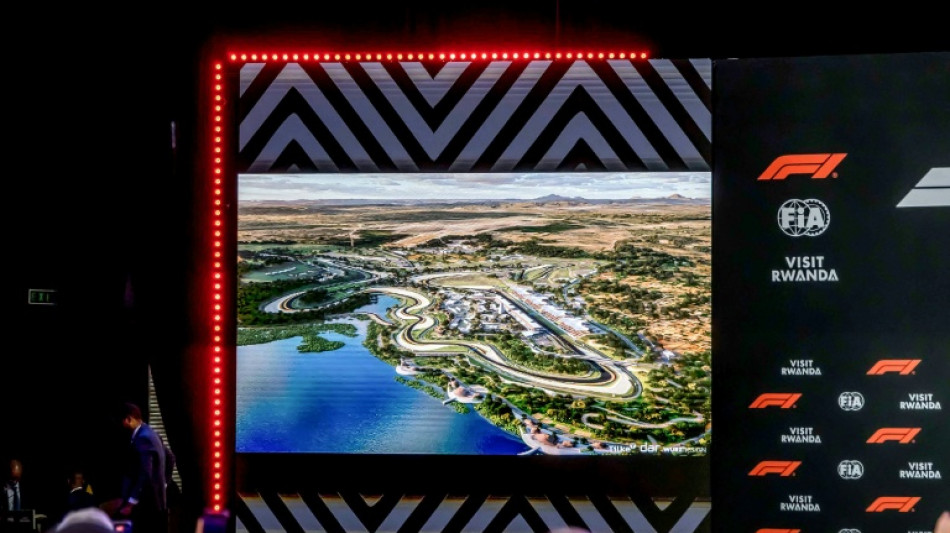
Viewed by some as "sportswashing" and by others as an overly ambitious, grandiose project, the prospect of a Formula 1 Grand Prix in Rwanda has provoked reaction at home and abroad.
The government touts the initiative as a significant "investment in Rwanda's future", slated for sometime in the early 2030s.
On Tuesday, Kigali put on a glitzy ceremony to announce the "historic" agreement between Rwanda, the organisation that owns Formula 1, and the International Automobile Federation (FIA).
A landlocked country still widely associated with a horrific genocide in 1994, Rwanda has used sports to revamp its image, attract tourists and impress investors with its organisational efficiency.
The event promises glamour -- replete with champagne-quaffing celebrities -- set against the backdrop of Rwanda's verdant hills and rich wildlife, all broadcast to a global audience.
Formula 1 markets itself as the third most-watched sporting event on the planet, trailing only the Olympic Games and the FIFA World Cup.
However, the project has drawn dismay from some quarters, including Amnesty International, which immediately condemned it as an act of sportswashing.
The NGO accuses Kigali of "buying into the world's biggest sports to polish its image and deflect from its appalling human rights record".
This same criticism has been levelled against Formula 1 on several previous occasions.
In its pursuit of global expansion, the sport has forged numerous partnerships with governments with questionable rights records, including China and Azerbaijan.
- Sports diplomacy -
Last year, Rwanda became the first African nation to successfully host the World Cycling Championships.
Through its "Visit Rwanda" campaign, Kigali also sponsors several major European football clubs, including Paris Saint-Germain (PSG), as well as the NBA's Los Angeles Clippers.
However, while President Paul Kagame is credited with a strategic vision that has driven Rwanda's economic transformation over his decades-long tenure, he has faced repeated accusations from opponents of suppressing political dissent.
Reacting to the news, Kenneth Roth, the former director of Human Rights Watch, noted on X Rwanda's "invasion via its M23 proxy of eastern Democratic Republic of Congo".
The armed M23 group, backed financially and militarily by Kigali, has forcibly seized vast swathes of the DRC.
During the Kigali ceremony, Kagame said it was an "honour" to be selected for Formula 1.
He described it as an "investment in Rwanda's future" that would bring "jobs, skills, tourism and new business to our country and our region for decades to come".
But one foreign attendee voiced concerns, telling AFP in English: "I am really hoping Rwanda is not chewing what it cannot swallow."
Formula 1 is an expensive pursuit and far wealthier nations have already seen their ambitions backfire.
- The Qatar model -
India and South Korea -- which built circuits specifically to host Formula 1 -- eventually withdrew as their financial losses mounted.
European organisers, including those in France and, more recently, the Netherlands, have encountered similar setbacks.
In comparison Rwanda, despite its economic boom, remains a low-income country with a GDP per capita barely exceeding $1,100.
It ranks 159 out of 193 countries on the United Nations' Human Development Index, although it is steadily improving.
Critics question whether the hundreds of millions of dollars required to build a modern racetrack might be better spent on healthcare or education -- not to mention the tens of millions of dollars F1 Grand Prix organisers typically charge host countries for the privilege of holding the event.
A source close to the FIA said Qatar was "supporting" the Rwandan project.
The Gulf country is also building a new international airport in Bugesera, 40 kilometres (25 miles) from Kigali -- near where the racetrack will be constructed.
Jean-Guy Africa, CEO of the Rwanda Development Board, pointed to the "tremendous interest" from the private sector.
"You cannot miss out on the 100,000 people who will come. From a business standpoint, you stand to benefit," he told AFP.
While several Rwandans told AFP of their pride that their country will soon host the pinnacle of motor sports, Kigali entrepreneur Amon Niyigena, took a more pragmatic view.
"The economics of hosting F1 in Rwanda will not be for everyone, but for a tiny percentage of the already rich," he said.
A.Walczak--GL