Irish police prepare for further hoax bomb threats after hundreds of schools targeted

 London
 4 °C

 Manchester
1 °C
 Glasgow
 2 °C
 Dublin
 5 °C
 Belfast
 5 °C
 Washington
 10 °C
 Denver
8 °C
 Atlanta
14 °C
 Dallas
15 °C
 Houston Texas
 17 °C
 New Orleans
18 °C
 El Paso
13 °C
 Phoenix
20 °C
 Los Angeles
20 °C
San Diego
19 °C
San Francisco
16 °C
Chicago
8 °C
Minneapolis
4 °C
Seattle
13 °C
Portland
12 °C
Salt Lake City
8 °C
Las Vegas
15 °C
Miami
23 °C
Jacksonville
16 °C
San Antonio
15 °C
Bermuda
21 °C
Nassau
11 °C
Iqaluit
-1 °C
Yellowknife
3 °C
Anchorage
1 °C
Fairbanks
-9 °C
Barrow
 -11 °C
Calgary
7 °C
Edmonton
10 °C
Winnipeg
-1 °C
Goose Bay
3 °C
Halifax
6 °C
Boston
8 °C
Ottawa
1 °C
Toronto
 6 °C
Detroit
8 °C
Cleveland
10 °C
New York
13 °C
Baltimore
11 °C
Philadelphia
12 °C
Nuuk (Godthåb)
4 °C
Hong Kong
27 °C
Singapore
 32 °C
Melbourne
21 °C
Canberra
25 °C
Adelaide
23 °C
Darwin
 31 °C
Perth
26 °C
Fort Worth
14 °C
Honolulu
25 °C
Sydney
21 °C
Johannesburg
28 °C
Dubai
 29 °C
Mumbai
34 °C
Zürich
11 °C
Tokyo
17 °C
Seoul
17 °C
Delhi
28 °C
Beijing
16 °C
Riyadh
17 °C
Prague
8 °C
Pennsylvania
10 °C
Valletta
25 °C
Manama
25 °C
Warsaw
3 °C
Stockholm
 6 °C
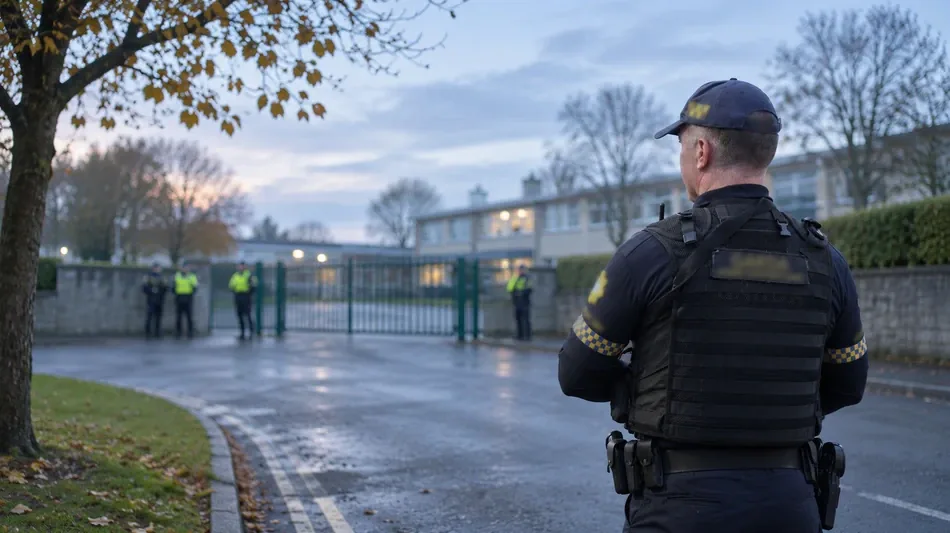
Gardaí are preparing for further hoax bomb threats after at least 300 schools across the Republic of Ireland received a mass email on Wednesday.
Gardaí are preparing for further hoax bomb threats after at least 300 schools across the Republic of Ireland received a mass email on Wednesday. Investigators assessed the messages as not credible, although some schools evacuated as a precaution while most continued operating. A similar number of schools were threatened in Northern Ireland. Approximately 1,000 schools in Scotland and another 400 in Italy also received messages believed to have come from the same online hoaxers. Garda sources said the campaign appeared intended to create disruption rather than signal a genuine explosive device.
The threats arrived as over 5,000 Garda personnel were involved in the state’s largest security operation, protecting about 50 heads of government attending two summits in Dublin on Thursday and Friday. Security officials considered additional disruptive emails during the meetings likely and continued investigating a related set of threats sent to media organizations the previous Friday. Deputy Commissioner Paul Cleary advised any organization receiving a bomb threat by email, letter or another form of communication to call 999 immediately and provide all available details. He stressed that receiving a threat does not automatically require evacuation, because the appropriate response depends on an assessment of credibility and the circumstances at the location.
After a report is made, the Garda Regional Control Centre assesses the information and advises responding officers and the affected organization. Depending on the result, police may recommend monitoring, a limited search of the premises or evacuation. Business owners, school administrators and other premises managers retain authority to evacuate, but Gardaí said they would provide professional guidance as quickly as possible. The Wednesday messages were sent at about 9.20am under the subject line "DEATH IS NEAR" and used the name Mikhail Andropov, the same identity attached to the earlier threats. The sender claimed affiliation with a group called the Red Owl project and falsely asserted that explosives had been placed in recipients’ buildings and in the prime minister’s car. The email also threatened further violence against survivors.
Schools in numerous cities and towns received the message, as did media organizations in Ireland and Britain, including RTÉ and the Guardian. RTÉ Director General Kevin Bakhurst told employees that the broadcaster received a short and nonspecific threat at 9.22am. The message was immediately referred to Gardaí, who advised the broadcaster that no further action was required. Education Minister Hildegarde Naughton said she had discussed the incident with Justice Minister Jim O’Callaghan and that education officials remained in contact with senior Garda officers. She said student and staff safety remained the priority but repeated the police assessment that the threat was not credible and that schools did not need to evacuate solely because they received the email.
Naughton asked schools to contact emergency services on 999 and follow Garda instructions. She also warned that the unusually high call volume could delay individual responses while officers worked through reports from each affected school. Gardaí said every report would still be examined and handled in a proportionate and timely manner. Cleary said the control centre or officers attending a location would recommend the most appropriate action after assessing the report. In many cases the response could consist of advice or a cursory search rather than a full evacuation. He said premises managers could still make their own decision to evacuate and that Gardaí would base their professional advice on the information available.
The threatening email claimed a powerful device with a remote detonator had been left in a plastic bag inside each recipient’s building. It also asserted that a bomb had been placed in the prime minister’s car engine and threatened knife attacks after an explosion. Investigators found no evidence supporting those claims and treated the mass mailing as a hoax. Bakhurst said RTÉ was one of a small number of Irish media organizations included in a wider distribution to British outlets. He told employees that the email was short and nonspecific and that Garda advice was clear that the broadcaster should take no additional action. He also noted that non-media organizations had received similar messages.
Naughton said officials in her department were continuing to liaise with An Garda Síochána at senior level. She asked every school that received the email to report it to emergency services and follow police advice. Because Gardaí had received a large volume of calls, she said officers would contact schools in turn and that some responses could take time. Garda Commissioner Justin Kelly had said a day earlier that he expected additional threats. He also said the early direction of the investigation suggested the hoax messages originated outside Ireland, although the inquiry remained at an initial stage. Authorities continued to coordinate the school response with the wider security arrangements for the Dublin summits.
A.Lewandowski--GL