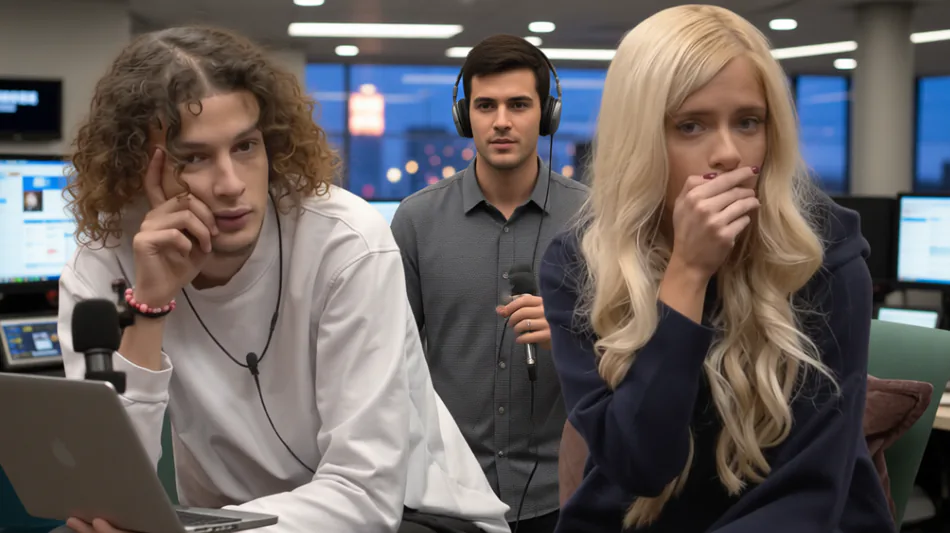
Big Brother’s Omar El Mayer Addresses Backlash, Confirms Relationship with Rhianna Collins

 London
 10 °C

 Manchester
 9 °C
 Glasgow
9 °C
 Dublin
 10 °C
 Belfast
 11 °C
 Washington
7 °C
 Denver
3 °C
 Atlanta
4 °C
 Dallas
9 °C
 Houston Texas
13 °C
 New Orleans
9 °C
 El Paso
11 °C
 Phoenix
15 °C
 Los Angeles
 14 °C
San Diego
18 °C
San Francisco
 12 °C
Chicago
0 °C
Minneapolis
-3 °C
Seattle
10 °C
Portland
11 °C
Salt Lake City
 7 °C
Las Vegas
14 °C
Miami
18 °C
Jacksonville
8 °C
San Antonio
14 °C
Bermuda
23 °C
Nassau
4 °C
Iqaluit
-9 °C
Yellowknife
 -1 °C
Anchorage
-4 °C
Fairbanks
-11 °C
Barrow
 -11 °C
Calgary
2 °C
Edmonton
1 °C
Winnipeg
-5 °C
Goose Bay
 3 °C
Halifax
3 °C
Boston
3 °C
Ottawa
3 °C
Toronto
3 °C
Detroit
2 °C
Cleveland
5 °C
New York
4 °C
Baltimore
6 °C
Philadelphia
5 °C
Nuuk (Godthåb)
1 °C
Hong Kong
23 °C
Singapore
29 °C
Melbourne
14 °C
Canberra
16 °C
Adelaide
13 °C
Darwin
29 °C
Perth
19 °C
Fort Worth
10 °C
Honolulu
23 °C
Sydney
21 °C
Johannesburg
27 °C
Dubai
28 °C
Mumbai
30 °C
Zürich
7 °C
Tokyo
15 °C
Seoul
12 °C
Delhi
24 °C
Beijing
 3 °C
Riyadh
21 °C
Prague
8 °C
Pennsylvania
5 °C
Valletta
24 °C
Manama
23 °C
Warsaw
6 °C
Stockholm
2 °C
Big House contestant Omar El Mayer has addressed the unprecedented public outcry surrounding his time in the show, acknowledging accountability for his conduct while attributing part of the backlash to stereotyping. Despite receiving more than 22,000 complaints from Ofcom regarding 'coercive and controlling' behavior toward girlfriend Rhianna Collins, Omar confirms the couple remains together and plans to use his platform to challenge societal stigmas.
Omar El Mayer, the 21-year-old contestant who became the most complained-about civilian in the history of Big Brother, has issued a detailed response to the intense public scrutiny surrounding his tenure in the house. Following an unprecedented wave of criticism that prompted Ofcom to log more than 22,000 complaints regarding his interactions with fellow housemate and girlfriend Rhianna Collins, Omar reflected on his conduct, the systemic factors he believes influenced the reaction, and his current personal status.
The broadcasting regulator received a record number of formal complaints after scenes depicting Omar’s behavior toward Collins were aired. Ofcom classified the nature of these interactions as 'coercive and controlling,' a designation that triggered widespread condemnation from viewers, advocacy groups, and former reality television stars. In his first comprehensive interview addressing the controversy, Omar stated that while he accepts responsibility for specific actions, he also perceives a disparity in how his behavior was interpreted compared to what might have occurred had he come from a different cultural or social background.
"I take accountability where it's due," Omar said. "I apologize. We had a lot of chats in there and not everything was shown." He described the period within the house as one of navigating complex interpersonal risks, suggesting that his attempts to manage perceived dangers led him into behaviors he now recognizes as toxic. "There were times where I didn't really listen to her, and I should have listened," he admitted. "But in my defence as well, I did try to listen. There were countless times where I did listen."
Omar explained that his actions were partly driven by a desire to protect himself within the high-pressure environment of the show. "For me, it was also navigating risk. I was worried for myself, because at the end of the day, I know the way the world is, and I know the way things are, so I feel like I was trying to over-engineer my behaviour," he said. He noted that this self-conscious approach caused him to slip away from his authentic self, resulting in moments where he engaged in "toxic behaviours, like, not listening, or saying 'don't talk about me', things like that." However, he contextualized these actions within the broader reality of group living, adding, "But at the end of the day we all argue."
A central theme of Omar’s defense was the role of identity and perception in the public reaction. He argued that his background contributed to a heightened level of scrutiny, suggesting that similar behavior from another contestant might have been received differently. "I felt like had it been someone else of another background, they wouldn't have treated it the same way," Omar stated. "And that's just the way the world is." He expressed distress at the extent of the public condemnation, comparing the intensity of the backlash to historical totalitarian figures. "So why have we now taken that and made it seem like I'm Stalin or like Kim Jong-un? It was very upsetting seeing that but it's a lesson that you have to learn," he said.
The controversy surrounding Omar’s relationship with Collins began early in the series, as the pair developed a romantic connection just days after entering the house. Their interactions quickly drew the attention of Big Brother producers and the show’s psychological support team. Omar revealed that he received formal warnings from the production team regarding his language and behavior. "Big Brother warned Omar that the 'language and behaviour' he used 'could cause offence to housemates or the viewing public'," he noted, adding that he had "lengthy chats with the show's psych team that were not broadcast."
Specific incidents cited in complaints included Omar using phrases such as "don't talk about me," "don't cry," "don't look away from me," "sort yourself out," and "fix up" when Collins attempted to discuss their conflicts with other housemates. These exchanges led Women’s Aid, a prominent charity supporting victims of domestic abuse, to issue a statement claiming that the show was "presenting abuse as a form of entertainment." The charity called for Omar to be removed from the house immediately.
Despite the severity of the complaints and the public petition demanding his removal, Omar confirmed that his relationship with Collins remains intact. "Despite the backlash over his relationship with Rhianna, Omar insisted that everything is fine between them now, with the couple still romantically involved and seeing each other regularly," reports indicate. He acknowledged the difficulty of reconciling their public image with their private reality, noting that he had faced significant criticism from Collins’ friends. "He revealed that the couple had moved on from the scandal but he had received a grilling from her friends, which he confessed was 'hard and sad' to take."
Omar also discussed his approach to representing his faith during the series. He revealed that he had requested Big Brother not to air footage of him praying, stating that he did not wish to be defined solely by his religion. "I didn't come here to represent a whole religion. I'm Muslim, that's my faith, and it's personal to me, and I'm on my own personal journey," Omar explained. He acknowledged the inevitability of public representation in his current position, adding, "But also, I understand now that the more I elevate in my life, I'm going to become a representation of everything that I am, whether I like it or not."
He expressed hope that increased visibility could help combat negative stereotypes associated with Islam. "Unfortunately there's so much negative stigma around being a Muslim in today's day and age, our communities are always getting penalized," he said. "Hopefully one day, there'll be more representation and stigmas can change." Omar emphasized his desire to present a multifaceted view of his identity, countering the two-dimensional portrayal he felt was imposed upon him. "I sound a bit different. I just dress a bit, but I'm not different to you, bro. I'm as multifaceted as any other human being. I'm not two-dimensional, I'm not from a parallel universe," he stated.
The controversy surrounding Omar was part of a broader pattern of conflict and complaints throughout the series, which ran for eight weeks. The final episode itself sparked 925 Ofcom complaints following the victory of Rochelle Rackham, a 57-year-old housewife whose win was met with boos from the studio audience. Rackham had been involved in several contentious exchanges during her time in the house, including remarks about disabled contestants and comments perceived as mocking plus-sized housemates.
One particularly criticized incident involved Rackham telling Charlotte Notts, a contestant who lost her limbs to meningitis at age three, that she was "scared of people with no limbs." The comment drew widespread condemnation, with viewers labeling it "disgusting and outrageous." Another controversy arose when Rackham appeared to mock the weight of housemate Yasmin, suggesting she would eat children’s packed lunches. Big Brother reprimanded Rackham for her language in these instances.
Further complaints were generated by interactions involving other housemates, including Phillip Regan, known as The Queen of Scotty Road, who made comments about the transgender community that drew criticism from former contestants and viewers. Regan’s remarks, which included a derogatory term for transgender individuals, led to calls for his reprimand and sparked debate about language and inclusion in reality television.
Despite the intense controversy, the series achieved significant ratings success. The broadcast watchdog noted that the show exceeded 56 million streams, an increase of more than 22 million compared to the previous year. The final episode alone attracted 770,000 overnight viewers, a substantial rise from the 516,000 who watched last year’s finale. Rochelle Rackham won the competition with 37.65 percent of the vote, narrowly defeating Lucinda Burnett, known as Twinks, who received 36.62 percent.
Omar has since remained in contact with Big Brother’s psychological support team and producers to provide feedback on contestant welfare. "They have been taking care of me, and they've given me a lot of support," he confirmed. He expressed gratitude for the opportunity to live with a diverse group of people, stating that he would repeat the experience despite the challenges.
Looking ahead, Omar outlined his plans to focus on content creation, specifically aiming to produce documentaries in the style of Louis Theroux for his YouTube channel. His goal is to educate the public and challenge preconceived notions about individuals from difficult backgrounds. "I want it to be personal to me, all the different walks of life that I've seen around me," he said. "I want to show people that you can come from a difficult upbringing and a difficult background, and still be great, and still have all these crazy, interesting things about you, and I want to document that in other people."
The series has been described as one of the most contentious in Big Brother’s 26-year history, with the extended eight-week run amplifying tensions among housemates. While Omar acknowledges the severity of the complaints against him, he maintains that his intentions were not malicious. "At the end of the day, I didn't walk in with any bad intentions or any malice and I didn't attempt to exercise anything malicious towards anyone," he said. He emphasized that he had acknowledged his housemates' feelings, even if his methods of communication were flawed.
As the dust settles on one of the most debated seasons in reality television history, Omar’s reflections offer a complex narrative of accountability, identity, and public perception. His confirmation that he remains with Rhianna Collins underscores the personal resilience required to navigate such intense scrutiny, while his future ambitions point toward a desire to reshape the narrative surrounding his background and faith.
O.Kubiak--GL