Bleak future for West Bank pupils as budget cuts bite / Photo: © AFP

 London
 11 °C
11 °C

 Manchester
 11 °C
11 °C
 Glasgow
 14 °C
14 °C
 Dublin
11 °C
Dublin
11 °C
 Belfast
 11 °C
11 °C
 Washington
17 °C
Washington
17 °C
 Denver
 27 °C
27 °C
 Atlanta
19 °C
Atlanta
19 °C
 Dallas
30 °C
Dallas
30 °C
 Houston Texas
31 °C
Houston Texas
31 °C
 New Orleans
25 °C
New Orleans
25 °C
 El Paso
27 °C
El Paso
27 °C
 Phoenix
 38 °C
38 °C
 Los Angeles
28 °C
San Diego
28 °C
San Francisco
17 °C
Chicago
19 °C
Minneapolis
20 °C
Seattle
11 °C
Portland
16 °C
Salt Lake City
27 °C
Las Vegas
Los Angeles
28 °C
San Diego
28 °C
San Francisco
17 °C
Chicago
19 °C
Minneapolis
20 °C
Seattle
11 °C
Portland
16 °C
Salt Lake City
27 °C
Las Vegas
 35 °C
Miami
29 °C
Jacksonville
25 °C
San Antonio
31 °C
Bermuda
26 °C
Nassau
18 °C
Iqaluit
35 °C
Miami
29 °C
Jacksonville
25 °C
San Antonio
31 °C
Bermuda
26 °C
Nassau
18 °C
Iqaluit
 0 °C
Yellowknife
6 °C
Anchorage
9 °C
Fairbanks
5 °C
Barrow
1 °C
Calgary
17 °C
Edmonton
23 °C
Winnipeg
16 °C
Goose Bay
12 °C
Halifax
12 °C
Boston
15 °C
Ottawa
9 °C
Toronto
16 °C
Detroit
18 °C
Cleveland
17 °C
New York
19 °C
Baltimore
18 °C
Philadelphia
17 °C
Nuuk (Godthåb)
1 °C
Hong Kong
26 °C
Singapore
0 °C
Yellowknife
6 °C
Anchorage
9 °C
Fairbanks
5 °C
Barrow
1 °C
Calgary
17 °C
Edmonton
23 °C
Winnipeg
16 °C
Goose Bay
12 °C
Halifax
12 °C
Boston
15 °C
Ottawa
9 °C
Toronto
16 °C
Detroit
18 °C
Cleveland
17 °C
New York
19 °C
Baltimore
18 °C
Philadelphia
17 °C
Nuuk (Godthåb)
1 °C
Hong Kong
26 °C
Singapore
 28 °C
Melbourne
29 °C
Canberra
18 °C
Adelaide
17 °C
Darwin
28 °C
Perth
17 °C
Fort Worth
31 °C
Honolulu
29 °C
Sydney
18 °C
Johannesburg
19 °C
Dubai
34 °C
Mumbai
30 °C
Zürich
12 °C
Tokyo
21 °C
Seoul
14 °C
Delhi
24 °C
Beijing
13 °C
Riyadh
26 °C
Prague
12 °C
Pennsylvania
15 °C
Valletta
25 °C
Manama
31 °C
Warsaw
11 °C
Stockholm
6 °C
28 °C
Melbourne
29 °C
Canberra
18 °C
Adelaide
17 °C
Darwin
28 °C
Perth
17 °C
Fort Worth
31 °C
Honolulu
29 °C
Sydney
18 °C
Johannesburg
19 °C
Dubai
34 °C
Mumbai
30 °C
Zürich
12 °C
Tokyo
21 °C
Seoul
14 °C
Delhi
24 °C
Beijing
13 °C
Riyadh
26 °C
Prague
12 °C
Pennsylvania
15 °C
Valletta
25 °C
Manama
31 °C
Warsaw
11 °C
Stockholm
6 °C
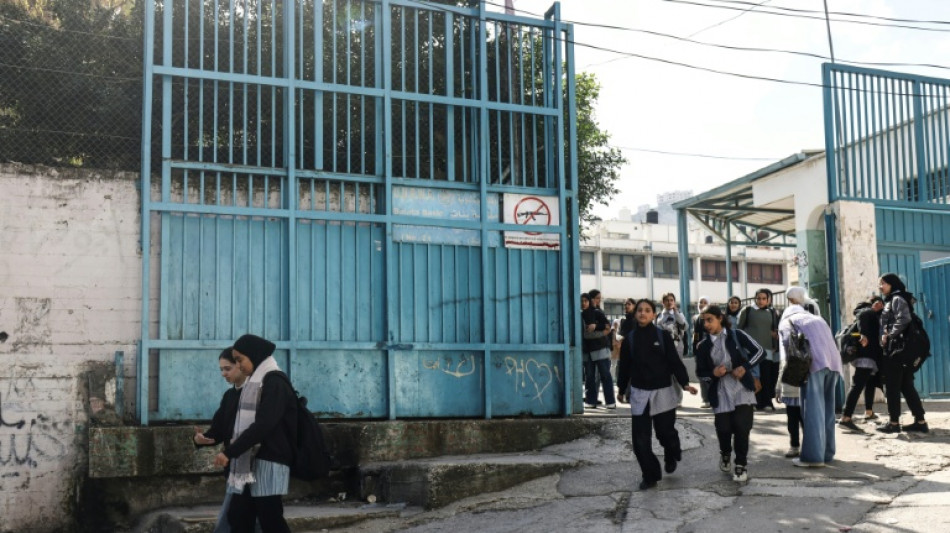
At an hour when Ahmad and Mohammed should have been in the classroom, the two brothers sat idle at home in the northern West Bank city of Nablus.
The 10-year-old twins are part of a generation abruptly cut adrift by a fiscal crisis that has slashed public schooling from five days a week to three across the Israeli-occupied Palestinian territory.
The Ramallah-based Palestinian Authority's deepening budget shortfall is cutting through every layer of society across the West Bank.
But nowhere are the consequences more stark than in its schools, where reduced salaries for teachers, shortened weeks and mounting uncertainty are reshaping the future of around 630,000 pupils.
Unable to meet its wage bill in full, the Palestinian Authority has cut teachers' pay to 60 percent, with public schools now operating at less than two-thirds capacity.
"Without proper education, there is no university. That means their future could be lost," Ibrahim al-Hajj, father of the twins, told AFP.
The budget shortfall stems in part from Israel's decision to withhold customs tax revenues it collects on the Palestinian Authority's behalf, a measure taken after the war in Gaza erupted in October 2023.
The West Bank's economy has also been hammered by a halt to permits for Palestinians seeking work in Israel and the proliferation of checkpoints and other movement controls.
- 'No foundation' for learning -
"Educational opportunities we had were much better than what this generation has today," said Aisha Khatib, 57, headmistress of the brothers' school in Nablus.
"Salaries are cut, working days are reduced, and students are not receiving enough education to become properly educated adults," she said, adding that many teachers had left for other work, while some students had begun working to help support their families during prolonged school closures.
Hajj said he worried about the time his sons were losing.
When classes are cancelled, he and his wife must leave the boys alone at home, where they spend much of the day on their phones or watching television.
Part of the time, the brothers attend private tutoring.
"We go downstairs to the teacher and she teaches us. Then we go back home," said Mohammad, who enjoys English lessons and hopes to become a carpenter.
But the extra lessons are costly, and Hajj, a farmer, said he cannot indefinitely compensate for what he sees as a steady academic decline.
Tamara Shtayyeh, a teacher in Nablus, said she had seen the impact firsthand in her own household.
Her 16-year-old daughter Zeena, who is due to sit the Palestinian high school exam, Tawjihi, next year, has seen her average grades drop by six percentage points since classroom hours were reduced, Shtayyeh said.
Younger pupils, however, may face the gravest consequences.
"In the basic stage, there is no proper foundation," she said. "Especially from first to fourth grade, there is no solid grounding in writing or reading."
Irregular attendance, with pupils out of school more often than in, has eroded attention spans and discipline, she added.
"There is a clear decline in students' levels -- lower grades, tension, laziness," Shtayyeh said.
- 'Systemic emergency' -
For UN-run schools teaching around 48,000 students in refugee camps across the West Bank, the picture is equally bleak.
The territory has shifted from "a learning poverty crisis to a full-scale systemic emergency," said Jonathan Fowler, spokesman for the UN agency for Palestinian refugees, UNRWA.
UNRWA schools are widely regarded as offering comparatively high educational standards.
But Fowler said proficiency in Arabic and mathematics had plummeted in recent years, driven not only by the budget crisis but also by Israeli military incursions and the lingering effects of the Covid-19 pandemic.
"The combination of hybrid schooling, trauma and over 2,000 documented incidents of military or settler interference in 2024-25 has resulted in a landscape of lost learning for thousands of Palestinian refugee students," he said.
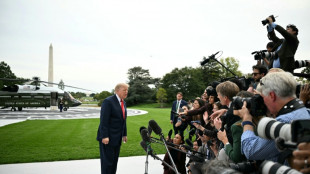
UNRWA itself is weighing a shorter school week as it grapples with its own funding shortfall, after key donor countries — including the United States under President Donald Trump — halted contributions to the agency, the main provider of health and education services in West Bank refugee camps.
In the northern West Bank, where Israeli military operations in refugee camps displaced around 35,000 people in 2025, some pupils have lost up to 45 percent of learning days, Fowler said.
Elsewhere, schools face demolition orders from Israeli authorities or outright closure, including six UNRWA schools in annexed east Jerusalem.
Teachers say the cumulative toll is profound.
"We are supposed to look toward a bright and successful future," Shtayyeh said. "But what we are seeing is things getting worse and worse."
X.Dabrowski--GL