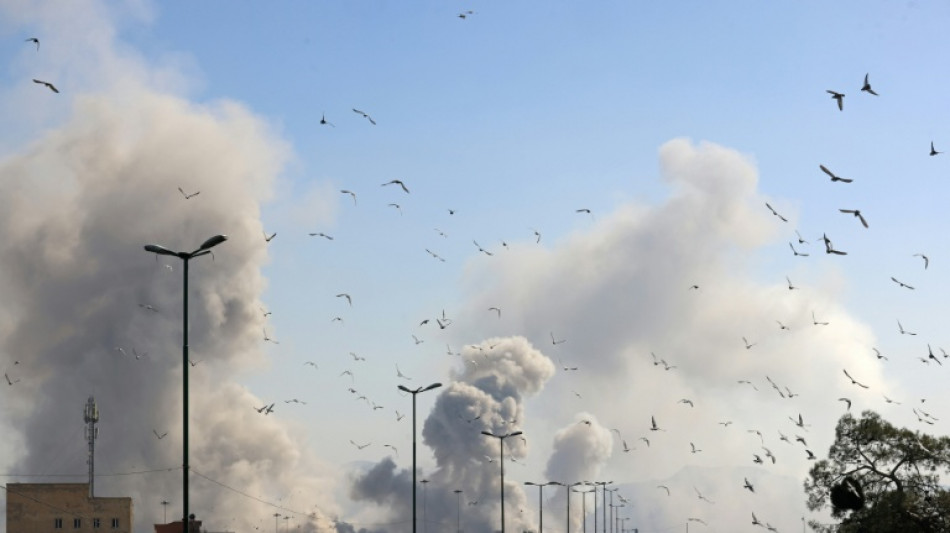
Heavy attacks hit Tehran as Israel says war in 'new phase' / Photo: © AFP

 London
 11 °C
11 °C

 Manchester
 11 °C
11 °C
 Glasgow
9 °C
Glasgow
9 °C
 Dublin
17 °C
Dublin
17 °C
 Belfast
15 °C
Belfast
15 °C
 Washington
 20 °C
20 °C
 Denver
27 °C
Denver
27 °C
 Atlanta
24 °C
Atlanta
24 °C
 Dallas
 31 °C
31 °C
 Houston Texas
31 °C
Houston Texas
31 °C
 New Orleans
28 °C
New Orleans
28 °C
 El Paso
28 °C
El Paso
28 °C
 Phoenix
39 °C
Phoenix
39 °C
 Los Angeles
32 °C
San Diego
31 °C
San Francisco
Los Angeles
32 °C
San Diego
31 °C
San Francisco
 21 °C
Chicago
21 °C
Chicago
 19 °C
Minneapolis
17 °C
Seattle
21 °C
Portland
25 °C
Salt Lake City
28 °C
Las Vegas
37 °C
Miami
29 °C
Jacksonville
24 °C
San Antonio
32 °C
Bermuda
26 °C
Nassau
20 °C
Iqaluit
19 °C
Minneapolis
17 °C
Seattle
21 °C
Portland
25 °C
Salt Lake City
28 °C
Las Vegas
37 °C
Miami
29 °C
Jacksonville
24 °C
San Antonio
32 °C
Bermuda
26 °C
Nassau
20 °C
Iqaluit
 0 °C
Yellowknife
6 °C
Anchorage
0 °C
Yellowknife
6 °C
Anchorage
 8 °C
Fairbanks
2 °C
Barrow
-8 °C
Calgary
13 °C
Edmonton
23 °C
Winnipeg
15 °C
Goose Bay
12 °C
Halifax
14 °C
Boston
17 °C
Ottawa
13 °C
Toronto
15 °C
Detroit
18 °C
Cleveland
17 °C
New York
21 °C
Baltimore
21 °C
Philadelphia
19 °C
Nuuk (Godthåb)
2 °C
Hong Kong
8 °C
Fairbanks
2 °C
Barrow
-8 °C
Calgary
13 °C
Edmonton
23 °C
Winnipeg
15 °C
Goose Bay
12 °C
Halifax
14 °C
Boston
17 °C
Ottawa
13 °C
Toronto
15 °C
Detroit
18 °C
Cleveland
17 °C
New York
21 °C
Baltimore
21 °C
Philadelphia
19 °C
Nuuk (Godthåb)
2 °C
Hong Kong
 24 °C
Singapore
27 °C
Melbourne
25 °C
Canberra
14 °C
Adelaide
18 °C
Darwin
29 °C
Perth
16 °C
Fort Worth
31 °C
Honolulu
28 °C
Sydney
19 °C
Johannesburg
14 °C
Dubai
33 °C
Mumbai
30 °C
Zürich
10 °C
Tokyo
19 °C
Seoul
15 °C
Delhi
26 °C
Beijing
10 °C
Riyadh
30 °C
Prague
9 °C
Pennsylvania
17 °C
Valletta
25 °C
Manama
32 °C
Warsaw
14 °C
Stockholm
13 °C
24 °C
Singapore
27 °C
Melbourne
25 °C
Canberra
14 °C
Adelaide
18 °C
Darwin
29 °C
Perth
16 °C
Fort Worth
31 °C
Honolulu
28 °C
Sydney
19 °C
Johannesburg
14 °C
Dubai
33 °C
Mumbai
30 °C
Zürich
10 °C
Tokyo
19 °C
Seoul
15 °C
Delhi
26 °C
Beijing
10 °C
Riyadh
30 °C
Prague
9 °C
Pennsylvania
17 °C
Valletta
25 °C
Manama
32 °C
Warsaw
14 °C
Stockholm
13 °C
Heavy attacks were reported in Tehran on Friday after Israel said it was hitting "regime infrastructure" in a "new phase" of the war it launched with the United States against Iran.
As the conflict entered its seventh day, its regional repercussions continued -- with Qatar saying it intercepted a drone targeting a US base, and Lebanon reporting the death toll from Israeli strikes had risen to 123.
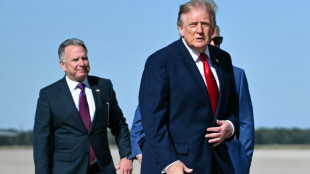
US President Donald Trump, meanwhile, said he would "have to be involved" in the appointment of Iran's next leader after US-Israeli strikes killed Ayatollah Ali Khamenei when the conflict began on Saturday.
Trump rejected the possibility that Khamenei's son Mojtaba could succeed his slain father, dismissing him as a "lightweight".
Early Friday, Iranian media reported heavy strikes in the capital, Tehran, shortly after Israel announced it was striking "regime infrastructure" in the city.
Israel's military chief had earlier warned the US-Israeli campaign was moving to "the next phase" and would "further dismantle the regime and its military capabilities".
"We have additional surprises ahead which I do not intend to disclose," Lieutenant General Eyal Zamir said in a televised statement.
US Defence Secretary Pete Hegseth also announced "firepower over Iran and over Tehran is about to surge dramatically".
Iran's Revolutionary Guards said they had fired missiles towards Tel Aviv after an earlier wave of explosions that caused a blaze at a residential building in the central Israeli city.
AFP journalists heard two near-simultaneous waves of explosions in Tel Aviv late Thursday, while rocket trails also lit up the sky in Netanya, further north.
- 'Why this war?' -
The conflict has drawn in Israel's neighbour Lebanon after Iranian-backed Hezbollah launched missiles in retaliation for the war.
Israel has carried out waves of air strikes in Lebanon, killing 123 people, the Lebanese health ministry said.
Tens of thousands of people have fled their homes after warnings from Israel that they were at risk, with a mass exodus from Beirut's southern suburbs leaving the area "almost empty", the official National News Agency said Thursday.
Hundreds of displaced families were left to seek shelter on a Beirut beach, where they waited despondently.
A 61-year-old man who gave his name only as Yousef said he was sleeping on the beach for the second time, after evacuating during a 2024 war between Israel and Hezbollah.
It's "luck" that decides if you survive, he told AFP.
"Only God, who created you, can take you."
He said he had sent his family to Syria for safety and was debating returning to his home despite the risks.
"Why this war?" he implored.
In Iran, an internet blackout has limited information on how the country's population is weathering the assault.
Internet connectivity is running at around one percent of usual levels, according to monitor group Netblocks, while authorities have warned people against using VPNs.
In Tehran, there were a few signs of normal life on Thursday: children playing with a balloon, a father accompanying his daughter as she rode a small four-wheel bike.
But, plainclothes security officials were also out in force.
An engineer living in Tehran said security forces "roam the streets on their own, creating fear and intimidation, checking people's phones, going through them, and harassing people".
And Ugandan student Oscar Nyegyema, arriving home at Entebbe after being evacuated from Tehran, described sheer terror as strikes shook the city.
"We could hear the ground trembling; we could hear the ground shake. We were all scared, we were all feeling devastated; we really did not know whether we could make it out," he said.
- 'Harmony and peace' -
Iran has retaliated against Israel and targets in neighbouring Gulf countries, including Qatar, which said its air defences thwarted a drone attack targeting the US airbase at Al-Udeid.
Bahrain said early Friday that Iran had targeted a hotel and two residential buildings in the capital, but that there was "no loss of life", while Saudi Arabia said it intercepted three ballistic missiles.
Thirteen people, seven of them civilians, have been killed in Gulf countries since the war began, including an 11-year-old girl in Kuwait.
The conflict has expanded as far afield as the Sri Lankan coast, where a US submarine torpedoed an Iranian frigate, and Azerbaijan, which threatened retaliation after a drone hit an airport.
An Iranian state-run foundation said the death toll from US and Israeli strikes on the country had risen to 1,230, a number AFP could not independently verify.
The US military has reported the deaths of six of its personnel since the war began Saturday, while at least 11 people have been killed in Israel.
Iranian Foreign Minister Abbas Araghchi struck a defiant tone Thursday, saying Tehran had not sought a ceasefire and did not "see any reason why we should negotiate with the US".
And there was no sign from Washington that an end was in sight, as Hegseth told reporters there was "no shortage" of US munitions.
"We have only just begun to fight, and fight decisively," he said.
But Admiral Brad Cooper, the head of Central Command responsible for US forces in the Middle East, told a news conference in Tampa, Florida, that strikes from Iran were diminishing.
"Ballistic missile attacks have decreased by 90 percent since day one. Drone attacks have decreased by 83 percent since day one," said Cooper.
Washington has offered shifting goals for the conflict, including denying Iran nuclear weapons and offering its people the opportunity to "rise up".
- Khamenei's son 'unacceptable' -
Trump said Thursday he wanted a say in Iran's next leader, drawing a comparison with Venezuela, where interim president Delcy Rodriguez has cooperated with him under threat of violence after Washington ousted her boss, Nicolas Maduro, in a military raid.
"Khamenei's son is unacceptable to me," Trump told Axios.
"We want someone that will bring harmony and peace to Iran," he said, threatening more war if a better alternative was not found.
The conflict has disrupted markets, energy supplies and global travel, with most Asian stocks down Friday despite a reprieve from a recent surge in oil prices.
burs-sah/fox
R.Sadowski--GL