Iran's Guards threaten US sites as Trump waits for Tehran response / Photo: © AFP

 London
 14 °C
14 °C

 Manchester
 11 °C
11 °C
 Glasgow
 11 °C
11 °C
 Dublin
15 °C
Dublin
15 °C
 Belfast
15 °C
Belfast
15 °C
 Washington
 14 °C
14 °C
 Denver
 27 °C
27 °C
 Atlanta
24 °C
Atlanta
24 °C
 Dallas
33 °C
Dallas
33 °C
 Houston Texas
30 °C
Houston Texas
30 °C
 New Orleans
29 °C
New Orleans
29 °C
 El Paso
32 °C
El Paso
32 °C
 Phoenix
37 °C
Phoenix
37 °C
 Los Angeles
29 °C
San Diego
27 °C
San Francisco
18 °C
Chicago
16 °C
Minneapolis
15 °C
Seattle
17 °C
Portland
20 °C
Salt Lake City
26 °C
Las Vegas
Los Angeles
29 °C
San Diego
27 °C
San Francisco
18 °C
Chicago
16 °C
Minneapolis
15 °C
Seattle
17 °C
Portland
20 °C
Salt Lake City
26 °C
Las Vegas
 35 °C
Miami
35 °C
Miami
 29 °C
Jacksonville
24 °C
San Antonio
29 °C
Jacksonville
24 °C
San Antonio
 34 °C
Bermuda
27 °C
Nassau
14 °C
Iqaluit
3 °C
Yellowknife
7 °C
Anchorage
11 °C
Fairbanks
14 °C
Barrow
3 °C
Calgary
34 °C
Bermuda
27 °C
Nassau
14 °C
Iqaluit
3 °C
Yellowknife
7 °C
Anchorage
11 °C
Fairbanks
14 °C
Barrow
3 °C
Calgary
 6 °C
Edmonton
23 °C
Winnipeg
17 °C
Goose Bay
18 °C
Halifax
14 °C
Boston
14 °C
Ottawa
20 °C
Toronto
20 °C
Detroit
18 °C
Cleveland
18 °C
New York
15 °C
Baltimore
15 °C
Philadelphia
16 °C
Nuuk (Godthåb)
1 °C
Hong Kong
27 °C
Singapore
27 °C
Melbourne
25 °C
Canberra
10 °C
Adelaide
14 °C
Darwin
26 °C
Perth
14 °C
Fort Worth
34 °C
Honolulu
26 °C
Sydney
16 °C
Johannesburg
16 °C
Dubai
32 °C
Mumbai
28 °C
Zürich
13 °C
Tokyo
19 °C
Seoul
19 °C
Delhi
22 °C
Beijing
17 °C
Riyadh
30 °C
Prague
12 °C
Pennsylvania
15 °C
Valletta
20 °C
Manama
33 °C
Warsaw
11 °C
Stockholm
10 °C
6 °C
Edmonton
23 °C
Winnipeg
17 °C
Goose Bay
18 °C
Halifax
14 °C
Boston
14 °C
Ottawa
20 °C
Toronto
20 °C
Detroit
18 °C
Cleveland
18 °C
New York
15 °C
Baltimore
15 °C
Philadelphia
16 °C
Nuuk (Godthåb)
1 °C
Hong Kong
27 °C
Singapore
27 °C
Melbourne
25 °C
Canberra
10 °C
Adelaide
14 °C
Darwin
26 °C
Perth
14 °C
Fort Worth
34 °C
Honolulu
26 °C
Sydney
16 °C
Johannesburg
16 °C
Dubai
32 °C
Mumbai
28 °C
Zürich
13 °C
Tokyo
19 °C
Seoul
19 °C
Delhi
22 °C
Beijing
17 °C
Riyadh
30 °C
Prague
12 °C
Pennsylvania
15 °C
Valletta
20 °C
Manama
33 °C
Warsaw
11 °C
Stockholm
10 °C
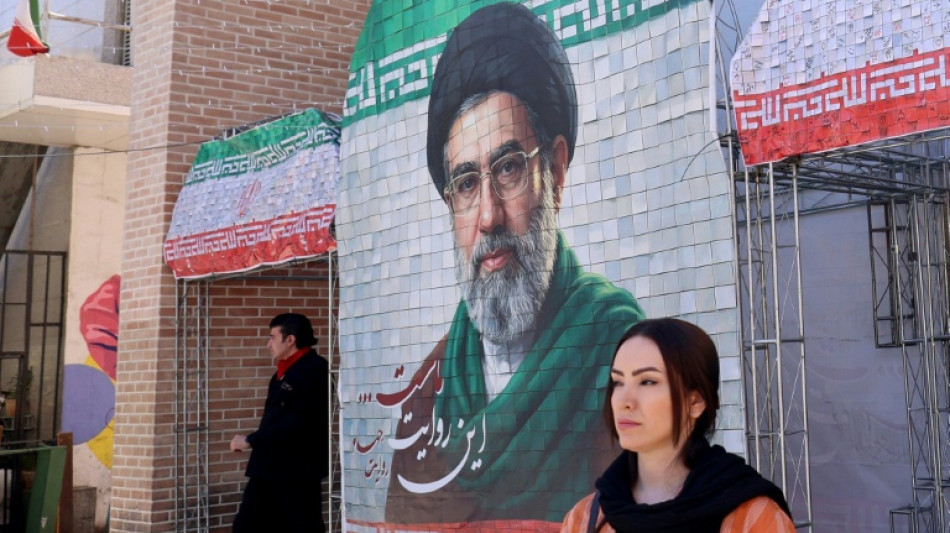
Iran's Islamic Revolutionary Guards threatened Saturday to target US sites if its tankers come under fire, Iranian media reported, as Washington continued to wait for Tehran's response to its latest negotiating position.
"Any attack on Iranian tankers and commercial vessels will result in a heavy attack on one of the American centres in the region and enemy ships," it said, a day after US strikes on two Iranian tankers in the Gulf of Oman.
US President Donald Trump had said on Friday he was expecting Iran's answer to Washington's latest proposal for a peace deal "supposedly tonight".
But if Tehran sent Pakistani mediators a response, there was no public sign of it, and Iran's Foreign Minister Abbas Araghchi called into question the reliability of the US leadership in a call with his Turkish counterpart.
"The recent escalation of tensions by American forces in the Persian Gulf and their numerous actions in violating the ceasefire have added to suspicions about the motivation and seriousness of the American side in the path of diplomacy," he said, according to an Iranian account of the call published by the ISNA news agency.
On Friday, a US fighter jet fired on and disabled two Iranian-flagged tankers that Washington accused of challenging its blockade of Iran's ports. An Iranian military official told local media the navy had responded with strikes.
That incident followed another flare-up the night before in the Strait of Hormuz, a vital international sea lane that Iran is seeking to control in order to extract tolls and wield economic leverage over the United States and its allies.
The US says it is unacceptable for Tehran to control the key oil route.
Washington has sent Iran, via Pakistani mediators, a proposal to extend the truce in the Gulf to allow for talks on a final settlement of the conflict, launched 10 weeks ago with US-Israeli strikes on Iran.
A reporter for French broadcaster LCI, Margot Haddad, said Saturday that Trump had told her in a brief interview he still expected to find out Iran's answer "very soon".
Iran's foreign ministry spokesman said Friday the proposal was still "under review".
- Oil slick -
Qatar's prime minister, Sheikh Mohammed bin Abdulrahman Al Thani, met with US Vice President JD Vance in Washington on Friday and discussed the Pakistani-led efforts to broker a permanent peace.
Iran has attacked sites in Qatar during the war, pointing to the wealthy emirate's role as host of a major US air base.
Meanwhile, satellite images have shown an apparent oil slick spreading off the coast of Iran's Kharg Island, a key oil export terminal for the Islamic republic.
It was not immediately clear what had caused the apparent spill, which was off the island's west coast and appeared to cover more than 20 square miles (52 square kilometres), according to global monitor Orbital EOS.
A UK-based non-governmental organisation, the Conflict and Environment Observatory, told AFP that by Saturday the slick was "much reduced", and may have been caused by leaking oil infrastructure.
Kharg Island is at the heart of Iran's oil export industry, a lynchpin of its battered economy, and lies in the Gulf far north of the narrow Strait of Hormuz.
Following the start of the war on February 28, Iran largely closed the strait, throwing global markets into turmoil and driving up oil prices.
The US later imposed its own blockade of Iranian ports in response, and Trump this week abandoned a short-lived US naval operation designed to reopen the strait to commercial shipping.
Britain said on Saturday it was sending a naval destroyer to the region as part of "prudent planning" for a British- and French-led coalition to facilitate shipping in the Strait of Hormuz once a durable ceasefire is reached.
- Lebanon front -
A parallel ceasefire on the war's Lebanon front is also under strain amid daily exchanges of fire between Israel and Iran-backed Hezbollah.
Authorities said at least eight people were killed in Israeli strikes in southern Lebanon on Saturday, while state media reported air raids targeting a highway south of Beirut, outside the militant group's traditional strongholds.
The fresh attacks were some of the most intense since the start of a three-week-old ceasefire between Israel and Hezbollah.
Hezbollah said it had targeted troops in northern Israel with drones on at least two occasions in response to the continued strikes.
Israel's military said several explosive drones were launched into Israeli territory, with one army reservist severely wounded and two others moderately injured.
The fresh strikes come as Lebanon and Israel, officially at war since 1948, are to hold direct negotiations in Washington next week, which Hezbollah vehemently opposes.
burs/acb/mlm
L.Sobczak--GL