Israel strikes southern Lebanon as far-right ministers call for escalation / Photo: © AFP

 London
 12 °C
12 °C

 Manchester
7 °C
Manchester
7 °C
 Glasgow
12 °C
Glasgow
12 °C
 Dublin
13 °C
Dublin
13 °C
 Belfast
12 °C
Belfast
12 °C
 Washington
 15 °C
15 °C
 Denver
17 °C
Denver
17 °C
 Atlanta
20 °C
Atlanta
20 °C
 Dallas
31 °C
Dallas
31 °C
 Houston Texas
29 °C
Houston Texas
29 °C
 New Orleans
 28 °C
28 °C
 El Paso
20 °C
El Paso
20 °C
 Phoenix
32 °C
Phoenix
32 °C
 Los Angeles
23 °C
San Diego
21 °C
San Francisco
18 °C
Chicago
Los Angeles
23 °C
San Diego
21 °C
San Francisco
18 °C
Chicago
 18 °C
Minneapolis
15 °C
Seattle
14 °C
Portland
17 °C
Salt Lake City
17 °C
Las Vegas
29 °C
Miami
18 °C
Minneapolis
15 °C
Seattle
14 °C
Portland
17 °C
Salt Lake City
17 °C
Las Vegas
29 °C
Miami
 25 °C
Jacksonville
25 °C
San Antonio
28 °C
Bermuda
28 °C
Nassau
14 °C
Iqaluit
5 °C
Yellowknife
12 °C
Anchorage
25 °C
Jacksonville
25 °C
San Antonio
28 °C
Bermuda
28 °C
Nassau
14 °C
Iqaluit
5 °C
Yellowknife
12 °C
Anchorage
 10 °C
Fairbanks
6 °C
Barrow
-2 °C
Calgary
11 °C
Edmonton
18 °C
Winnipeg
16 °C
Goose Bay
13 °C
Halifax
12 °C
Boston
11 °C
Ottawa
9 °C
Toronto
14 °C
Detroit
15 °C
Cleveland
17 °C
New York
15 °C
Baltimore
15 °C
Philadelphia
14 °C
Nuuk (Godthåb)
3 °C
Hong Kong
31 °C
Singapore
30 °C
Melbourne
26 °C
Canberra
10 °C
Fairbanks
6 °C
Barrow
-2 °C
Calgary
11 °C
Edmonton
18 °C
Winnipeg
16 °C
Goose Bay
13 °C
Halifax
12 °C
Boston
11 °C
Ottawa
9 °C
Toronto
14 °C
Detroit
15 °C
Cleveland
17 °C
New York
15 °C
Baltimore
15 °C
Philadelphia
14 °C
Nuuk (Godthåb)
3 °C
Hong Kong
31 °C
Singapore
30 °C
Melbourne
26 °C
Canberra
 22 °C
Adelaide
26 °C
Darwin
22 °C
Adelaide
26 °C
Darwin
 32 °C
Perth
20 °C
Fort Worth
27 °C
Honolulu
28 °C
Sydney
23 °C
Johannesburg
16 °C
Dubai
31 °C
Mumbai
30 °C
Zürich
11 °C
Tokyo
28 °C
Seoul
26 °C
Delhi
28 °C
Beijing
32 °C
Perth
20 °C
Fort Worth
27 °C
Honolulu
28 °C
Sydney
23 °C
Johannesburg
16 °C
Dubai
31 °C
Mumbai
30 °C
Zürich
11 °C
Tokyo
28 °C
Seoul
26 °C
Delhi
28 °C
Beijing
 22 °C
Riyadh
28 °C
Prague
10 °C
Pennsylvania
12 °C
Valletta
22 °C
Manama
32 °C
Warsaw
7 °C
Stockholm
6 °C
22 °C
Riyadh
28 °C
Prague
10 °C
Pennsylvania
12 °C
Valletta
22 °C
Manama
32 °C
Warsaw
7 °C
Stockholm
6 °C
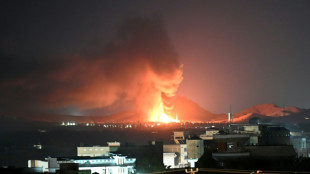
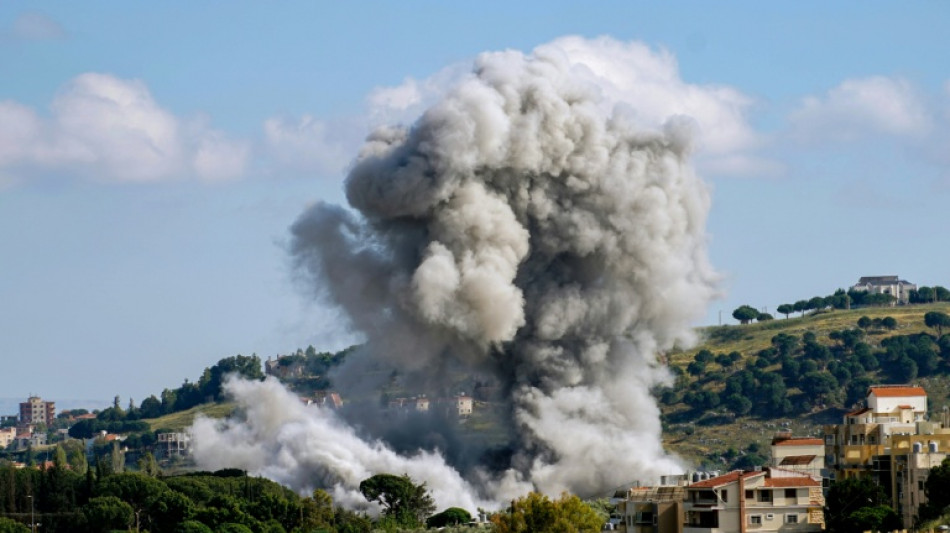
The Israeli army intensified strikes in southern Lebanon on Monday, as two far-right Israeli ministers called for escalation including attacks on Lebanese capital Beirut.
The airstrikes come as the United States and Iran seek to finalise the terms of an agreement to end the Middle East conflict, which could include the Lebanon front, where Israel and Hezbollah have waged war since March 2.
Despite a ceasefire that came into effect on April 17, Israel and Hezbollah have continued to exchange fire on a near-daily basis.
Dozens of Israeli strikes targeted several towns and villages in southern Lebanon in the early hours of Monday, killing three people in two cars and on a motorcycle, Lebanon's National News Agency (NNA) reported.
Israeli airstrikes later targeted several towns near the ancient city of Tyre on Monday, according to NNA.
Those strikes came after Israel issued evacuation orders for 10 villages, accusing Hezbollah of breaching the truce.
"In light of Hezbollah's violation of the ceasefire agreement, the Israel Defense Forces are compelled to operate against it with force," the military's Arabic-language spokesman Colonel Avichay Adraee said in a social media post, listing the names of the villages.
Hezbollah, a Lebanese Iran-backed movement, has regularly launched drone attacks against Israeli forces inside Lebanese territory and across the border, including several on Monday.
Later on Monday, Adraee issued another evacuation warning directed at residents of a building in Rashidieh and two buildings in Burj al-Shamali, near the city of Tyre.
According to Lebanese authorities, Israeli strikes since early March have killed more than 3,100 people.
The Israeli military also announced on Monday that a soldier had been killed the previous day in southern Lebanon.
That brings the number of Israeli soldiers killed since the outbreak of hostilities with Hezbollah to 23. One civilian contractor has also been killed.
- 'Buildings must fall' -
Two far-right ministers called for an expansion of Israel's military campaign in Lebanon.
"There is an urgent need to put an end to the threat posed by Hezbollah's explosive drones," Finance Minister Bezalel Smotrich, who lives in an occupied West Bank settlement, said on Telegram.
"For every explosive drone strike, 10 buildings must fall in Beirut."
National Security Minister Itamar Ben Gvir, another figurehead of the Israeli far-right, called for a "return to intensive warfare" and for "taking control" of the Zahrani River, located further north than the Litani River.
The Israeli army, which controls a strip of land approximately 10 kilometres deep in Lebanese territory, has designated the Litani River as the boundary of the area to be cleared of Hezbollah fighters.
On Monday, Lebanese President Joseph Aoun defended his decision to hold talks with Israel, adding that his demand for a complete Israeli withdrawal from southern Lebanon was "non-negotiable".
Lebanon and Israel, which do not have diplomatic relations, are holding another round of negotiations in Washington on June 2 and 3, preceded by a meeting of military officials from both countries at the Pentagon on May 29.
Hezbollah leader Naim Qassem reiterated his opposition to direct negotiations between Lebanon and Israel on Sunday evening and repeated his refusal to allow his movement to disarm.
US Secretary of State Marco Rubio condemned his remarks, accusing him of calling for the "overthrow" of the Lebanese government and of wanting to "plunge Lebanon back into chaos".
In response to Rubio, Hezbollah MP Ali Ammar called on the US administration on Monday to stop "interfering in Lebanese affairs and destabilising the country".
P.Majewski--GL