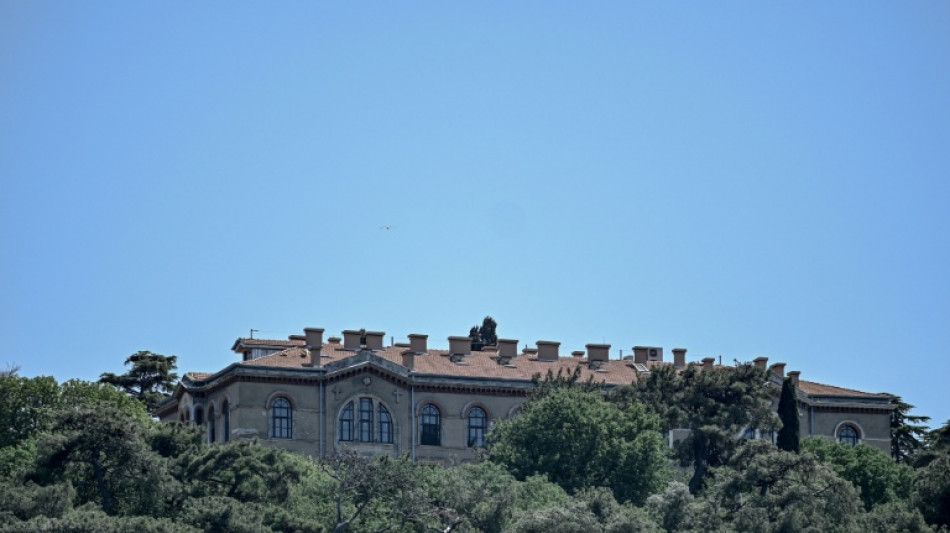
Revival hopes grow for long-closed Greek Orthodox seminary off Istanbul / Photo: © AFP
 London
 14 °C
14 °C

 Manchester
 13 °C
13 °C
 Glasgow
12 °C
Glasgow
12 °C
 Dublin
12 °C
Dublin
12 °C
 Belfast
 12 °C
12 °C
 Washington
 22 °C
22 °C
 Denver
20 °C
Denver
20 °C
 Atlanta
24 °C
Atlanta
24 °C
 Dallas
31 °C
Dallas
31 °C
 Houston Texas
30 °C
Houston Texas
30 °C
 New Orleans
 28 °C
28 °C
 El Paso
24 °C
El Paso
24 °C
 Phoenix
24 °C
Phoenix
24 °C
 Los Angeles
21 °C
San Diego
21 °C
San Francisco
16 °C
Chicago
20 °C
Minneapolis
15 °C
Seattle
16 °C
Portland
19 °C
Salt Lake City
23 °C
Las Vegas
29 °C
Miami
26 °C
Jacksonville
25 °C
San Antonio
29 °C
Bermuda
27 °C
Nassau
22 °C
Iqaluit
3 °C
Yellowknife
6 °C
Anchorage
12 °C
Fairbanks
7 °C
Barrow
-1 °C
Calgary
9 °C
Edmonton
25 °C
Winnipeg
11 °C
Goose Bay
16 °C
Halifax
18 °C
Boston
20 °C
Ottawa
14 °C
Toronto
17 °C
Detroit
18 °C
Cleveland
22 °C
New York
23 °C
Baltimore
21 °C
Philadelphia
22 °C
Nuuk (Godthåb)
6 °C
Hong Kong
Los Angeles
21 °C
San Diego
21 °C
San Francisco
16 °C
Chicago
20 °C
Minneapolis
15 °C
Seattle
16 °C
Portland
19 °C
Salt Lake City
23 °C
Las Vegas
29 °C
Miami
26 °C
Jacksonville
25 °C
San Antonio
29 °C
Bermuda
27 °C
Nassau
22 °C
Iqaluit
3 °C
Yellowknife
6 °C
Anchorage
12 °C
Fairbanks
7 °C
Barrow
-1 °C
Calgary
9 °C
Edmonton
25 °C
Winnipeg
11 °C
Goose Bay
16 °C
Halifax
18 °C
Boston
20 °C
Ottawa
14 °C
Toronto
17 °C
Detroit
18 °C
Cleveland
22 °C
New York
23 °C
Baltimore
21 °C
Philadelphia
22 °C
Nuuk (Godthåb)
6 °C
Hong Kong
 30 °C
Singapore
30 °C
Singapore
 32 °C
Melbourne
28 °C
Canberra
32 °C
Melbourne
28 °C
Canberra
 15 °C
Adelaide
16 °C
Darwin
35 °C
Perth
26 °C
Fort Worth
30 °C
Honolulu
27 °C
Sydney
19 °C
Johannesburg
16 °C
Dubai
33 °C
Mumbai
29 °C
Zürich
11 °C
Tokyo
25 °C
Seoul
27 °C
Delhi
30 °C
Beijing
29 °C
Riyadh
30 °C
Prague
13 °C
Pennsylvania
22 °C
Valletta
25 °C
Manama
36 °C
Warsaw
12 °C
Stockholm
13 °C
15 °C
Adelaide
16 °C
Darwin
35 °C
Perth
26 °C
Fort Worth
30 °C
Honolulu
27 °C
Sydney
19 °C
Johannesburg
16 °C
Dubai
33 °C
Mumbai
29 °C
Zürich
11 °C
Tokyo
25 °C
Seoul
27 °C
Delhi
30 °C
Beijing
29 °C
Riyadh
30 °C
Prague
13 °C
Pennsylvania
22 °C
Valletta
25 °C
Manama
36 °C
Warsaw
12 °C
Stockholm
13 °C
Hopes are growing that a long-closed Greek Orthodox seminary on an island off Istanbul could reopen soon, with formulas for its new status under discussion, Bishop Aravissu Kassianos Nikolar told AFP.
Located on Heybeliada, one of the Princes' Islands, the Halki seminary opened in the mid-19th century and was the main theological school for the Eastern Orthodox Church until it was closed under a Turkish law in 1971.
Despite decades of pressure on Ankara to reopen it -- led by Ecumenical Patriarch Bartholomew I, leader of the world's 260 million Orthodox Christians and a graduate of the seminary -- the school has remained closed.
But the seminary made headlines in September when US President Donald Trump raised the issue with Turkish counterpart Recep Tayyip Erdogan, raising hopes the deadlock could soon be broken.
"At this stage, we are making quite good progress overall. Things are positive at the moment, 100 percent positive," the bishop told AFP in a rare interview just days before Trump was to fly in on his first official visit to attend the July 7-8 NATO summit.
The seminary has symbolic significance for the world's Orthodox community, which was based in Constantinople until 1453 when the Ottomans conquered the city and renamed it Istanbul.
- Renovation in full swing -
Perched on a hill, the historic seminary was shrouded in scaffolding, the sprawling complex undergoing extensive renovation ahead of its eventual reopening.
As well as the seminary, the site incorporates a monastery and a high school although it too has long sat empty.
Inside, an AFP team saw the renovation work in full swing ahead of what the patriarch has said would be a September deadline for it to be completed.
In one classroom, rows of new chairs faced an electronic display as a portrait of modern Turkey's founder Mustafa Kemal Ataturk gazed down from the wall -- a mirror image of classrooms across Turkey.
What brought about its closure was a 1971 court ruling that all private educational institutions must come under state control -- a decision rejected by the patriarchate as it wanted to preserve the seminary's independence.
But after years of closure, the patriarchate has agreed to accept a formula that would let the seminary reopen, operating under Turkish oversight.
Renewed interest in the site was sparked in 2024 when Turkey's Education Minister Yusuf Tekin visited and spoke of the importance of preserving the building's original character in any renovation.
He also conveyed a message from Erdogan that a solution had to be found to reopen the institution.
"That kicked off negotiations with Ankara," Nikolar said, with plans for its reopening gaining real momentum after last September's White House talks.
The initial proposal was to reopen the seminary as a university operating under the Turkey's Higher Education Board (YOK).
That later evolved into the idea of establishing an institute offering post-graduate theological training over a two-year period that would be affiliated with a Turkish university, and a quota of 60-70 students.
The latest talks in Ankara last month were attended by Erdogan and Patriarch Bartholomew, said Nikolar who was also present.
- 'A major loss' -
Nikolar told AFP there was "no set time" for the reopening, but said Erdogan had urged all parties to finalise the matter swiftly, saying: "Dont lose too much time".
As for Trump's involvement, the bishop said he was someone who held Patriarch Bartholomew "in high regard".
Not only did the seminary have a history of educating distinguished clergy but it also reached out to other faiths, he said.
"We should not look at it solely from the perspective of Christianity, it also achieved major success in interfaith dialogue. The school's mission was to educate broad-minded students, not people with a narrow outlook on the world," Nikolar said.
"That is why this school is valuable to Trump, and our president (Erdogan) is also aware of its importance. The fact that such a valuable institution has remained closed and been unable to train clergy is a major loss."
Even though it is still closed, there's already a high demand to study at the seminary, he said.
"It's a valuable institution. This school has never been forgotten."
E.Dudek--GL