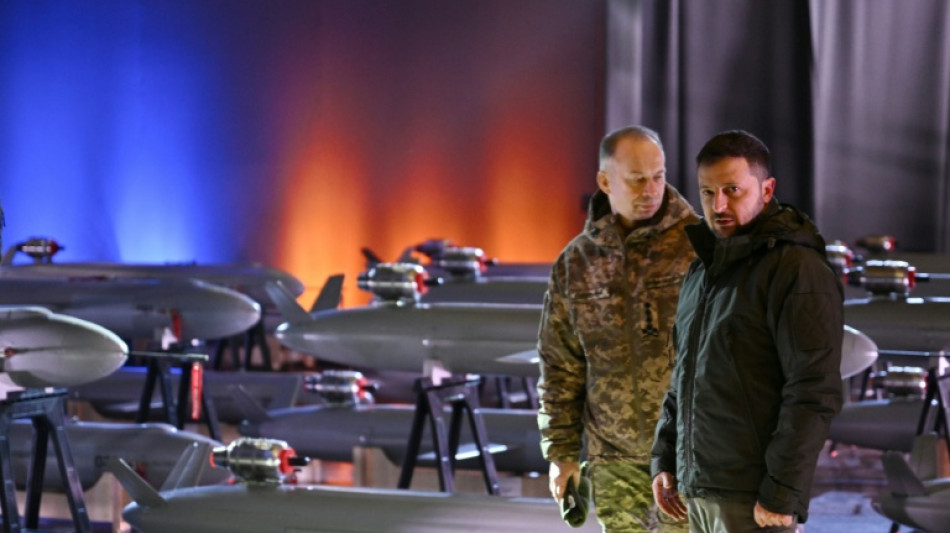
Oleksandr Syrsky, Ukraine's under-fire commander-in-chief / Photo: © AFP
 London
 22 °C
22 °C

 Manchester
18 °C
Manchester
18 °C
 Glasgow
 26 °C
26 °C
 Dublin
17 °C
Dublin
17 °C
 Belfast
 17 °C
17 °C
 Washington
22 °C
Washington
22 °C
 Denver
 15 °C
15 °C
 Atlanta
27 °C
Atlanta
27 °C
 Dallas
30 °C
Dallas
30 °C
 Houston Texas
31 °C
Houston Texas
31 °C
 New Orleans
30 °C
New Orleans
30 °C
 El Paso
22 °C
El Paso
22 °C
 Phoenix
30 °C
Phoenix
30 °C
 Los Angeles
21 °C
San Diego
21 °C
San Francisco
14 °C
Chicago
23 °C
Minneapolis
16 °C
Seattle
Los Angeles
21 °C
San Diego
21 °C
San Francisco
14 °C
Chicago
23 °C
Minneapolis
16 °C
Seattle
 13 °C
Portland
12 °C
Salt Lake City
16 °C
Las Vegas
27 °C
Miami
32 °C
Jacksonville
29 °C
San Antonio
29 °C
Bermuda
28 °C
Nassau
20 °C
Iqaluit
6 °C
Yellowknife
2 °C
Anchorage
11 °C
Fairbanks
5 °C
Barrow
13 °C
Portland
12 °C
Salt Lake City
16 °C
Las Vegas
27 °C
Miami
32 °C
Jacksonville
29 °C
San Antonio
29 °C
Bermuda
28 °C
Nassau
20 °C
Iqaluit
6 °C
Yellowknife
2 °C
Anchorage
11 °C
Fairbanks
5 °C
Barrow
 -2 °C
Calgary
7 °C
Edmonton
28 °C
Winnipeg
13 °C
Goose Bay
17 °C
Halifax
18 °C
Boston
18 °C
Ottawa
15 °C
Toronto
18 °C
Detroit
21 °C
Cleveland
21 °C
New York
20 °C
Baltimore
21 °C
Philadelphia
21 °C
Nuuk (Godthåb)
7 °C
Hong Kong
29 °C
Singapore
29 °C
Melbourne
31 °C
Canberra
5 °C
Adelaide
-2 °C
Calgary
7 °C
Edmonton
28 °C
Winnipeg
13 °C
Goose Bay
17 °C
Halifax
18 °C
Boston
18 °C
Ottawa
15 °C
Toronto
18 °C
Detroit
21 °C
Cleveland
21 °C
New York
20 °C
Baltimore
21 °C
Philadelphia
21 °C
Nuuk (Godthåb)
7 °C
Hong Kong
29 °C
Singapore
29 °C
Melbourne
31 °C
Canberra
5 °C
Adelaide
 11 °C
Darwin
11 °C
Darwin
 25 °C
Perth
20 °C
Fort Worth
30 °C
Honolulu
24 °C
Sydney
13 °C
Johannesburg
22 °C
Dubai
35 °C
Mumbai
25 °C
Perth
20 °C
Fort Worth
30 °C
Honolulu
24 °C
Sydney
13 °C
Johannesburg
22 °C
Dubai
35 °C
Mumbai
 25 °C
Zürich
28 °C
Tokyo
23 °C
Seoul
17 °C
Delhi
32 °C
Beijing
21 °C
Riyadh
40 °C
Prague
24 °C
Pennsylvania
19 °C
Valletta
27 °C
Manama
36 °C
Warsaw
20 °C
Stockholm
16 °C
25 °C
Zürich
28 °C
Tokyo
23 °C
Seoul
17 °C
Delhi
32 °C
Beijing
21 °C
Riyadh
40 °C
Prague
24 °C
Pennsylvania
19 °C
Valletta
27 °C
Manama
36 °C
Warsaw
20 °C
Stockholm
16 °C
Ukraine's Soviet-trained top commander Oleksandr Syrsky -- who could be sacked this week -- led some of Kyiv's most decisive military campaigns, but clashed with reformers as drones and technology changed the face of war.
His possible removal -- reported to be under consideration by President Volodymyr Zelensky, according to Ukrainian and foreign media -- comes as Ukraine appears to be in its best position in the war for months.
Syrsky halted Russia's advance on Kyiv after the 2022 invasion and led Ukraine's brazen counter-attack into Russia's Kursk region in 2024.
But, born in Russia and trained in Moscow, the 60-year-old never managed to shake his reputation as a Soviet-style general.
Critics accused him of not caring about the number of his troops killed, earning him the nickname "butcher."
"He is very tough, but an army general has to be tough," a high-placed Ukrainian official told AFP after his 2024 appointment as commander-in-chief.
As fatigue -- and anger at army scandals -- grew, that approach grated.
Zelensky's surprise ousting of reformist Defence Minister Mykhailo Fedorov -- brought in to modernise the army -- triggered the largest war-related demonstrations since 2022.
"Shame on Syrsky", young people in Kyiv chanted, calling for him to be removed.
- 'Not a politician' -
For a while, Zelensky appeared to side with Syrsky.
To the Ukrainian leader -- seen as mistrusting of those with political ambitions or popular appeal -- the ever-loyal Syrsky, a career military man, was in many respects an ideal commander.
"My job is war ... I have no political ambitions. I deal with the war 24/7," Syrsky said in a rare article published Monday.
Analysts agreed Syrsky was not a threat to Zelensky, unlike his predecessor, the ultra-popular Valery Zaluzhny, who was removed.
"He is not a politician. Just look at him. He speaks Ukrainian poorly and is not a public communicator," analyst Anatolii Oktysiuk of the KI Research Group in Kyiv told AFP.
"He always adapts to what Zelensky wants."
That style is the root of the criticism he now faces.
Syrsky "built a system in which initiative and independence are suppressed, while a loyal cadre of generals is promoted instead," Oktysiuk said.
In a blistering attack after being ousted, Fedorov said Syrsky had hobbled his attempts at modernisation -- on procurement, equipment and mobilisation.
"All the initiatives we were proposing started to be blocked, and Syrsky ... is not ready to look you in the eye and openly talk about those problems," Fedorov said.
Syrsky rejected the charges and urged the matter be resolved behind closed doors.
"A war is won by real work, not by the public drama surrounding it," he said.
- Russian roots -
Like many officers of his generation, Syrsky was born in Soviet Russia and studied at a Red Army academy in Moscow.
In the 1980s, he was deployed to Soviet Ukraine, staying there to study at the National Defence University in Kyiv and joining the new Ukrainian army after the USSR collapse.
Three decades later, his command of the Ukrainian language is far from perfect and his parents and brother still live in Russia.
When appointed, his brother told Russia's state TASS news agency the pair had long stopped talking.
"I'm not in touch with him ... I don't know anything about him," he was cited as saying.
After Ukraine attacked Russia's western Kursk region, a popular internet meme quipped: "Syrsky explained the reason for the attack on Kursk: 'I just want to go home'."
Discreet about his personal life, Syrsky is married and the father of two sons, an army spokesman told AFP.
- 'Younger version' -
Even his critics acknowledge his military achievements.
Syrsky led the defence of Kyiv when Russia tried to surround the city in the first days of its invasion.
Six months later, he inflicted a humiliating defeat with a lightning counter-offensive in the northeastern Kharkiv region.
And then in 2024 he masterminded the Kursk attack -- the first sustained foreign incursion into Russia since WWII.
"We can't treat such a commander as someone whose contribution we don't fully appreciate," his rival Fedorov said last week.
"But the war has completely changed ... The command-and-control system has changed, and we have to change."
The question for Zelensky -- and one being watched closely in Moscow -- is what that change looks like.
"What (Zelensky) needs is a younger version of Syrsky," said political expert Volodymyr Fesenko.
"Someone more flexible, more communicative, and more appealing to society -- but such a person does not seem to exist."
A.Walczak--GL