Saudi says resilience tested, vows response after deadly airport attacks / Photo: © SAUDI MEDIA MINISTRY/AFP

 London
 16 °C
16 °C

 Manchester
16 °C
Manchester
16 °C
 Glasgow
 15 °C
15 °C
 Dublin
 19 °C
19 °C
 Belfast
16 °C
Belfast
16 °C
 Washington
17 °C
Washington
17 °C
 Denver
16 °C
Denver
16 °C
 Atlanta
18 °C
Atlanta
18 °C
 Dallas
22 °C
Dallas
22 °C
 Houston Texas
26 °C
Houston Texas
26 °C
 New Orleans
23 °C
New Orleans
23 °C
 El Paso
19 °C
El Paso
19 °C
 Phoenix
 22 °C
22 °C
 Los Angeles
15 °C
San Diego
Los Angeles
15 °C
San Diego
 16 °C
San Francisco
16 °C
San Francisco
 11 °C
Chicago
20 °C
Minneapolis
18 °C
Seattle
5 °C
Portland
4 °C
Salt Lake City
14 °C
Las Vegas
17 °C
Miami
29 °C
Jacksonville
23 °C
San Antonio
24 °C
Bermuda
27 °C
Nassau
15 °C
Iqaluit
-5 °C
Yellowknife
4 °C
Anchorage
5 °C
Fairbanks
1 °C
Barrow
11 °C
Chicago
20 °C
Minneapolis
18 °C
Seattle
5 °C
Portland
4 °C
Salt Lake City
14 °C
Las Vegas
17 °C
Miami
29 °C
Jacksonville
23 °C
San Antonio
24 °C
Bermuda
27 °C
Nassau
15 °C
Iqaluit
-5 °C
Yellowknife
4 °C
Anchorage
5 °C
Fairbanks
1 °C
Barrow
 -2 °C
Calgary
-2 °C
Edmonton
15 °C
Winnipeg
-2 °C
Calgary
-2 °C
Edmonton
15 °C
Winnipeg
 5 °C
Goose Bay
13 °C
Halifax
12 °C
Boston
11 °C
Ottawa
13 °C
Toronto
16 °C
Detroit
15 °C
Cleveland
17 °C
New York
15 °C
Baltimore
17 °C
Philadelphia
15 °C
Nuuk (Godthåb)
3 °C
Hong Kong
27 °C
Singapore
5 °C
Goose Bay
13 °C
Halifax
12 °C
Boston
11 °C
Ottawa
13 °C
Toronto
16 °C
Detroit
15 °C
Cleveland
17 °C
New York
15 °C
Baltimore
17 °C
Philadelphia
15 °C
Nuuk (Godthåb)
3 °C
Hong Kong
27 °C
Singapore
 28 °C
Melbourne
24 °C
Canberra
16 °C
Adelaide
12 °C
Darwin
29 °C
Perth
15 °C
Fort Worth
22 °C
Honolulu
23 °C
Sydney
28 °C
Melbourne
24 °C
Canberra
16 °C
Adelaide
12 °C
Darwin
29 °C
Perth
15 °C
Fort Worth
22 °C
Honolulu
23 °C
Sydney
 22 °C
Johannesburg
29 °C
Dubai
34 °C
Mumbai
34 °C
Zürich
17 °C
Tokyo
20 °C
Seoul
21 °C
Delhi
28 °C
Beijing
17 °C
Riyadh
35 °C
Prague
13 °C
Pennsylvania
17 °C
Valletta
26 °C
Manama
35 °C
Warsaw
11 °C
Stockholm
8 °C
22 °C
Johannesburg
29 °C
Dubai
34 °C
Mumbai
34 °C
Zürich
17 °C
Tokyo
20 °C
Seoul
21 °C
Delhi
28 °C
Beijing
17 °C
Riyadh
35 °C
Prague
13 °C
Pennsylvania
17 °C
Valletta
26 °C
Manama
35 °C
Warsaw
11 °C
Stockholm
8 °C
Saudi Arabia's energy minister on Monday said the country had been tested but would mount a "serious" response after a string of attacks on Riyadh's international airport by Yemen's Houthis that left 18 people dead.
Lethal airport strikes since last week have rocked the world's top oil exporter, which is pursuing an expensive economic reform drive aimed at attracting foreign investment.
Yemen's civil war, where a Saudi-led military coalition supports the government against the Iran-backed Houthis, has reignited months into the US-Iran conflict that has roiled energy markets and plunged the Middle East into crisis.
"Energy security can't be taken for granted," Prince Abdulaziz bin Salman told an energy conference in Riyadh, as oil prices topped $105 a barrel.
"The events of recent weeks are serious, our response must be equally serious."
"For Saudi Arabia, these circumstances have tested our infrastructure, our institutions, our people, and our resilience," he added.
On Saturday, Houthi strikes killed 13 people and wounded hundreds at King Khalid International Airport -- the deadliest attack on Saudi soil in more than a decade.
Four people died in earlier attacks on Wednesday and Thursday, and another was killed on Sunday. Operations remained suspended at the sprawling airport on Riyadh's outskirts on Monday.
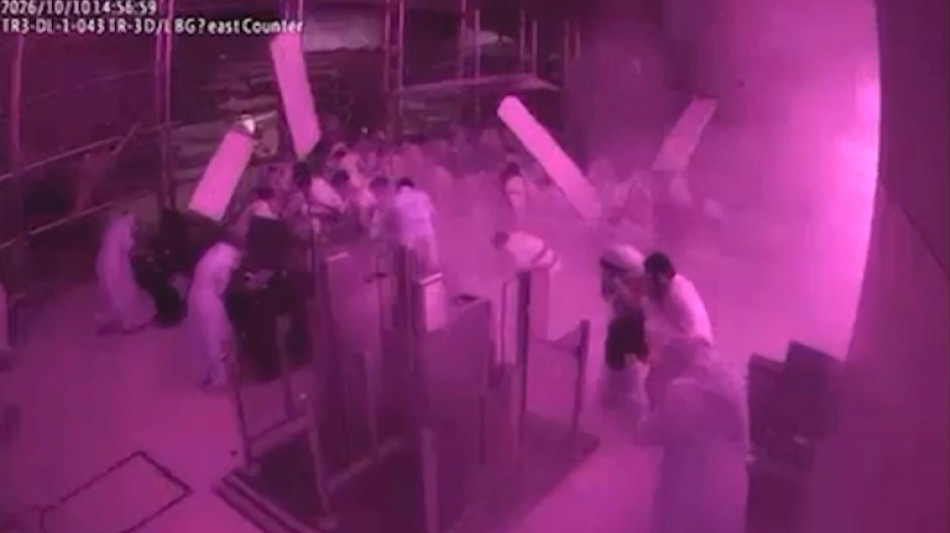
CCTV footage of Saturday's attack released by Saudi authorities showed Muslim pilgrims in religious attire waiting in departure lounges before a sudden flash tore through the building and brought down flaming debris.
- 'The whole house shook' -
The atmosphere in Riyadh remained tense on Monday, as state broadcaster Al Ekhbariya said the military coalition was responding to drone and missile threats, and Australia's embassy warned its citizens in the city to shelter in place.
The Houthis on Sunday claimed multiple attacks over the previous 24 hours, including on the airport, and threatened to keep targeting Saudi transit hubs, calling them "a theatre of operations for our forces".
Hours later, the coalition said yet another projectile had struck Riyadh airport, sparking a fire, while air defences intercepted a missile nearby.
AFP journalists and locals reported hearing multiple blasts in the capital on Sunday.
"The whole house shook," said one resident of the Al-Aarid neighbourhood in the city's north.
Riyadh's airport was not the only one to suffer a deadly attack: early on Monday, officials said one person had been killed and 11 wounded in a strike on Dammam airport.
The Saudi-led coalition said Monday that it had also "intercepted and destroyed" a Houthi ballistic missile heading for the southern city of Khamis Mushait, home to a major military base.
Riyadh hosts a packed calendar of events at this time of year, including its flagship Future Investment Initiative conference, which draws foreign leaders and business titans.
- 'Full-fledged war crime' -
Despite vast spending on military hardware, the Houthi attacks on oil, military and transport facilities across the large, mostly desert country are stretching Saudi defences.
"Saudi air defences have been able to intercept some Houthi missile and drone attacks, but Saudi Arabia is so large that it's simply impossible for them to consistently defend themselves," said Thomas Juneau, security analyst at Ottawa University.
The anti-Houthi coalition called Saturday's attack a "full-fledged war crime" and vowed to "respond decisively".
The attack drew condemnation from the United Nations and leaders including US President Donald Trump, who said he was considering joining Saudi strikes against the Houthis.
Iran, which backs the Houthis, said Monday it was "deeply concerned" over the recent escalation.
Witnesses to Saturday's strike described chaos in the aftermath.
"Some had lost a hand or an arm. People were running while carrying injured people, covered in blood," a 32-year-old Riyadh resident told AFP.
Saudi Arabia leads an international coalition that has supported Yemen's government militarily since 2015, including by seeking to exert control over Yemeni airspace and the airport in the Houthi-held capital Sanaa.
Ottawa University's Juneau said the Houthis now "want to do to Saudi Arabia what Saudi Arabia does to them".
burs/th/smw
N.Wasilewski--GL