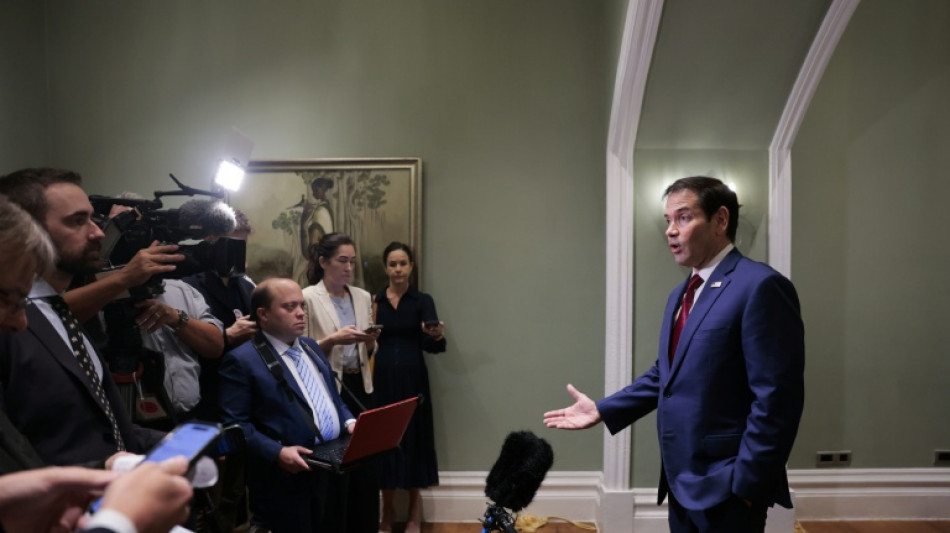
Rubio urges Cubans to work with CIA, but warns: be discreet / Photo: © POOL/AFP

 London
 8 °C

 Manchester
 8 °C
 Glasgow
10 °C
 Dublin
 7 °C
 Belfast
6 °C
 Washington
13 °C
 Denver
 23 °C
 Atlanta
19 °C
 Dallas
27 °C
 Houston Texas
 28 °C
 New Orleans
24 °C
 El Paso
28 °C
 Phoenix
27 °C
 Los Angeles
21 °C
San Diego
21 °C
San Francisco
 20 °C
Chicago
 18 °C
Minneapolis
21 °C
Seattle
14 °C
Portland
15 °C
Salt Lake City
14 °C
Las Vegas
21 °C
Miami
25 °C
Jacksonville
19 °C
San Antonio
28 °C
Bermuda
24 °C
Nassau
12 °C
Iqaluit
 0 °C
Yellowknife
-1 °C
Anchorage
1 °C
Fairbanks
-6 °C
Barrow
-4 °C
Calgary
5 °C
Edmonton
16 °C
Winnipeg
23 °C
Goose Bay
7 °C
Halifax
5 °C
Boston
8 °C
Ottawa
8 °C
Toronto
8 °C
Detroit
14 °C
Cleveland
13 °C
New York
14 °C
Baltimore
12 °C
Philadelphia
12 °C
Nuuk (Godthåb)
-3 °C
Hong Kong
25 °C
Singapore
 29 °C
Melbourne
24 °C
Canberra
20 °C
Adelaide
22 °C
Darwin
30 °C
Perth
12 °C
Fort Worth
26 °C
Honolulu
29 °C
Sydney
22 °C
Johannesburg
19 °C
Dubai
31 °C
Mumbai
30 °C
Zürich
9 °C
Tokyo
 17 °C
Seoul
13 °C
Delhi
20 °C
Beijing
11 °C
Riyadh
27 °C
Prague
9 °C
Pennsylvania
11 °C
Valletta
19 °C
Manama
31 °C
Warsaw
8 °C
Stockholm
7 °C
US Secretary of State Marco Rubio on Friday called for Cubans to make "discreet" contact with the American intelligence services as Washington seeks to force an end to the island's communist government.
For months, President Donald Trump and other senior US officials have openly hinted at a military intervention or takeover of Cuba, ramping up economic, political and legal pressure on the country.
"To those who seek to create positive change in Cuba -- now is the time," Rubio said on social media.
"The disappointment of failed promises, corruption, and the privileged lives of only a few; seize this opportunity to create the change you desire through a discrete partnership with the CIA."
The unusual post appeared to confirm that the CIA is currently active in Cuba after a long history of covert operations including backing the disastrous Bay of Pigs invasion in 1961.
Trump, speaking at a rally in Florida earlier Friday, underlined his ambitions to impose regime change in Cuba.
"Those beautiful (US military) ships will pass Cuba. We'll have one of them stop about 50 yards off the coast," he said. "They'll raise up their hands. And then we're going to send Marco Rubio in to finish up the deal."
Cuban Foreign Minister Bruno Rodriguez quickly dismissed Trump's threats.
"Our coastline is full of beautiful beaches, but there are also razor-sharp limestone spikes, an inhospitable environment for those who make it to our shores with hostile purposes and lust for domination," he posted.
- Energy blockade -
In the latest US move against the Cuban leadership, Florida's top prosecutor this week announced an arrest warrant for former president Raul Castro on state murder charges that echo a federal indictment unveiled earlier this year.
Castro, 95, is wanted on murder charges connected to the 1996 shooting down of two civilian aircraft from "Brothers to the Rescue," an organization assisting Cubans fleeing to the US state by sea.
Castro, brother of the late revolutionary leader and US nemesis Fidel Castro, was indicted on federal charges related to the incident in May.
Trump previously seized on a US indictment to justify military action that toppled Venezuela's then-president Nicolas Maduro, a staunch ally of the Cuban authorities.
Current Cuban President Miguel Diaz-Canel has said the US federal indictment against Castro has "no legal basis" and was an attempt "to justify the folly of a military aggression against Cuba."
Washington also imposed a de facto energy blockade on Cuba in January, threatening to sanction any country that supplies fuel to the island of 9.4 million people.
R.Kozlowski--GL