UN Security Council Renew Yemen Sanctions to Curb Houthi Weapons Supplies

 London
 3 °C

 Manchester
-3 °C
 Glasgow
 5 °C
 Dublin
2 °C
 Belfast
 5 °C
 Washington
 12 °C
 Denver
12 °C
 Atlanta
12 °C
 Dallas
18 °C
 Houston Texas
20 °C
 New Orleans
20 °C
 El Paso
18 °C
 Phoenix
24 °C
 Los Angeles
19 °C
San Diego
21 °C
San Francisco
18 °C
Chicago
5 °C
Minneapolis
0 °C
Seattle
13 °C
Portland
12 °C
Salt Lake City
10 °C
Las Vegas
19 °C
Miami
25 °C
Jacksonville
21 °C
San Antonio
18 °C
Bermuda
24 °C
Nassau
 9 °C
Iqaluit
-6 °C
Yellowknife
3 °C
Anchorage
2 °C
Fairbanks
 -9 °C
Barrow
 -11 °C
Calgary
10 °C
Edmonton
 8 °C
Winnipeg
-4 °C
Goose Bay
4 °C
Halifax
9 °C
Boston
8 °C
Ottawa
2 °C
Toronto
2 °C
Detroit
7 °C
Cleveland
7 °C
New York
9 °C
Baltimore
13 °C
Philadelphia
11 °C
Nuuk (Godthåb)
0 °C
Hong Kong
25 °C
Singapore
30 °C
Melbourne
22 °C
Canberra
30 °C
Adelaide
 16 °C
Darwin
33 °C
Perth
 25 °C
Fort Worth
18 °C
Honolulu
 27 °C
Sydney
27 °C
Johannesburg
17 °C
Dubai
27 °C
Mumbai
27 °C
Zürich
5 °C
Tokyo
16 °C
Seoul
14 °C
Delhi
17 °C
Beijing
6 °C
Riyadh
12 °C
Prague
4 °C
Pennsylvania
8 °C
Valletta
23 °C
Manama
22 °C
Warsaw
4 °C
Stockholm
3 °C
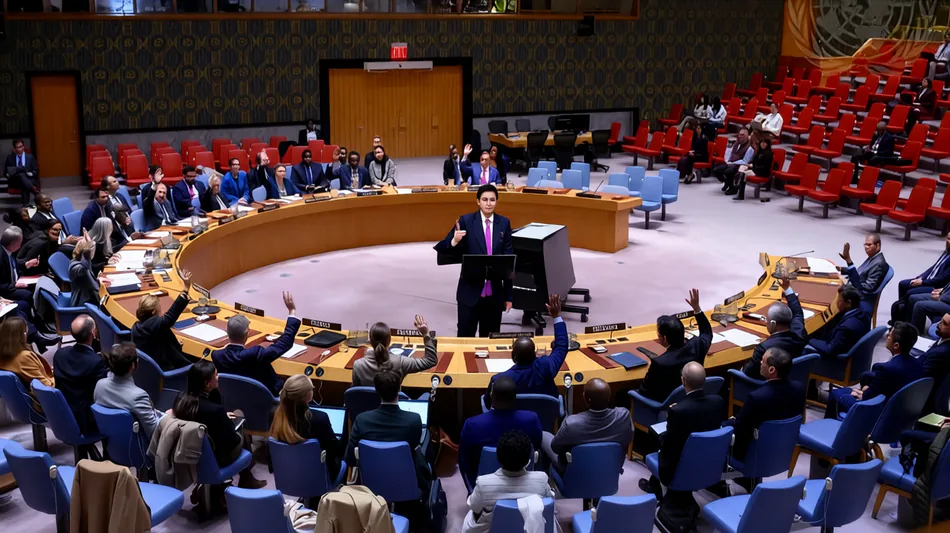
The United Nations Security Council unanimously adopted a resolution on Thursday renewing sanctions against Yemen’s Iran-backed Houthi rebels and introducing measures to block the supply of materials used to manufacture drones and missiles. The decision comes amid escalating military operations in Yemen and cross-border strikes on Saudi Arabia, with the council extending asset freezes and travel bans until late 2027.
The United Nations Security Council adopted a resolution on Thursday renewing sanctions against Yemen’s Iran-backed Houthi rebels and establishing new measures to restrict the flow of materials used to manufacture drones and missiles. The resolution, passed by consensus without a formal vote, condemned the group’s military escalation in Yemen and its cross-border attacks on Saudi Arabia.
The council extended targeted asset freezes and travel bans for designated individuals until November 14, 2027, and renewed the mandate of the panel monitoring these sanctions until December 15, 2027. An arms embargo imposed on the Houthis in 2015 remains in effect with no specified end date.
A key component of the new resolution is a deadline for member states to determine specific steps to prevent the acquisition of dual-use items—materials with both civilian and military applications. The council intends to finalize this list by January 11, based on recommendations from the expert monitoring panel. British Ambassador Sarah MacIntosh stated that London would work with other council members in the coming months to agree on the list, ensuring the sanctions regime "keeps pace with the evolving threat from the Houthis."
UN monitors have documented that the rebels maintain their arsenal through smuggling and the diversion of commercially available parts, enabling local production of attack drones. The resolution also tasked the expert panel with tracking revenues the Houthis earn from key economic sectors and recommending ways to prevent these funds from being diverted to military use.
The diplomatic negotiations leading to the resolution were complex. Britain, Bahrain, and the United States sought to include language describing the Houthis as a "terrorist group," but this wording was removed after Russia objected that it could hinder political talks. China, supported by Russia, opposed aspects of the proposed dual-use items list and an expansion of the expert panel. References to Houthi links with Somalia’s Al-Shabaab were also deleted following objections from African council members, China, and Russia.
Yemen’s UN Ambassador Abdullah Al-Saadi welcomed the condemnation of the Houthis but expressed regret that the council did not explicitly label them a terrorist group. He accused the rebels of "using starvation as a means of war" and called for the lifting of their siege on the city of Taiz.
The resolution also addressed the arbitrary detention of United Nations, diplomatic, and humanitarian personnel, stating such actions could be grounds for further sanctions. This provision followed the death in Houthi custody of Mohammad El-Shami, a Yemeni employee of the UN Human Rights Office who had been detained since June 2024. MacIntosh called for the "immediate and unconditional release" of all detained personnel.
The diplomatic action coincides with intensified fighting in Yemen. The Houthis launched an offensive in early September, seizing the strategic Red Sea port of Mokha after clashes with government forces. They have also continued missile and drone strikes on Saudi territory.
MacIntosh highlighted the humanitarian toll, noting that more than 22.3 million Yemenis require aid and over 330,000 have been displaced by the latest fighting. "Sanctions are not an end in themselves," she said. "They are a tool to constrain those who threaten Yemen’s peace and security."
R.Sadowski--GL