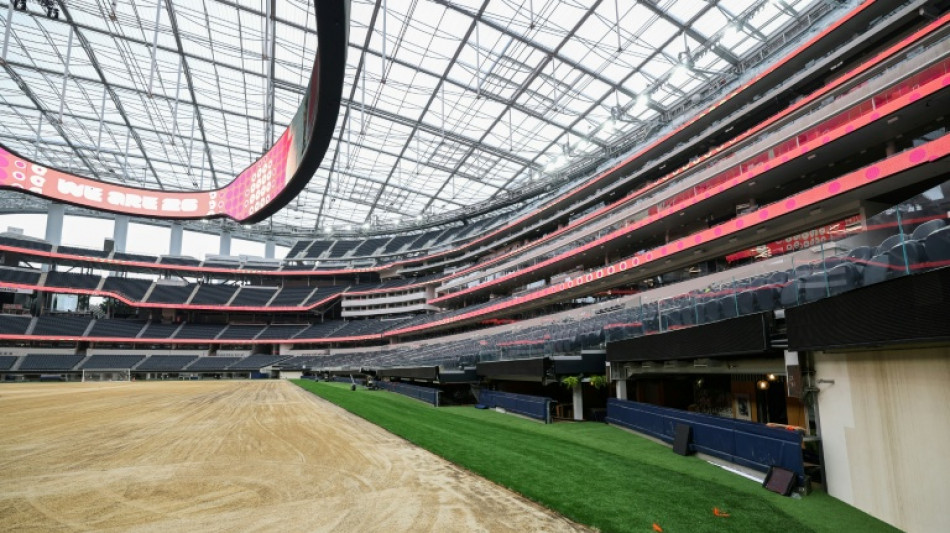
Los Angeles stadium undergoes World Cup facelift / Photo: © AFP

 London
 12 °C
12 °C

 Manchester
 10 °C
10 °C
 Glasgow
11 °C
Glasgow
11 °C
 Dublin
 9 °C
9 °C
 Belfast
11 °C
Belfast
11 °C
 Washington
21 °C
Washington
21 °C
 Denver
25 °C
Denver
25 °C
 Atlanta
25 °C
Atlanta
25 °C
 Dallas
 32 °C
32 °C
 Houston Texas
29 °C
Houston Texas
29 °C
 New Orleans
 25 °C
25 °C
 El Paso
31 °C
El Paso
31 °C
 Phoenix
38 °C
Phoenix
38 °C
 Los Angeles
25 °C
San Diego
22 °C
San Francisco
15 °C
Chicago
23 °C
Minneapolis
21 °C
Seattle
20 °C
Portland
21 °C
Salt Lake City
27 °C
Las Vegas
37 °C
Miami
29 °C
Jacksonville
24 °C
San Antonio
30 °C
Bermuda
27 °C
Nassau
19 °C
Iqaluit
9 °C
Yellowknife
18 °C
Anchorage
Los Angeles
25 °C
San Diego
22 °C
San Francisco
15 °C
Chicago
23 °C
Minneapolis
21 °C
Seattle
20 °C
Portland
21 °C
Salt Lake City
27 °C
Las Vegas
37 °C
Miami
29 °C
Jacksonville
24 °C
San Antonio
30 °C
Bermuda
27 °C
Nassau
19 °C
Iqaluit
9 °C
Yellowknife
18 °C
Anchorage
 14 °C
Fairbanks
14 °C
Barrow
7 °C
Calgary
19 °C
Edmonton
21 °C
Winnipeg
14 °C
Goose Bay
15 °C
Halifax
19 °C
Boston
20 °C
Ottawa
15 °C
Toronto
20 °C
Detroit
21 °C
Cleveland
21 °C
New York
22 °C
Baltimore
21 °C
Philadelphia
22 °C
Nuuk (Godthåb)
9 °C
Hong Kong
31 °C
Singapore
14 °C
Fairbanks
14 °C
Barrow
7 °C
Calgary
19 °C
Edmonton
21 °C
Winnipeg
14 °C
Goose Bay
15 °C
Halifax
19 °C
Boston
20 °C
Ottawa
15 °C
Toronto
20 °C
Detroit
21 °C
Cleveland
21 °C
New York
22 °C
Baltimore
21 °C
Philadelphia
22 °C
Nuuk (Godthåb)
9 °C
Hong Kong
31 °C
Singapore
 32 °C
Melbourne
25 °C
Canberra
16 °C
Adelaide
32 °C
Melbourne
25 °C
Canberra
16 °C
Adelaide
 16 °C
Darwin
33 °C
Perth
19 °C
Fort Worth
31 °C
Honolulu
27 °C
Sydney
23 °C
Johannesburg
8 °C
Dubai
37 °C
Mumbai
28 °C
Zürich
16 °C
Darwin
33 °C
Perth
19 °C
Fort Worth
31 °C
Honolulu
27 °C
Sydney
23 °C
Johannesburg
8 °C
Dubai
37 °C
Mumbai
28 °C
Zürich
 13 °C
Tokyo
32 °C
Seoul
23 °C
Delhi
30 °C
Beijing
26 °C
Riyadh
34 °C
Prague
14 °C
Pennsylvania
17 °C
Valletta
26 °C
Manama
35 °C
Warsaw
19 °C
Stockholm
14 °C
13 °C
Tokyo
32 °C
Seoul
23 °C
Delhi
30 °C
Beijing
26 °C
Riyadh
34 °C
Prague
14 °C
Pennsylvania
17 °C
Valletta
26 °C
Manama
35 °C
Warsaw
19 °C
Stockholm
14 °C
Hundreds of corner seats have been ripped out of Los Angeles' SoFi Stadium and truckloads of freshly harvested sod were beginning the 1,200-mile journey from Washington state Tuesday as the venue puts the finishing touches on its facelift for soccer's World Cup.
The $5 billion stadium has also had to bury its NFL-standard synthetic turf under a complicated overlay of sand and flooring material, and remove all corporate sponsor signage, in the race to be ready for the United States' first match against Paraguay in less than a month.
"No sleep. We'll sleep later!" joked Otto Benedict, senior vice president of facility and campus operations, one day before the venue is officially turned over to FIFA and renamed the brand-neutral "Los Angeles Stadium."
Because American football pitches are narrower, and soccer fields require extra space for players to take corner kicks and throw-ins, officials removed 100 seats at each corner to squeeze in a playing surface compliant with FIFA rules.
FIFA initially wanted to have pitches with dimensions up to 80 meters wide at the corners, but realized that none of the 11 NFL stadiums being used could meet that distance, said Benedict.
"I think they made a great collaboration with us and all the other NFL stadiums to say, 'how far can we get?'"
SoFi Stadium already had some "demountable" seats in the corner, that could be removed "LEGO-style," but the decision was taken to also tear out two extras rows of permanent seats at two corners to create extra space.
The silver lining is that fans who have purchased seats by those corners will be sitting right on top of the action, Benedict told AFP.
"They wanted to have at least three meters, and we got it up to five meters... Anybody sitting in the corner is gonna have an incredible seat!"
- 'Monumental task' -
As of Tuesday, the view from the corners was still a vast, sandy rectangle, with no grass in sight.
Grass was due to be harvested in the Pacific Northwest on Tuesday night, put immediately into refrigerated trucks, and driven directly to the stadium without stopping by teams of drivers working in shifts.
The idea is for the sod to spend "the least amount of time in the truck coming down here," said Benedict.
While beginning installation just a month out from the first kickoff might seem tight, Benedict pointed to the trial use of a hybrid surface with natural grass and synthetic fibers at last year's CONCACAF Nations League games at the SoFi Stadium.
"We built this exact field with this exact system that's in there now last year, and test-ran how that would go," said Benedict.
"This 30 days is giving us the right amount of time to get the grass in, get it rooted and allow FIFA (to) take over the building tomorrow."
With its transparent roof covering, the stadium has the advantage of greenhouse-like conditions that can help the grass to thrive.
The installation will take two days, after which the grass will benefit from a newly installed irrigation system and grow lights.
Officials have also had to remove all signage that contains the names of SoFi sponsors -- from the stadium banner itself, to various bars, lobbies and restaurants.
"It's a pretty monumental task... Every little place you look, you suddenly see a new name or something that has to be has to be covered up," said Benedict.
X.Dabrowski--GL