'Alligator Alcatraz' detention center shuts in US: official / Photo: © AFP/File

 London
 20 °C
20 °C

 Manchester
 15 °C
15 °C
 Glasgow
 19 °C
19 °C
 Dublin
15 °C
Dublin
15 °C
 Belfast
12 °C
Belfast
12 °C
 Washington
 26 °C
26 °C
 Denver
17 °C
Denver
17 °C
 Atlanta
 25 °C
25 °C
 Dallas
27 °C
Dallas
27 °C
 Houston Texas
26 °C
Houston Texas
26 °C
 New Orleans
27 °C
New Orleans
27 °C
 El Paso
19 °C
El Paso
19 °C
 Phoenix
26 °C
Phoenix
26 °C
 Los Angeles
 17 °C
San Diego
21 °C
San Francisco
17 °C
San Diego
21 °C
San Francisco
 14 °C
Chicago
20 °C
Minneapolis
16 °C
Seattle
14 °C
Portland
12 °C
Salt Lake City
19 °C
Las Vegas
25 °C
Miami
29 °C
Jacksonville
26 °C
San Antonio
26 °C
Bermuda
28 °C
Nassau
23 °C
Iqaluit
3 °C
Yellowknife
8 °C
Anchorage
14 °C
Chicago
20 °C
Minneapolis
16 °C
Seattle
14 °C
Portland
12 °C
Salt Lake City
19 °C
Las Vegas
25 °C
Miami
29 °C
Jacksonville
26 °C
San Antonio
26 °C
Bermuda
28 °C
Nassau
23 °C
Iqaluit
3 °C
Yellowknife
8 °C
Anchorage
 9 °C
Fairbanks
4 °C
Barrow
9 °C
Fairbanks
4 °C
Barrow
 -1 °C
Calgary
7 °C
Edmonton
24 °C
Winnipeg
10 °C
Goose Bay
16 °C
Halifax
21 °C
Boston
21 °C
Ottawa
17 °C
Toronto
17 °C
Detroit
17 °C
Cleveland
20 °C
New York
24 °C
Baltimore
26 °C
Philadelphia
24 °C
Nuuk (Godthåb)
3 °C
Hong Kong
28 °C
Singapore
25 °C
Melbourne
28 °C
Canberra
9 °C
Adelaide
13 °C
Darwin
26 °C
Perth
16 °C
Fort Worth
26 °C
Honolulu
-1 °C
Calgary
7 °C
Edmonton
24 °C
Winnipeg
10 °C
Goose Bay
16 °C
Halifax
21 °C
Boston
21 °C
Ottawa
17 °C
Toronto
17 °C
Detroit
17 °C
Cleveland
20 °C
New York
24 °C
Baltimore
26 °C
Philadelphia
24 °C
Nuuk (Godthåb)
3 °C
Hong Kong
28 °C
Singapore
25 °C
Melbourne
28 °C
Canberra
9 °C
Adelaide
13 °C
Darwin
26 °C
Perth
16 °C
Fort Worth
26 °C
Honolulu
 26 °C
Sydney
14 °C
Johannesburg
20 °C
Dubai
37 °C
Mumbai
29 °C
Zürich
22 °C
Tokyo
22 °C
Seoul
24 °C
Delhi
32 °C
Beijing
22 °C
Riyadh
41 °C
Prague
21 °C
Pennsylvania
22 °C
Valletta
29 °C
Manama
36 °C
Warsaw
22 °C
Stockholm
18 °C
26 °C
Sydney
14 °C
Johannesburg
20 °C
Dubai
37 °C
Mumbai
29 °C
Zürich
22 °C
Tokyo
22 °C
Seoul
24 °C
Delhi
32 °C
Beijing
22 °C
Riyadh
41 °C
Prague
21 °C
Pennsylvania
22 °C
Valletta
29 °C
Manama
36 °C
Warsaw
22 °C
Stockholm
18 °C
The controversial "Alligator Alcatraz" immigration detention center -- a costly Florida facility that became a symbol of US President Donald Trump's deportation drive -- has shut down after less than a year in operation, officials said Thursday.
Florida Governor Ron DeSantis, appearing at the remote Everglades site with White House border czar Tom Homan, said the facility no longer held any detainees and had fulfilled the emergency role it was built to serve.
The facility drew fierce criticism from lawyers, families, civil rights groups and human rights advocates, who accused the government of holding detainees in harsh conditions and denying them meaningful due process.
"Alligator Alcatraz fulfilled the role that it was designed to serve," DeSantis said, adding that it had helped remove "many, many dangerous people" from Florida and the United States.
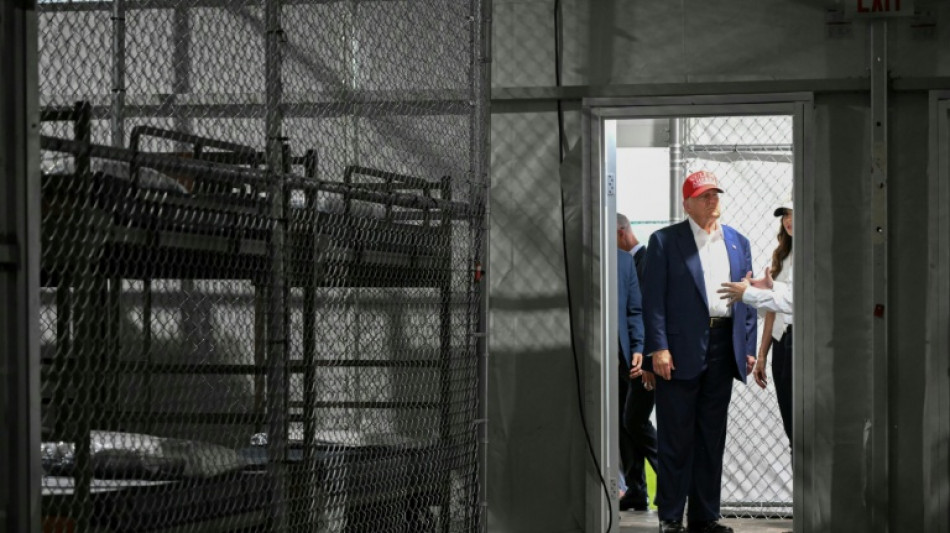
The center was assembled in just eight days in June last year with bunk beds, wire cages and large white tents at an abandoned airfield in the Everglades, home to a large population of alligators.
Trump, who has vowed to deport millions of undocumented migrants, visited the detention site after its July 2025 opening, boasting about the harsh conditions and joking that the reptilian predators will serve as guards.
DeSantis said in May that more than 22,000 people had been processed or staged for deportation through the site.
Officials said the last detainees had either been transferred to other centers or deported, after federal and state authorities initially described the removals as a safety measure linked to the start of hurricane season.
Vendors hired to operate the site had been told to begin full demobilization, according to US media reports, bringing down the curtain on an experiment once promoted by Trump and DeSantis as a possible model for other states.
Environmental advocates and the Miccosukee Tribe challenged the project, saying construction at the isolated Dade-Collier Training and Transition Airport had damaged the fragile Everglades ecosystem and threatened protected species.
The site's cost became another flashpoint.
Estimates put the price tag at more than $1 billion, and the federal government has approved hundreds of millions of dollars in reimbursement, though Florida has not yet been fully repaid.
- Legacy -
The future of the land is now emerging as a new fight.
Miami-Dade Mayor Daniella Levine Cava said Thursday her administration would explore transferring county-owned land at the airfield to the National Park Service or other Everglades restoration partners.
She said the property's remote location, limited aviation value and high maintenance costs made it a poor long-term airport asset, while its position beside one of the world's most important wetlands made conservation a better option.
"Once this facility is decommissioned, we have an opportunity to permanently protect these lands for Everglades restoration and ensure they remain protected for generations to come. That is the legacy we should leave," Levine Cava said.
A judge barred the Trump administration and Florida officials last August from bringing any new migrants to the facility, but an appeals court ruled that it could remain open while the Trump administration appealed.
Several detainees spoke with AFP about the conditions at the center, including a lack of medical care, mistreatment and the alleged violation of their legal rights.
"From the very beginning, I have raised serious concerns about the 'Alligator Alcatraz' detention facility because people have been held there in inhumane conditions without meaningful due process, while occupying land alongside one of the world's most precious natural ecosystems," said Levine Cava.
Friends of the Everglades and the Center for Biological Diversity filed a lawsuit arguing that the facility threatened the sensitive Everglades wetlands and was hastily built without the legally required environmental impact studies.
E.Dudek--GL