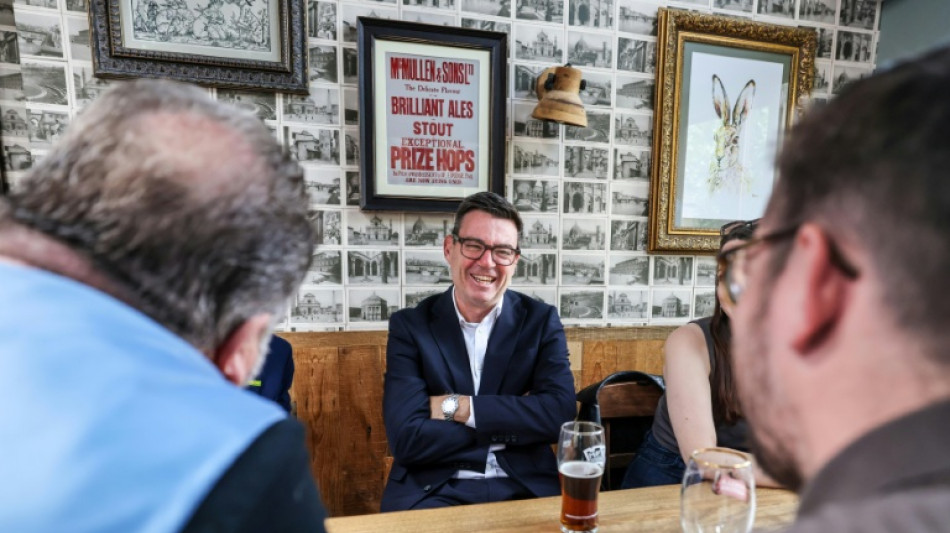
Burnham offers sweeteners, hopeful vibes in first week as UK PM / Photo: © POOL/AFP

 London
 19 °C
19 °C
 Manchester
18 °C
Manchester
18 °C
 Glasgow
 10 °C
10 °C
 Dublin
18 °C
Dublin
18 °C
 Belfast
16 °C
Belfast
16 °C
 Washington
26 °C
Washington
26 °C
 Denver
30 °C
Denver
30 °C
 Atlanta
26 °C
Atlanta
26 °C
 Dallas
34 °C
Dallas
34 °C
 Houston Texas
 31 °C
31 °C
 New Orleans
30 °C
New Orleans
30 °C
 El Paso
 34 °C
34 °C
 Phoenix
39 °C
Phoenix
39 °C
 Los Angeles
 26 °C
San Diego
24 °C
San Francisco
19 °C
Chicago
17 °C
Minneapolis
17 °C
Seattle
15 °C
Portland
17 °C
Salt Lake City
30 °C
Las Vegas
37 °C
Miami
26 °C
San Diego
24 °C
San Francisco
19 °C
Chicago
17 °C
Minneapolis
17 °C
Seattle
15 °C
Portland
17 °C
Salt Lake City
30 °C
Las Vegas
37 °C
Miami
 26 °C
Jacksonville
27 °C
San Antonio
33 °C
Bermuda
27 °C
Nassau
23 °C
Iqaluit
5 °C
Yellowknife
12 °C
Anchorage
15 °C
Fairbanks
26 °C
Jacksonville
27 °C
San Antonio
33 °C
Bermuda
27 °C
Nassau
23 °C
Iqaluit
5 °C
Yellowknife
12 °C
Anchorage
15 °C
Fairbanks
 11 °C
Barrow
2 °C
Calgary
10 °C
Edmonton
11 °C
Barrow
2 °C
Calgary
10 °C
Edmonton
 27 °C
Winnipeg
14 °C
Goose Bay
22 °C
Halifax
19 °C
Boston
20 °C
Ottawa
21 °C
Toronto
20 °C
Detroit
19 °C
Cleveland
22 °C
New York
25 °C
Baltimore
25 °C
Philadelphia
24 °C
Nuuk (Godthåb)
6 °C
Hong Kong
29 °C
Singapore
29 °C
Melbourne
28 °C
Canberra
16 °C
Adelaide
15 °C
Darwin
31 °C
Perth
17 °C
Fort Worth
34 °C
Honolulu
27 °C
Winnipeg
14 °C
Goose Bay
22 °C
Halifax
19 °C
Boston
20 °C
Ottawa
21 °C
Toronto
20 °C
Detroit
19 °C
Cleveland
22 °C
New York
25 °C
Baltimore
25 °C
Philadelphia
24 °C
Nuuk (Godthåb)
6 °C
Hong Kong
29 °C
Singapore
29 °C
Melbourne
28 °C
Canberra
16 °C
Adelaide
15 °C
Darwin
31 °C
Perth
17 °C
Fort Worth
34 °C
Honolulu
 29 °C
Sydney
26 °C
Johannesburg
14 °C
Dubai
33 °C
Mumbai
25 °C
Zürich
16 °C
Tokyo
29 °C
Seoul
22 °C
Delhi
28 °C
Beijing
21 °C
Riyadh
29 °C
Prague
15 °C
Pennsylvania
23 °C
Valletta
25 °C
Manama
32 °C
Warsaw
15 °C
Stockholm
10 °C
29 °C
Sydney
26 °C
Johannesburg
14 °C
Dubai
33 °C
Mumbai
25 °C
Zürich
16 °C
Tokyo
29 °C
Seoul
22 °C
Delhi
28 °C
Beijing
21 °C
Riyadh
29 °C
Prague
15 °C
Pennsylvania
23 °C
Valletta
25 °C
Manama
32 °C
Warsaw
15 °C
Stockholm
10 °C
New UK Prime Minister Andy Burnham's first week in office signalled a shift in focus and style for the centre-left Labour government as he sought a clean break from predecessor Keir Starmer.
- Cost of living -
Burnham, 56, announced three feel-good measures designed to offer Britons and businesses some early modest help with high living costs, which he has made the focus of his nascent administration.
He unveiled the removal of a tax on household electricity bills, a planned cap on most bus fares in England and a 20 percent reduction in business rates for pubs, clubs, and live music venues.
In contrast, one of Starmer's first moves in power two years ago was to cut winter fuel payments for millions of elderly people -- a mistake he was forced to reverse and struggled to recover from.
Burnham's early sweeteners are raising questions about whether he shares Starmer's commitment to fiscal discipline, although he insists they represent a "re-prioritisation" of spending.
The US-Iran conflict, which has sent energy prices soaring, and other geo-political crises outside of Burnham's control could impact his ability to drive his cost-of-living agenda.
He will also have to confront international affairs sooner or later, but is expected to travel less than Starmer, who worked hard to restore Britain's credibility overseas but was branded "never here Keir" by opponents.
"It's good to see the Burnham government get itself on the front foot politically, but you can see that there are a lot of storm clouds on the horizon," said Patrick Diamond, an advisor to previous Labour governments.
- Casual vibes -
After arriving in Downing Street on Monday, Burnham delivered a speech without notes and without the traditional lecturn, symbolising the more relaxed image he cultivated over nine years as Manchester mayor.
That said, he did swap his trademark dark T-Shirt and jacket for a suit and tie, although he has maintained his regular output of casual, selfie-led videos on his social media channels.
During his inaugural speech, Burnham emphasised his desire to "bring back hope", contrasting with the Starmer government's repeated warnings about the "tough choices" required following 14 years of Conservative rule.
"That didn't work as a narrative because it was too pessimistic," Diamond told AFP.
"What Burnham's doing is really very different because he's trying to underline that things can be better, and government can still make a difference."
On Friday, Burnham, opened his new No 10 North office in Manchester, where he intends to work at least once a week as part of his drive to increase devolution in England.
Addressing staff, he said it would be the "nerve centre for a rewired Britain" and not a "short-lived gimmick".
- Political unity? -
Burnham has vowed to unite the ruling Labour party, a pledge that some commentators have seen as rich since his supporters just helped topple Starmer from power.
On Wednesday, he dismissed suggestions that his culling of numerous Starmer loyalists from his ministerial team, and promotion of his own allies, was itself a factional move.
"Obviously, there's a need to bring in change to give the government that new direction that I've called for. That's just the reality of politics," Burnham said.
Since he was parachuted into the top job by Labour MPs, rather than winning a popular vote, Burnham is likely to face continued questions about his mandate.
As leader of parliament's largest party he automatically became prime minister without having to call a new general election. The next one is due in 2029.
Nigel Farage, leader of the hard-right Reform UK party which has topped opinion polls for about 18 months, has repeatedly said that Burnham should announce a national vote now.
Those calls could grow if Burnham deviates from the manifesto upon which Labour under Starmer won its majority in July 2024, something he might be tempted to do if the economy continues to stall.
"The challenge he faces is that the public judges quickly," political scientist Tony Travers told AFP.
"And the difficulty with a lot of the problems that he's dealing with" is that they are "30, 40, 50 years in their evolution".
U.Krajewski--GL