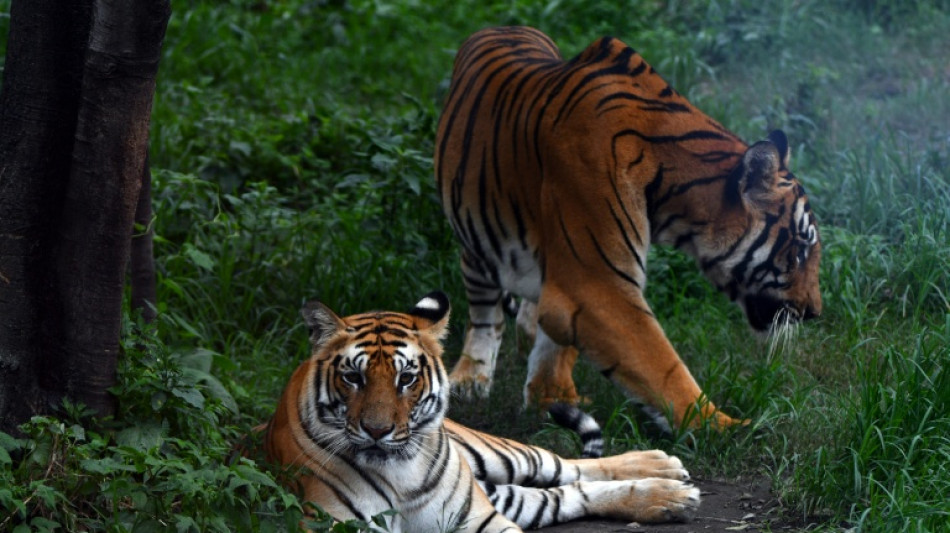
Nepal's tiger numbers climb 20 percent to estimated 429: survey / Photo: © AFP

 London
 20 °C
20 °C

 Manchester
19 °C
Manchester
19 °C
 Glasgow
16 °C
Glasgow
16 °C
 Dublin
18 °C
Dublin
18 °C
 Belfast
16 °C
Belfast
16 °C
 Washington
30 °C
Washington
30 °C
 Denver
 33 °C
33 °C
 Atlanta
32 °C
Atlanta
32 °C
 Dallas
37 °C
Dallas
37 °C
 Houston Texas
34 °C
Houston Texas
34 °C
 New Orleans
 32 °C
32 °C
 El Paso
 34 °C
34 °C
 Phoenix
37 °C
Phoenix
37 °C
 Los Angeles
27 °C
San Diego
27 °C
San Francisco
20 °C
Chicago
21 °C
Minneapolis
21 °C
Seattle
14 °C
Portland
15 °C
Salt Lake City
31 °C
Las Vegas
36 °C
Miami
Los Angeles
27 °C
San Diego
27 °C
San Francisco
20 °C
Chicago
21 °C
Minneapolis
21 °C
Seattle
14 °C
Portland
15 °C
Salt Lake City
31 °C
Las Vegas
36 °C
Miami
 29 °C
Jacksonville
33 °C
San Antonio
36 °C
Bermuda
29 °C
Nassau
24 °C
Iqaluit
5 °C
Yellowknife
13 °C
Anchorage
11 °C
Fairbanks
8 °C
Barrow
1 °C
Calgary
14 °C
Edmonton
34 °C
Winnipeg
16 °C
Goose Bay
25 °C
Halifax
19 °C
Boston
19 °C
Ottawa
26 °C
Toronto
26 °C
Detroit
27 °C
Cleveland
28 °C
New York
26 °C
Baltimore
30 °C
Philadelphia
28 °C
Nuuk (Godthåb)
8 °C
Hong Kong
29 °C
Jacksonville
33 °C
San Antonio
36 °C
Bermuda
29 °C
Nassau
24 °C
Iqaluit
5 °C
Yellowknife
13 °C
Anchorage
11 °C
Fairbanks
8 °C
Barrow
1 °C
Calgary
14 °C
Edmonton
34 °C
Winnipeg
16 °C
Goose Bay
25 °C
Halifax
19 °C
Boston
19 °C
Ottawa
26 °C
Toronto
26 °C
Detroit
27 °C
Cleveland
28 °C
New York
26 °C
Baltimore
30 °C
Philadelphia
28 °C
Nuuk (Godthåb)
8 °C
Hong Kong
 27 °C
Singapore
28 °C
Melbourne
31 °C
Canberra
8 °C
Adelaide
13 °C
Darwin
27 °C
Singapore
28 °C
Melbourne
31 °C
Canberra
8 °C
Adelaide
13 °C
Darwin
 24 °C
Perth
14 °C
Fort Worth
36 °C
Honolulu
26 °C
Sydney
12 °C
Johannesburg
24 °C
Perth
14 °C
Fort Worth
36 °C
Honolulu
26 °C
Sydney
12 °C
Johannesburg
 15 °C
Dubai
35 °C
Mumbai
15 °C
Dubai
35 °C
Mumbai
 26 °C
Zürich
18 °C
Tokyo
24 °C
Seoul
18 °C
Delhi
29 °C
Beijing
20 °C
Riyadh
35 °C
Prague
16 °C
Pennsylvania
28 °C
Valletta
26 °C
Manama
33 °C
Warsaw
18 °C
Stockholm
15 °C
26 °C
Zürich
18 °C
Tokyo
24 °C
Seoul
18 °C
Delhi
29 °C
Beijing
20 °C
Riyadh
35 °C
Prague
16 °C
Pennsylvania
28 °C
Valletta
26 °C
Manama
33 °C
Warsaw
18 °C
Stockholm
15 °C
Nepal's tiger population has risen by roughly 20 percent in the past four years to an estimated 429, officials said on Wednesday, a conservation milestone despite challenges from human-wildlife conflict.
The latest nationwide survey found tiger numbers had increased from 355 in 2022, reinforcing the Himalayan nation's reputation as a success story in big-cat conservation.
"The data analysis shows that the tiger population has increased by five percent each year, and we are happy to see this increasing trend," Bed Kumar Dhakal, spokesman for Nepal's Department of National Parks and Wildlife Conservation, told AFP.
The survey was conducted between December and July, and was announced to coincide with International Tiger Day. It covered more than 7,300 square kilometres (2,820 square miles) of Nepal's southern plains that are home to the predators.
Wildlife officials deployed more than 3,600 motion-sensitive cameras across five protected areas, with experts analysing thousands of images to identify individual tigers by their distinctive stripe patterns.
"The reason behind the increasing number of tigers is because we could keep their habitat secure," said conservation department ecologist Hari Bhadra Acharya.
Deforestation, habitat loss and poaching have been major challenges for tiger populations across Asia, and Nepal has won international praise for reversing the decline.
In 2010, Nepal joined 12 other countries in pledging to double tiger numbers by 2022.
It became the first nation to meet that goal, boosting its tiger population to 355 in 2022 from about 121 in 2009.
- Tiger attacks -
However, the conservation success has also brought unintended risks for communities living near tiger habitats.
Government data shows at least 38 people were killed in tiger attacks between 2019 and 2023.
"The local communities played a crucial role in increasing the tiger numbers, but the government and organisations are not taking action when the tigers are attacking the same communities," said Nischal Neupane, an advocate for tiger victims in Bardiya district.
The district is home to 112 tigers, up from only 18 in 2009.
WWF Nepal country representative Ghana Shyam Gurung said conservation gains must be matched by efforts to ensure "people and wildlife can thrive together".
"By investing in effective co-existence programmes, Nepal can continue to offer a powerful model for other tiger range countries."
More than 100,000 tigers roamed the wild at the start of the 20th century, but global numbers plunged to an estimated 3,200 in 2010 before recovering in parts of Asia through intensified conservation efforts.
M.Kowalski--GL


